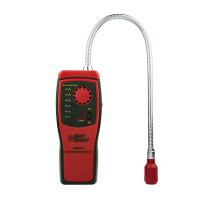
What is the difference between Gas Detector calibrate and bump test?
Short answer: Gas Detector calibration is more effective and confirms the accuracy of gas detection. The bump test just checks that the sensors and alarms are actually working.

Gas Detector bump test
Shock testing is defined as...
"To verify sensor and alarm operation, a brief exposure to a gas of known concentration."
In other words, it's a simple test to make sure the Gas Detector will respond to exposure to gas and will sound the alarm.
A shock test won't tell you anything about the accuracy of a Gas Detector's performance, but it does give you confidence that it's working and therefore fit for use.
For Industrial Scientific's line of Gas Detectors, an automated bump test procedure exposes the Detector to a gas (from a bottle of calibration gas). Gas Detectors are required to successfully report at least 50 percent of the target alarm level for each sensor within 45 seconds.
If not, a failure report is generated. A failure report is a red flag that triggers the user to book the Detector for calibration.
Gas Detector Calibration
The Gas Detector calibration process involves...
Test the Gas Detector's sensor against a known calibration standard (i.e., the contents of the calibration gas cylinder) and
adjust the Gas Detector to correct for any inaccuracies.
Therefore, Gas Detector calibration is more effective than a simple bump test. A successfully calibrated Gas Detector gives you confidence in how accurately it detects the gas of interest.
How often should a crash test be performed?
Good practice of impact testing is daily, before use. A bump test is a great way to make sure your Gas Detector is actually working before you use it.
Shock testing with a dock is a very simple process, but it can also be performed manually without a dock.
An important benefit of a "smart" dock in this modern age is that the dock keeps a record of the Gas Detector's history. This provides an excellent documentation to aid in your compliance record keeping.


- 1Principle and Application Analysis of Composite Four-in-One Gas Detector
- 2Introduction to Working Principle and Application of Carbon Monoxide Gas Detector
- 3Basic Principle and Application of Portable Gas Detector
- 4Basic Principle and Application Analysis of Gas Detector
- 5What is the alarm value of Gas Detector?
- 6What is phosphating Gas Detector?
- 7What is a combustion analyzer?
- 8Application Scheme of Gas Detector in Coking Coal Metallurgy Industry
保时安 - 《保时安》
- 9Application of Gas Detector in Medical Manufacturing
保时安 - 《保时安》