Viscometer measurement of different types of Viscosity
Kinematic, dynamic, relative, apparent, absolute - you may come across these words when dealing with viscosity measurements with a viscometer. They refer to different types (or coefficient values) of viscosity that can be measured in a fluid. The type of viscosity produced by a viscometer measurement depends on the type of viscometer you use, but is usually dynamic or kinematic viscosity.
Let's define the different types of viscosity:
Dynamic (Absolute) Viscosity : Dynamic viscosity, also known as absolute viscosity, is usually associated with non-Newtonian fluids. It refers to the internal resistance of a fluid when a force is applied.
Kinematic Viscosity : Kinematic viscosity is a measure of the viscosity of a fluid (usually a Newtonian fluid) in motion. It can be defined as the ratio of dynamic viscosity to density. Any viscometer that uses gravity in its measurement design is measuring kinematic viscosity.
Apparent (Shear) Viscosity : Apparent or shear viscosity refers to the relationship between viscosity and shear rate. In Newtonian fluids this value does not change, but for non-Newtonian fluids the apparent viscosity is directly affected by the shear rate. It can be calculated by dividing the shear stress by the shear rate.
Relative Viscosity : Relative viscosity is important for non-Newtonian fluids, especially polymers. It refers to the relationship between molar mass (the mass of a chemical compound divided by the total amount) and viscosity - a higher molar mass means a higher viscosity in a polymer. It is calculated by dividing the polymer viscosity by that of the pure solvent.
What viscosity do different viscometers measure?
Not every viscometer is the same - the type of viscosity it measures depends on its design. Let's review the common types:
Orifice Viscometer : Orifice viscometers include different types of cup viscometers. When they act using gravity, the measured viscosity is kinematic viscosity.
Capillary Viscometer : A capillary viscometer uses gravity to measure the time it takes a fluid sample to travel the length of a tube. They also measure kinematic viscosity.
Falling Stick Viscometer : A falling piston viscometer uses the force created by a falling piston to measure viscosity. They measure dynamic viscosity as stress is applied to the fluid.
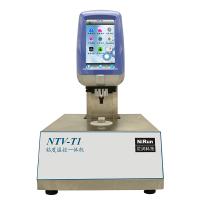
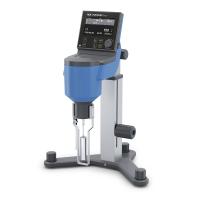
Rotational Viscometer : A Rotational Viscometer measures the torque required to turn a spindle immersed in a fluid. The spindle applies stress to the fluid, thereby measuring dynamic viscosity.
Falling Ball Viscometer : A falling ball viscometer measures the force required for a ball to fall into a fluid. The ball applies stress to the fluid, measuring dynamic viscosity. Patented by Fritz Höppler in 1932, the falling ball viscometer was actually the first viscometer to measure dynamic viscosity.
Oscillating Viscometer : A vibrating viscometer measures a fluid's resistance to vibration. Since vibrations constitute the force applied to the fluid, these viscometers measure dynamic viscosity.


- 1Viscosity of polypropylene (PP) amide measured by NDJ Viscometer
- 2Which Viscometer to Choose for Licorice Extract Viscosity Testing? How to Test?
- 3Application of Rotational Viscometer in juice viscosity test
- 4Working Principle, Classification and Application of Capillary Viscometer
- 5Principle, Characteristics and Application of Dial Viscometer
- 6Basic Principle and Application of Ceramic Viscometer
- 7Principle, Characteristics and Application of QND Viscometer
- 8Determination of epoxy resin viscosity by Rotational Viscometer
- 9Rotational viscometer selection suggestions


