5 common misconceptions about the Zahn Cup
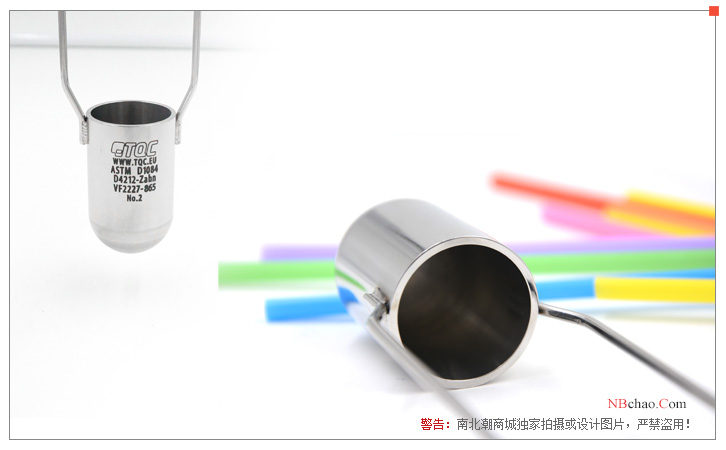
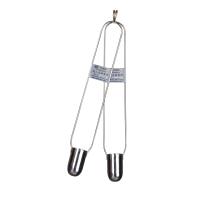
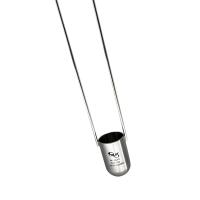
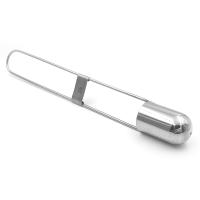
To determine the viscosity of a liquid, a Zahn cup is dipped and completely filled with the liquid to be tested. After removing the cup from the liquid, the user measures the time it takes for the liquid to "break down" from the opening in the bottom of the cup. This is the corresponding "Outflow Time".
(Quick note: Efflux is defined as "to shed a specific substance or particle." A cup of this nature would probably be more named like a Zahn Cup, Shell Cup, or Ford Cup. For the purposes of this blog, I'm using the Zahn Cup to refer to are all efflux cups). As I like to say, it's not rocket science, it's flow science (which requires some level of education).
Sounds simple right?
it is!
Other than the ability to use the stopwatch, no special skills are required to use the Zahn Cup. However, the variables involved can lead to inaccurate viscosity measurements. This is not desirable when accurate viscosity readings are required, as they are on inks and coatings used in printing. This applies only to flexo and gravure printing, and the manufacture of food and beverage cans, to name a few applications. These inconsistencies can lead to inaccurate readings including temperature fluctuations, operator error and maintenance issues such as a clogged or damaged cup with holes.
Misconception #1 - The Zahn Cup is accurate
It has been known that you can have three people use the same Zahn cup in the same ink and get three different readings with up to 30% variation. Not that anyone is doing anything wrong, it's all about reaction time, how you train someone, and the condition of the cup.
Misconception #2 - All Zahn cups are the same
There are various manufacturers across the globe, some of which adhere to strict manufacturing guidelines, and some of which are cheap imitations. It's not easy to tell the difference. This becomes a problem when you compare one cup with the correct volume and orifice to another cup with a different volume and/or orifice.
Misconception #3 - Zahn Cups Don't Need Calibration
The truth is, in the workshop, mugs take a beating. In addition to not being cleaned between measurements, they sometimes get dropped, bumped, or simply cannot be handled with "kid gloves". Any buildup or damage will affect the reading of the cup and ultimately the viscosity of the ink. Since most reputable cup manufacturers offer NIST Zahn cups (cups are guaranteed to meet ASTM D4212), the cups used on the floor need to be compared to the calibrated cups. This ensures that each cup is as close to identical as possible and identifies cups that are no longer available.
Misconception #4 - Zahn cups will read the same value as an automatic viscosity control system
The main test of the Zahn cup is resistance to flow; a preset volume of fluid is expelled through a set hole size. The forces at work are gravity causing the flow and the size of the hole and the gauge of the cup. Zion Cup readings may not be as sensitive as automated viscometers with higher shear methods.
A #2 Zahn cup can be used to measure ink viscosity and get a 22 second reading, while an automatic can read the same ink at 15 or even 35 cup seconds. For example, a falling piston viscometer generates significantly more shear stress during its measurement cycle. This difference in readings depends on how the fluid behaves in response to shear stress. With the piston descending, the shear stress exerted by the surface area of the piston against the cylinder wall as it descends produces a more accurate reading.
Myth #5 - Zahn cups are enough to control the viscosity of a print job
Using a Zahn cup to manually control viscosity is a good start and helps benchmark inks. However, controlling viscosity during a print job requires vigilant effort by the operator to ensure that viscosity remains within a certain range. This is not always possible due to other media attention.
Operators always notice color problems when it may be too late and try to add solvent or replenisher to bring the color back. By then, hundreds of feet of printed film could be rejected. As customers demand better end products and scrutinize every inch of film, the importance of maintaining fluid viscosity throughout a print job cannot be overemphasized. In these cases, manual control with Zahn cups just doesn't make the grade.
The Zahn cup is a great tool to get a quick and rough estimate of fluid viscosity. Whether they're good enough to manage the quality of your print jobs is a decision you can make. Since the advent of the Zion Cup, there have been many developments in the measurement and control of fluid viscosity. If you're at all unsure, it might make sense to consider some of the more cost-effective options.
- 1Zahn Cup Method for Determination of Coating Viscosity
- 2How to effectively control ink viscosity?
- 3Application Case of Adhesion Tester Gravure Ink Adhesion Test on PET Film Surface
张复忠,魏先福,黄蓓青,李鑫 - 《《水性凹印油墨在PET薄膜表面附着力的研究》》
- 4The principle of small hole viscometer
- 5Why can't Zahn Viscosity Cups be used for viscosity measurement of thixotropic fluids?
- 6Method for Determination of Coating Viscosity by Zain Cup
- 7Comparison of Several Common Viscosity Testing Tools
- 8Is the Toyo Cai En Cup you bought genuine?
- 979 Zahn Immersion Viscosity cups