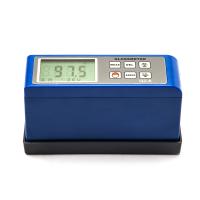
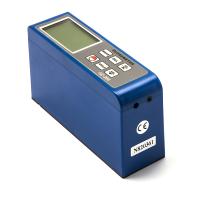
Gloss measurement angle problem
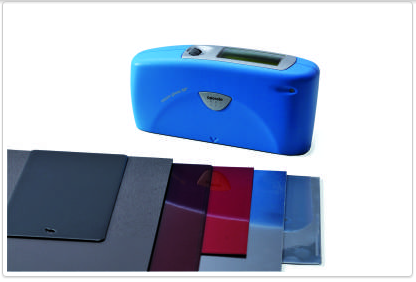
Micro gloss and swatches. Photo courtesy of BYK-Gardner.
luster
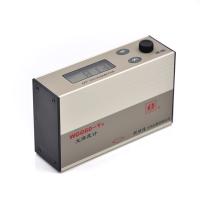
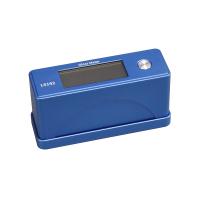
Gloss is an optical phenomenon caused when evaluating the appearance of a surface. The evaluation of gloss describes the ability of a surface to reflect directed light. A gloss meter measures specular reflection. The intensity of reflected light depends on the material and the angle of illumination. In order to obtain clear distinctions across the entire measurement range from high gloss to matte, 3 geometries (ranges) are defined.
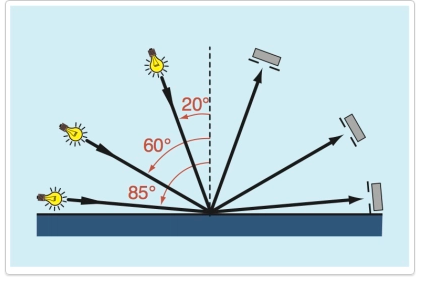
Define three angles to measure gloss. Photo courtesy of BYK-Gardner.
gloss angle
Using the 60º gloss angle as a reference angle, the working range for the 60º gloss is 10-70 GU (gloss units). This is considered a semi-gloss range. Below 10 GU or above 70 GU, 60º gloss measurements are not relevant for visual assessment of gloss. Therefore, for measurements above 70 GU, a 20º gloss meter is used for high gloss surfaces. For below 10 GU, use an 85º gloss meter. This is called a low gloss or matte finish.

Chart of 13 gloss samples and their measured gloss values in Gloss Units (GU). Below 10 GU and above 70 GU, the 60° curve is flat and no difference can be seen anymore. Need to switch to 85° or 20°.
Photo courtesy of BYK-Gardner.
There are two additional angles, 45º and 75º. These angles are industry specific for measuring paper and plastic films.
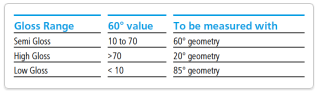
A diagram showing when to use each gloss angle. Photo courtesy of BYK-Gardner.

- 1Gloss inspection method of slurry inks
- 2Principle and Application of Glossiness Tester
- 3Working Principle and Application of Metal Gloss Meter
- 4Basic principle and application analysis of insulating paint gloss Detector
- 5Working principle and application analysis of film Glossmeter
- 6Principle and application analysis of microporous gloss meter
- 7 FZ/T 01097 Analysis of fabric gloss test method
- 8Evaluation and Application of Optical Properties of Powder coatings
- 9Coating coatings - Determination of surface gloss and Gloss meter