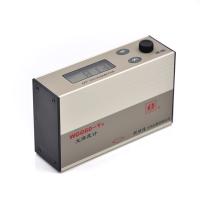
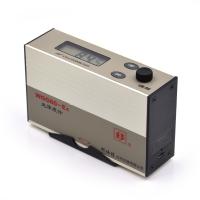
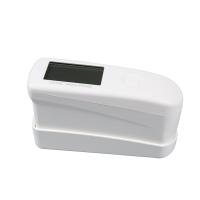
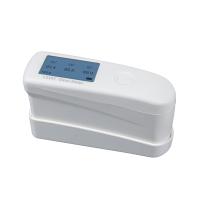
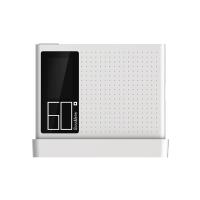
Gloss meter measurement meaning and working principle
Accurate color measurement goes beyond measuring the reflective portion of the visible spectrum. There are many other components like gloss, opacity, transparency, tint, etc. To increase customer loyalty, the same color is available in high-gloss, medium-gloss and matte finishes. However, the same color but due to the difference in the gloss, the look of the shade varies a lot. Another important factor that contributes to changing color perception is viewing light, angle, surface finish, etc. This is why instrumentation is becoming a very important part of any industry that utilizes color. Paint color measuring instruments are designed in such a way that all of these factors do not interfere with the observation.
For example, to measure opaque color, reflectance instruments are used, which exploit the phenomenon of measuring the visible spectrum reflected by surfaces. Transparent color, on the other hand, is measured by the principle of transmittance and measures the light absorbed by the surface. Typically, a device such as a Spectrophotometer is used for this measurement.
Gloss measurement
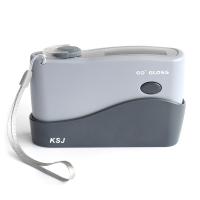
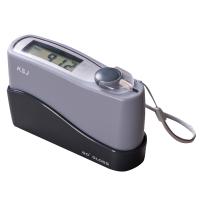
Gloss meters are used to measure the glossiness of surfaces. It is one of the important parameters of quality maintenance. As the paint application progresses, it is important to measure gloss to help catch wrong applications early and save time and effort. Additionally, it helps determine the degradation of coatings when exposed to actual operating conditions. Poor quality paints tend to tarnish due to exposure to weathering conditions, leading to early recoating requirements.
How Gloss Meters Work
Gloss meters have many uses in paint color measurement, especially in critical applications such as automotive where aesthetics play a major role. It is specifically designed to measure the glossiness of surface reflections. Typically, gloss is measured at three angles, 20°, 60° and 85°. Testronix's device works in three angles, that's why it's called a triangulation device. In addition to gloss, it also measures brightness and whiteness.

- 1Principle and Application of Glossiness Tester
- 2Working Principle and Application of Metal Gloss Meter
- 3Basic principle and application analysis of insulating paint gloss Detector
- 4Working principle and application analysis of film Glossmeter
- 5Principle and application analysis of microporous gloss meter
- 6 FZ/T 01097 Analysis of fabric gloss test method
- 7Evaluation and Application of Optical Properties of Powder coatings
- 8Coating coatings - Determination of surface gloss and Gloss meter
- 9The Importance and Method of Gloss Measurement of Paint Film
-
![KSJ WGG60-Y4 high-precision Glossiness Meter, special for thin film industry, built-in lithium battery]()
-
![KSJ WGG60-E4 Gloss meter built-in lithium battery]()
-
![CHINA LS195 Portable Glossmeter Cost-effective Gloss Meter 60 °/200GU]()
-
![CHINA LS197 three-angle Glossmeter 20 °/60 °/85 ° multi-angle measurement]()
-
![DONGRU DR61S Glossmeter 0-200Gs]() DONGRU DR61S Glossmeter 0-200Gs$ 314.00
DONGRU DR61S Glossmeter 0-200Gs$ 314.00 -
![CHNSPEC DG60 MAX single angle gloss meter 2000GU/60 °]()