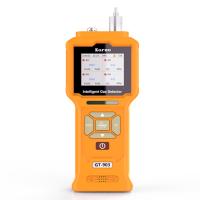
PIDs - Common equipment for emergency services responding to HAZMAT incidents
The versatility of the PID instrument makes it an important piece of equipment for emergency services in response to a HAZMAT event.
The ability of photoionization Detectors (PIDs) to measure low levels of volatile organic compounds (VOCs) makes them an important tool in the decision-making process following a hazardous materials (HAZMAT) incident. After an accident, chemical spill, or other incident involving hazardous materials, there are many unknowns. The speed with which these can be identified is key to response, containment and cleanup efforts. If the HAZMAT material is a VOC, the sensitivity of photoionization detection can measure low (parts per million - ppm) levels that could be toxic but not detectable by standard lower explosive limit (LEL) sensors, making it an ideal tool for assessing hazards Multi-tool in case of emergency. read more!
The near-instantaneous response of PID instruments, such as Ion Sciences Tiger VOC detection instruments, ensures that if conditions change in terms of payout of toxic gases or vapors, the perimeter can be adjusted accordingly.
PID for HAZMAT The versatile nature of the PID instrument makes it an important piece of equipment for emergency services in response to a HAZMAT event.
Initial Personal Protective Equipment (PPE) Evaluation - Using a PID instrument can greatly aid and speed up the decision-making process for determining the presence of toxic gases or vapors.
Leak Detection - When a gas or vapor escapes, it disperses and becomes diluted with the surrounding air, making it difficult to detect. This is where PID instruments excel.
Perimeter Establishment and Monitoring - The nearly instantaneous response of the PID instrument ensures that if conditions change in terms of disbursement of toxic gases or vapors, the perimeter can be adjusted accordingly.
Data Logging - PID instruments are capable of logging information with positive or negative results at set intervals or continuously.
Contamination from Spills - PID instruments also ensure that first responders can identify and, critically, eliminate any liquid present.
Cleanup and Decontamination - After the initial target of containing the spill, a PID unit can then be used to determine the level of contamination among the first responders themselves.
Remediation - Concentration levels for remedial actions are set by individual countries, and PID instruments provide a quick and efficient way to determine if an area is now free of pollution or needs further attention.
in conclusion
In conclusion, one of the great benefits of PID instruments in HAZMAT response situations is that while they are not always selective, they are small continuous monitors that provide immediate response to anyone using them. When the threat of toxicity of a compound outweighs its risk of explosion and accuracy and speed of response are of paramount importance, a PID instrument is a desirable choice. This makes them an invaluable tool in First Responders resources from start to finish.



- 1VOC Detector technology analysis: complete guide to principles, types and applications
- 2Make it easy for you to use the ionic science tiger VOC Detector
- 3UK ION SCIENCE Tiger VOC Detector screen display description
- 4British ion Tiger Tiger brand VOC Detector
- 5Common faults and maintenance of Tiger TIGER LT VOC Detector
- 6TIGER LT Series Handheld VOC Detectors
- 7Influence of hot pressing process and environment parameters on TVOC and formaldehyde release from particle board
王敬贤;沈隽 - 《生物质材料科学与技术教育部重点实验室》