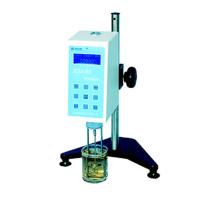
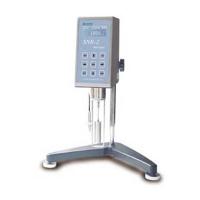
How to use Rotational Viscometer to get consistent and accurate test results
Most Rotational Viscometer specifications guarantee high test accuracy and repeatability. However, the instrument itself does not guarantee accurate results. Instrument setup and using the correct test parameters are key pieces of the puzzle.
Test parameters and turbulence are two key factors to consider when preparing to test with a Rotational Viscometer. Spindle, speed setting, and product temperature are some of the parameters that affect test results. Additionally, turbulence in the sample flow during testing can distort viscosity readings. Knowing how to manage these two factors can significantly improve the accuracy of your test.
The Key to Accurate Viscosity Testing
The first key to accurate viscosity testing is maintaining consistent test parameters. Here are the exact same parameters that every test you run requires:
product temperature
sample size
sample container
Main axis (use the same main axis - size and shape)
speed
Test time (time to run the test)
The second critical factor to consider when testing accurately is turbulence. It is necessary to ensure that the flow of product during the test is smooth or non-turbulent. You can confirm non-turbulent flow by making sure that the torque reading during the test is at least (and preferably greater than) 0.1 mNm. Ensuring non-turbulent flow is especially important for products with low viscosity. You may want to try running the test at a few different speeds before determining the speed at which you will get a satisfactory torque reading.
Scenarios for Precise Viscosity Testing
Two common programs that utilize viscosity testing are quality control and product development. In each of the above cases, there are strategies related to the two key factors above that you can use to ensure the accuracy of your tests.
Scenario 1: Quality Control Testing
When quality control testing shows that a product has a viscosity outside its usual range, the question arises: Is there something wrong with the product, or is the viscometer not working properly? There are steps you can take to answer this question.
First, check that the flow is non-turbulent and that the test parameters are exactly the same as the tests you ran on the previous batch. If your instrument has the ability to save test parameters for future use, do so. If not, include a list next to the instrument detailing the test parameters used for each product your firm tests.
A temperature control accessory (sometimes called a thermostatic accessory) may be necessary if the product is to be hotter or cooler than room temperature during the test. This accessory keeps the product at a consistent temperature for each test run. In the unlikely event that the product was at room temperature during testing, but you notice a significant change in viscosity with only a degree or two difference in temperature, you may also want to consider using a temperature control accessory to maintain accurate and consistent parameters.
If the test parameters are consistent with previous tests, either or both of the following can be performed, depending on the capabilities of the instrument. First, run the zero setting if the viscometer has that capability. The zero setting simulates a test with no spindle attached. Think of it like a "reset" button. Once done, test the product again.
If you still get unusual results, follow the calibration procedure for your viscometer, using a standard calibration oil.
Once the instrument failure is ruled out, it can be ensured that the abnormality of the test result is caused by the product itself, and appropriate measures are taken to solve the problem.
Scenario 2: Product Development
As with quality control testing, it is important to ensure non-turbulent and consistent test parameters during testing during the product development phase. Doing so allows monitoring of the impact of formulation adjustments on the product. If the flow is smooth and the test parameters are consistent with previous tests, you will know that any change in product viscosity is the result of a change in the formula.
When you're doing research and development (R&D), you don't always know what the test parameters should be. You may need to determine your own test parameters to use during product development. If so, here's what to consider for each parameter:
Temperature: Temperature changes always affect viscosity. You may want to consider testing your product at the same temperature that you expect it to be tested during quality control checks on the production line.
Number of samples and sample containers: These parameters depend on the spindle you choose. Each spindle has its own requirements regarding the required sample volume and which sample container to use. Some spindles have special cups or tubes that hold the sample, which allow for more accurate readings.
Spindle: The type of spindle you choose (coaxial cylinder, anchor, pendulum, disc, etc.) depends on your product. Most spindles, regardless of type, come in different sizes, each corresponding to a specific viscosity range. Sometimes your product may fit the viscosity range of multiple spindle sizes. In this case, select the spindle size to obtain non-turbulent readings (torque measurements above 0.1 mNm) at moderate speeds (not at the top or bottom of the instrument's speed range).
Speed: Select a speed that will give a torque reading above 0.1 mNm. If your product won't flow without force on it (think ketchup, mayonnaise, mashed potatoes, etc.), make sure the velocity isn't so fast that it creates a hole in the product around the spindle. If you can't do that, try a different spindle size and/or type.
Test time: Unless you have an application where it is important to know how the product reacts after the spindle has been turned for a specific amount of time (e.g. paint, viscosity decreases, the longer it is agitated), it will take a test of a minute or two at most to run. If time is not a factor in the results, anywhere from 20 seconds to 2 minutes is a good range to consider. Once you've chosen a time limit for your test, just make sure you run it for the same amount of time in every test thereafter.
Accurate viscosity testing is not as tricky as it sounds. Most instruments will give repeatable results if you clearly differentiate the test parameters for each product. Some viscometers allow you to save test parameters on the instrument, making it easier to prepare and run tests. Even if your instrument doesn't have this capability, most viscometers are still very user-friendly and it shouldn't be too difficult to manually enter the parameters for each test.