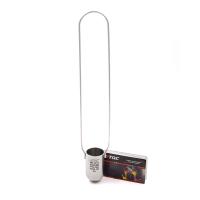
Common Methods for Determination of Coating Viscosity
1. GB/T 17 23-93 (Method for determination of paint viscosity)
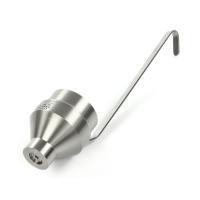
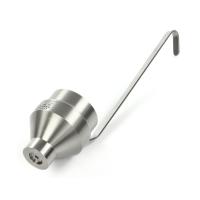
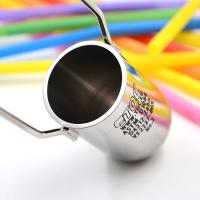
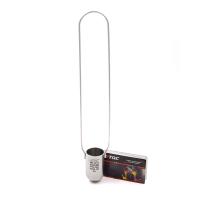
Tu-1 cup is suitable for measuring products whose outflow time is not less than 20s; Tu-4 cups is suitable for measuring products whose outflow time is less than 150s; falling ball viscometer is suitable for measuring products with higher viscosity. Measure the prescribed temperature of the sample to be 23.0 °C ±0.2°C, adjust the paint at this temperature for a period of time, plug the leak of the small hole with fingers or utensils, fill 100mL of paint liquid, and use a glass rod to remove air bubbles and excess The sample is poured into the groove to prevent the sample from falling below or exceeding the standard. Put a when you quickly remove your finger, start the stopwatch at the same time, and stop the stopwatch immediately when the sample stream is just interrupted ; Repeat the test, the difference between the two measured values should not be greater than 3% of the average value, and take the average value of the two measured values as the test result.
2. GB/T 9751. 1 - 2008 "Determination of Viscosity by Rotational Viscometer "
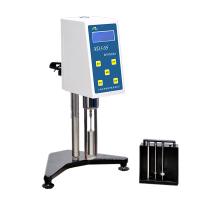
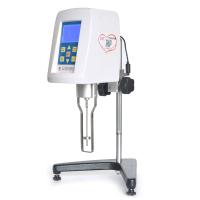
The temperature of the sample is controlled at 23.0 °C ±0.2°C . Clean, select, and install the rotor ( pay attention protecting the new shaft and hairspring), check the instrument, adjust the level, and remove the air bubbles in the sample.
When connecting the rotor, pay attention to protect the connecting head of the viscometer, and gently lift it with your fingers , so as to avoid strong collision and friction between the steel needle and the jewel bearing seat in the load-bearing system . The nut of the rotor and the threaded joint of the viscometer should be kept smooth and clean to avoid abnormal rotation of the rotor. The standard container for viscosity measurement is a 600mL beaker. In order to maintain the consistency of measurement conditions, the measurement of different samples should use a fixed volume container. Before taking a measurement, select the spindle and speed combination; a change in speed or spindle will result in a change in the viscosity reading. For more viscous samples, use a smaller rotor area and lower speed ; for lower viscous samples, the opposite is true.
Turn the lift knob to immerse the rotor in the sample up to the notch on the rotor stem. If it is a disc-type rotor, pay attention to immerse it in the sample at an angle (insert the rotor , and then install it on the head of the viscometer) to avoid air bubbles affecting the test results .
Before reading, it should be kept for a period of time to allow the reading to stabilize. The length of time depends on speed used and the nature of the fluid; in order to obtain high-accuracy test results, the torque reading should be within the range of 30~90. After the measurement, remove the rotor, clean it put it back into the box in which the rotor is installed.
NDJ-1 type reading: Indication reading X factor = result. For example, if the 4# rotor is used and the speed is 12r/min, then the coefficient is 500, if the indicator is 60, then the result is 60X500 = 30000 (mPa• s). NDJ-1 Rotational Viscometer coefficients are shown in Table 5-5.

3. GB/T 9269 — 2009 "Determination of Coating Viscosity Stormer Viscometer Method"
GB/T 9269-2009 is applied to the determination of the viscosity of architectural coatings. When measuring, the sample
Control the temperature at 23.0 °C ±0.2°C , clean, select, and install the rotor (pay attention to protecting the new shaft and hairspring), check the instrument, adjust the level, remove the air bubbles in the sample, immerse the paddle in the sample to be tested, and measure the The quality required for the rotational speed to reach 200r/min, the result is expressed in KU.

- 1Determination of starch viscosity by swirl/spin Viscosity meter
- 2Coating viscosity determination - viscosity cup Yiwen
- 3Measuring method of coating viscosity
- 4Determination of epoxy resin viscosity by Rotational Viscometer
- 5Zahn Cup Method for Determination of Coating Viscosity
- 6Apparent viscosity measurement
- 7Application of Viscosity Cup in Printing ink viscosity measurement
- 8How to measure the viscosity of paints with Ford Viscosity Cup?
- 9The use, principle and selection points of Rotational Viscometer