Online Viscometer should be used correctly!
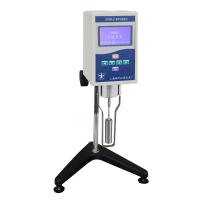
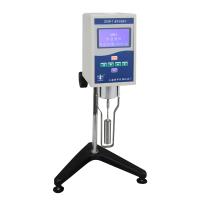
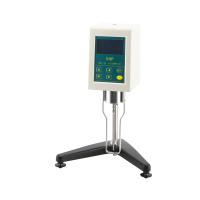
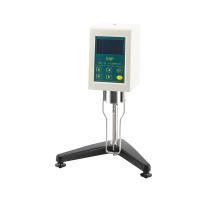
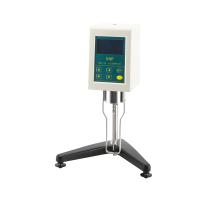
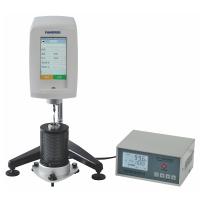
On-line viscometers are more and more widely used, and there are many types, and vibration-type on-line viscometers and rotary on-line viscometers are more widely used. Although the types are different, the installation method is the same, and the installation work needs to be done before use. The quality of the installation will directly affect the measurement results. Next, the online viscometer manufacturer will briefly introduce it to you.

1. Care should be taken when loading and unloading the rotor. When loading and unloading, the connecting screw should be lifted slightly for operation. Do not use too much force or force the rotor laterally to avoid bending the rotor.
2. Keep the end face and thread of the connecting screw and rotor clean, otherwise it will affect the shaking degree of the rotor. Please do not put the online viscometer with the rotor on its side or upside down.
3. When changing the measured liquid, please clean (wipe clean) the rotor and the rotor protection frame in time to avoid measurement errors caused by the mixing of the measured liquid.
4. After replacing the rotor, please input the new rotor number in time. After each use, the replaced rotor should be cleaned (wipe clean) in time and put back into the rotor rack. Please do not leave the rotor on the instrument for cleaning.
5. Please do not disassemble and adjust the parts of the instrument at will. The instrument and the rotor are one-to-one matching. Please do not confuse several instruments and rotors.
6. To move and transport the online viscometer, install the yellow cap on the connecting screw, tighten the screw, and put it in the packing box.
7. After installing the rotor, please do not rotate it for a long time without liquid, so as not to damage the shaft tip.
In addition, there is another point that needs our attention. After the online viscometer is turned on, the zero position must be detected first. This operation is generally carried out without installing the rotor, and then installed coaxially in the outer cylinder with a radius of R1. The inner cylinder with radius R2 is filled with viscous fluid, and the synchronous motor rotates at a stable speed, connecting the scale discs, and then drives the inner cylinder (that is, the rotor) to rotate through the hairspring and the rotating shaft, and the inner cylinder (that is, the rotor) is controlled by the fluid-based force. The greater the effect of the viscous moment, the greater the torque generated by the hairspring competing against it, so the greater the scale indicated by the pointer on the dial. Multiply the reading by a specific coefficient to get the dynamic viscosity of the liquid.



- 1Viscosity of polypropylene (PP) amide measured by NDJ Viscometer
- 2Online Viscometer Selection Guide
- 3Which Viscometer to Choose for Licorice Extract Viscosity Testing? How to Test?
- 4Application of Rotational Viscometer in juice viscosity test
- 5Working Principle, Classification and Application of Capillary Viscometer
- 6Principle, Characteristics and Application of Dial Viscometer
- 7Basic Principle and Application of Ceramic Viscometer
- 8Principle, Characteristics and Application of QND Viscometer
- 9Determination of epoxy resin viscosity by Rotational Viscometer


