Classification of Viscometers Commonly Used in Production
1. Introduction of Viscometer
Viscometer is an important physical parameter to measure the ability of liquid to resist flow. The measurement of viscosity is closely related to the fields of petroleum, chemical industry, electric power, textile, metallurgy and national defense. It is an important tool for industrial process control, improving product quality, saving and developing energy important means. In physical chemistry, fluid mechanics and other scientific fields, viscosity measurement plays an important role in understanding fluid properties and studying flow states. In the medical industry, measuring the viscosity of blood and physiological fluids is a newly developed diagnostics, especially an important diagnostic method for cardiovascular diseases, cancer, tumors and other intractable diseases.
Fluids are divided into Newtonian fluids and non-Newtonian fluids. The shear stress required for Newtonian fluid flow does not change with the change of flow rate, and the solution of pure liquid and low molecular substance belongs to this category; the shear stress required for non-Newtonian fluid is opposite to that of Newtonian fluid, and the solution, suspension, and Emulsion dispersion liquids and solutions of surfactants fall into this category.
Two, the type of viscometer
1. Rotational viscometer: Brookfield viscometer and the NDJ series in the domestic standard, there is also a Brabender viscometer commonly used to continuously track the viscosity changes in the starch gelatinization process. It is said that the same principle is also used, but I have never used it. Comment.
2. Capillary type: various forms such as Ubbelohde, Pinnock, Finn, and countercurrent.
3. Cup type: Engler viscometer, Ford cup in the United States, Zahn cup in Japan and Tu-4 cup in my country.
4. Falling ball type.
5. Others: One can measure the viscosity of glass or ceramic droplets melted in a heating furnace, and can measure viscosity, surface tension and detection angle, and the temperature range is from room temperature to 1000°C or 2100°C.
Viscometers commonly used in the production process include Rotational Viscometers, ultrasonic viscometers and capillary viscometers.
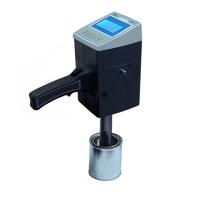
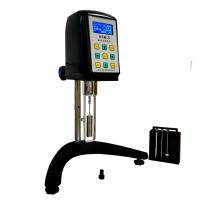
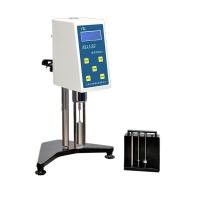
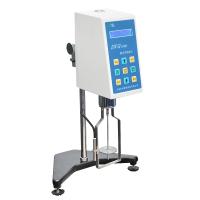
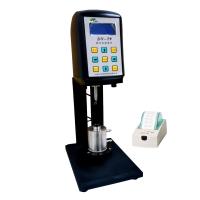
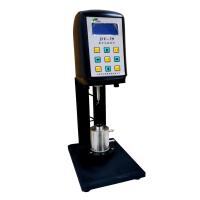
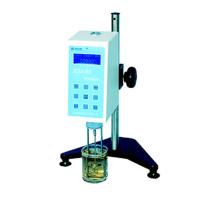
Rotational Viscometer: A viscometer with a rotational measurement system. It has a wide variety: according to the measurement parameters, it can be divided into torque measurement type (speed constant) and speed measurement type (torque constant); according to different device structures, it can be divided into coaxial cylinder type and cone plate type. Figure 1 is a torque measuring viscometer with a coaxial cylinder structure. When the outer cylinder rotates at a certain speed, the viscosity can be expressed by measuring the torsional moment on the shaft of the inner cylinder. It can measure absolute viscosity, is suitable for high temperature and high pressure, and is often used in industrial production such as chemical fiber, paper making, and resin polymer.
Ultrasonic viscometer: composed of ultrasonic detection elements and electronic instruments (Figure 2). When the electronic instrument outputs a pulse current to excite the iron-cobalt-vanadium shrapnel immersed in the measured liquid, due to the magnetostrictive effect (see piezomagnetic sensor), a mechanical vibration that decays with time is generated. The viscosity of the liquid can be expressed by measuring the attenuation speed of the shrapnel in the liquid by the measuring circuit. The detection element is temperature-resistant up to 300°C, and is also resistant to high pressure and corrosion. It is suitable for chemical, petroleum, papermaking, rubber, plastic, paint and heavy oil burning furnace control, etc.
Capillary Viscometer: An instrument that uses a capillary tube to measure the viscosity of a fluid. The behavior of fluid flowing through a capillary is described by Poiseuille’s equation: η=(πr to the 4th power pt)/(8lv) where η is the viscosity coefficient, r is the capillary radius, l is the capillary length, and P is the pressure at both ends of the capillary Difference, v is the volume of liquid that flows through, and t is the time of flow. There are many measurement methods for this kind of viscometer. It can measure the time for a certain volume of liquid to flow through the capillary under a certain pressure difference, and can also measure the volume of the liquid flowing out under a certain pressure difference per unit time. It can also specify a certain flow rate to measure the capillary. pressure difference across the ends. The viscometer in Figure 3 uses the metering pump to pass the measured liquid through the capillary at a certain flow rate, and then uses the differential pressure gauge to measure the pressure difference at both ends of the capillary, which can indicate the viscosity value. The capillary viscometer has a wide measurement range, high precision, simple and easy maintenance, and can be used for high pressure, but it has high requirements for the cleanliness of the measured liquid. Suitable for measuring lubricating oil, fuel oil, etc.


- 1Viscosity of polypropylene (PP) amide measured by NDJ Viscometer
- 2Which Viscometer to Choose for Licorice Extract Viscosity Testing? How to Test?
- 3Application of Rotational Viscometer in juice viscosity test
- 4Working Principle, Classification and Application of Capillary Viscometer
- 5Principle, Characteristics and Application of Dial Viscometer
- 6Basic Principle and Application of Ceramic Viscometer
- 7Principle, Characteristics and Application of QND Viscometer
- 8Determination of epoxy resin viscosity by Rotational Viscometer
- 9Rotational viscometer selection suggestions


