The professionalism of the operator can be seen from the operating habits of the Viscometer
旋转粘度计作为一种精密仪器,在使用中对操作人员也有专业性的要求的。
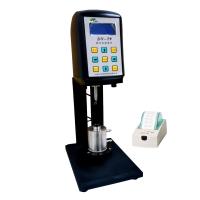
1. Select the rotor speed: use an appropriate rotor and speed to get a correct viscosity value. At the beginning of viscosity testing, a better way to select the rotor and speed is trial and error, and adjust the viscometer percentage scale between 20% and 90% or between 10% and 90% (based on the instrument alarm limit prevail), when the percentage meter scale is within this range, the measurement accuracy can be guaranteed. If the percentage scale exceeds 90%, select a slower speed or smaller rotor. Conversely, if the percentage scale is less than 10% or 20%, select a higher RPM or larger rotor.
2. Rotor and protective frame: Each rotor needs to be checked before use. If the rotor has corroded or changed shape, the measured viscosity will not be accurate. When the new rotor is found to be defective or damaged in shape, please contact the manufacturer to obtain a new rotor. Before installing the rotor to the viscometer, the protective frame must be installed, which can protect the rotor and define the fluid boundary conditions. When installing the rotor, please pay attention to lock it correctly in the left helical direction. In order to avoid damage to the bearing, the protective frame needs to be used at any time.
3. Viscosity measurement skills: Like many precision instruments, the correct operation method helps to improve the working efficiency of the digital viscometer. The introduction of each operation step can be found in the operation manual of each unit in the instruction manual, and this section does not repeat these parts. This section will provide some advice and guidance, read these complete basic instructions, you can go further to complete many accurate measurements.
4. Sample tank size: We suggest that when measuring viscosity, the inner diameter of the sample tank should be 70mm or larger. Usually a 400ml beaker container is sufficient. Using a beaker with a smaller diameter will result in a larger measurement value, especially when using No. 1 and No. 2 rotors, the error is very obvious. When using a smaller sample cell, it is easy to note this in the results and ignore possible calibration errors. The correlation between these data is correct as long as the same sample well is used throughout.
5. The immersion status of the rotor: the rotor needs to be immersed in the sample until it reaches the mark, and the incorrect position will make the viscosity data incorrect. In some fluids, the sample changes its rheological state due to the immersion of the rotor. To avoid this situation, we recommend inserting the spindle at different positions on the sample and moving it horizontally to the center of the sample well before connecting the spindle to the viscometer.
6. Keep records: In the steps of viscosity measurement, we suggest that data records are required. This includes the type of digital viscometer, type of spindle (including accessories), speed, percent torque, sample well size, whether to use a protective frame, etc. We recommend making yourself a record sheet that accompanies the viscosity measurement.

- 1Viscosity of polypropylene (PP) amide measured by NDJ Viscometer
- 2Which Viscometer to Choose for Licorice Extract Viscosity Testing? How to Test?
- 3Application of Rotational Viscometer in juice viscosity test
- 4Working Principle, Classification and Application of Capillary Viscometer
- 5Principle, Characteristics and Application of Dial Viscometer
- 6Basic Principle and Application of Ceramic Viscometer
- 7Principle, Characteristics and Application of QND Viscometer
- 8Determination of epoxy resin viscosity by Rotational Viscometer
- 9Rotational viscometer selection suggestions


