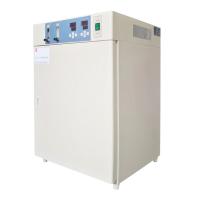
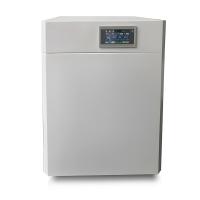
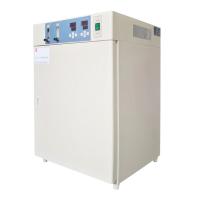
Several Important Factors to Consider When Buying a CO2 Incubator
Really do your research into what CO2 Incubators are on offer
Before you get a new CO2 Incubator for your lab, you should learn about their most important quality characteristics. Here we'll show you what factors into your purchase, and the criteria that should fit your decision.
Important things when growing cell cultures are obviously the cleanliness of the environment and protection from contamination. However, the question of whether this cleanliness can be guaranteed in the long term is also important - the most critical factor here is the design of the CO2 interior of the Incubator. How to handle and clean the equipment easily and efficiently? The interior design also influences which applications are possible, so this needs to be effectively researched beforehand. A humidity management system protects your cultures from drying out, while the CO2 gas supply ensures that an optimum pH is achieved in the cell culture medium. As a priority when buying your CO 2 Incubators check to provide these basic features. Of course, you also need to consider the cost-benefit ratio when purchasing laboratory equipment. Think of your CO2 Incubator as a long-term purchase and consider the costs you will incur to maintain the unit.
Before you buy, keep in mind the potential risk of contamination!
According to a study by the health economist Prof. Dietmar W. Hutmacher, the average cost of in vitro experiments for cell cultures is about 9,000 Euros. However, if contamination occurs, the experiment is completely useless and ends up costing more than buying a new unit. So what weaknesses should you pay attention to when buying? REMEMBER: It is an internal fan and any type of fixture that provides a colonization surface. Less is more - so a desirable interior should have as few fixtures as possible. The simpler the design of the CO2 Incubator, the quicker and easier it is to sterilize by spraying and wiping. Good units also offer a standard hot air sanitizing option.
Master complex tasks with ease - fully handle
The creation of cell cultures is a complex and complex process that requires a high degree of concentration, so the laboratory equipment used should not make the job more difficult. Components of the CO Incubator should be easy to install and remove, as this process step is required after each experiment. The time required for these tasks varies widely and can add up quickly if installation is a laborious process. The standard temperature range for hot air disinfection indoors is 160 to 180 degrees Celsius. When desired, it can be easily controlled at the touch of a button. To enable you to directly evaluate and share measurement data, the CO2 Incubator should have an Ethernet interface.
Humidity management without contamination risk
What's a good way to stop cell cultures from drying out?
The answer is an effective humidification system that ensures a high level of humidity in the interior air at all times. This is achieved by placing an easily removable water pan inside, providing high relative humidity (RH) of 90% to 95%, and guaranteeing short humidity recovery times.
Humidity management is a key factor: In practice, it is impossible to avoid doors being opened during observation. Remember: the cells will not suffer any damage during this process.
The results of effective humidity management are:
Evaporation of the medium is kept to a minimum due to high humidity
Interior walls kept dry by humidity limitation
What are the options for homogeneous atmospheric mixing?
You have two options for mixing atmospheres:
Natural convection, no internal fans
Simple gas inlet for atmospheric mixing with an additional fan inside
The latter is certainly not advised, as there will inevitably be places where contamination can hide and airborne germs can certainly spread! This would result in a potential source of contamination.
The method of measurement is also an important factor. CO sensors can be located inside and outside the incubation chamber. External CO2 sensors are more complex and prone to failure. Conversely, a CO sensor for CO inside the Incubator is more accurate - as it requires direct measurement in the incubation chamber. Internal sensors need to be able to withstand the temperatures reached during hot air sterilization - but good products can already do this. Alternatively, it is possible and acceptable to use a plug-in sensor.
Your CO's In-House Design 2 Incubator
The slogan "less is more" really applies to the interior design of the CO 2 Incubator. The fewer corners, angles, shafts or screws, the better when it comes to preventing contamination. Smooth interior walls, satisfactorily made of stainless steel, are required so the surface can be hygienically cleaned. But "less" doesn't mean you should end up with fixed shelves - you should be able to decide for yourself how many shelves you want and what height they're going to be.
Be critical of looks too: Can the CO2 Incubator be easily and safely stacked and then easily handled?
Keep in mind your co-workers' running costs for 2 Incubators!
When operating a CO2 Incubator, maintenance and cleaning costs are unavoidable. Running costs relate to consumables and wearing parts, as well as cleaning agents and, of course, employees. Properly cleaning a CO2 Incubator can take anywhere from one to five hours. The more sophisticated the design, the shorter the working time and therefore the less material used. Be sure to consider these factors before making a decision.
A high quality CO2 Incubator will ensure your experiments are a success
Don't just go for the cheap models when buying your co-workers 2 Incubators, because just one failed experiment can cost a lot more than the purchase price. Better to stick to the standards and requirements that apply to your field of study and consider the factors described here when purchasing. Is the equipment cleverly designed for ease of use and maintenance? Does it have a good humidity management system and a well thought out method of air delivery? Is it cost effective and low maintenance to operate?
To ensure you make a decision for your project, we summarize the important aspects in our guide titled "Six Point 2 Incubators You Need to Consider When Buying a CO" Download the guide for free, and use it as an aid in making objective decisions !




- 1What is a laboratory Incubator?
- 2What is a CO2 Incubator? Why do you need a CO2 Gas Detector?
- 35 new application fields for CO2 Incubators
- 4Carbon Dioxide Incubator Selection
-
![CHINA CHP-80S Co2 Incubator Water jacket 500W/80L]()
-
![HUITAI HH. CP-01-ⅱ Co2 incubator volume 160L]()
-
![CHINA CHP-160Q Co2 Incubator 160L/700W]() CHINA CHP-160Q Co2 Incubator 160L/700W$ 1992.00
CHINA CHP-160Q Co2 Incubator 160L/700W$ 1992.00 -
![CHINA CHP-80Q Co2 Incubator 500W/80L]() CHINA CHP-80Q Co2 Incubator 500W/80L$ 1468.00
CHINA CHP-80Q Co2 Incubator 500W/80L$ 1468.00 -
![CHINA CHP-160S Co2 Incubator Water jacket 160L/700W]()
-
![YIHENG BPN-240RWP Co2 Incubator 240L/1000W]()