How to choose the right laboratory balance?
Balances are an essential part of laboratory work, and the importance of choosing the right equipment for efficient performance and accurate results cannot be overemphasized. There are many factors to consider when choosing the right laboratory balance for the job.
Things to Consider When Buying a Balance
When purchasing a new electronic balance, the first step is to consider the type of application that will be performed. Do you need your balance to include built-in functions in addition to weighing, such as check weighing or formulation? Where will the electronic balance be used - in the laboratory or in the field? Do you need to connect it to other devices?
The second step is to determine the readability accuracy your balance requires. Readability is the smallest reading a balance can display. Your experiments may require the precision of the results. If you are weighing chemicals to the nearest 10mg (0.01g), a balance with a readability of 0.001 is recommended.
Next, you need to know how much you need to weigh to complete your daily tasks. Weighing is the maximum weight that the balance can measure. When calculating capacity, remember to include the weight of any containers you may be using.
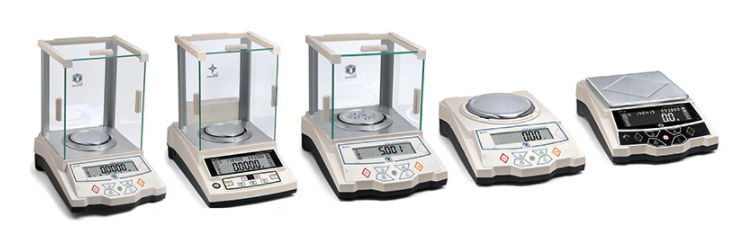
Most balances are capable of weighing in different units. Certain applications require specific weighing units. For example, science lab applications typically require grams and milligrams, and jewelry typically requires carats. The fourth step is to note down the units of measure required for your task.
The fifth step is to determine the size of the pot. The weighing pan needs to be large enough to accommodate the items being weighed, as well as the container that will hold them during the weighing process. Scale location can also play a role in choosing pan size; space constraints may mean choosing a smaller platform.
Finally, you should also consider whether you need additional features:
Do you prefer internal or external calibration?
Do you need to weigh below the scale?
Do you weigh live, animals - is live weighing important?
To collect and log data, would a USB or RS-232 connection help?
Does your balance need to calculate specific gravity? Some balances do this automatically.
Are you handling or weighing any substance or item that might require consideration of an all metal or plastic enclosure?
Do you have a workplace issue with your electronic balance that requires a locking feature?

Choosing the right electronic balance is an investment; the right tool can improve efficiency, reduce waste, and even save money in the long run. Buying the wrong balance means sacrificing precision and accuracy; this can be a costly mistake.



- 1Proper Use of Electronic Balance
- 2What is the difference between 10,000-level and 100,000-level Electronic Balance?
- 3Selection scheme of solar cell slurry performance testing instrument
- 4Offset printing ink laboratory performance testing instrument scheme
- 5Method of using electronic balance and its structure
- 6How should the calibration weights of precision balances be handled and maintained?
- 7How to choose and use precision electronic balance test weights?
- 8How to choose a precision digital electronic balance?
- 9How do university labs properly use analytical scales?