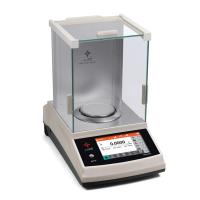
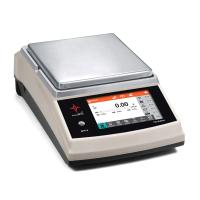
Do you know when to change the lab balance?
You love your lab balance - you've had it for years and come to rely on it so much that it almost feels like an extension of your own hand. But how long is too long to use the same balance? How do you know when it's time to replace it?
Of course, one of the most important ways to extend the life of your balance is to have it serviced regularly by a certified technician. A technician can of course advise on whether or not the device should be replaced. Some questions you should consider are:
Does your balance need more maintenance time than ever?
Does your balance keep its calibration, or does it need to be recalibrated after just a few tasks?
Are its weighing results consistently erratic, with drift or unexplained jumps? Are stability and repeatability incorrect?
Are there signs of corrosion inside the pot or at access points such as communication ports?
Have your weighing needs changed, or do you need more advanced functionality, such as updated communication interfaces, data storage or PLU?
Answering "yes" to any of these questions doesn't necessarily mean you need to replace your balance. For example, static electricity may cause drift or instability, and anti-static equipment such as ionizers may solve the problem. Vibration from nearby equipment could also be the cause, in which case an anti-vibration table may be necessary. For best performance, keep the balance free from vibration, excessive heat or humidity, direct sunlight, chemical vapors and drafts.
Diagnose the problem
If you have a problem with your balance, first try the troubleshooting tips contained in the product manual. You might be pleasantly surprised to find a quick fix! A repair technician can rule out many problems, such as twisted load cells, faulty internal calibration motors and even software issues.
If your balance requires more frequent maintenance or calibration than ever, you need to consider lost productivity due to downtime in addition to money spent on repairs or technicians.
If you see signs of corrosion, you need to address the possible cause of the rust (usually excess moisture) before considering cleaning it or replacing the balance so the same thing happens with the new unit.
What functions does the balance need?
Next, review your current needs. Does your balance do everything you need it to do, even if it's in good shape? Consider the efficiencies new equipment can bring to your laboratory operations.
Maybe you have an older balance that can't communicate with your computer, USB flash drive or printer. Some of today's balances even include multiple options, such as RS-232 and USB, in the same device (like Adam's Equinox range). Can your balance format printouts that comply with Laboratory Practice? All Adam analytical balances and many Adam precision balances are capable of delivering GLP compliant outputs. Can your balance store ingredients like Solis when making recipes?
- 1Discussion on Balance Weighing Method
- 2Correct correction method of thousand electronic precision balance [including video demonstration]
- 3 What is the difference between readability and accuracy of a balance?
- 4Types and maintenance methods of scales and scales
- 56 features to look for when buying a lab scale
- 6How to choose laboratory balance?
- 7Huazhi balance full series selection comparison table
- 8Coatings - Test method for storage stability
- 9Balance weighing method