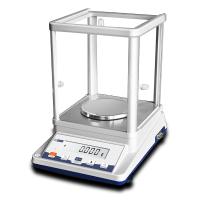
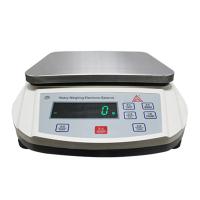
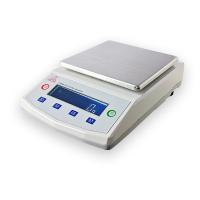
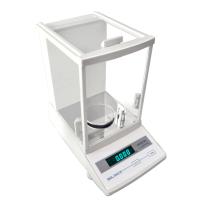
What does the GLP of Electronic Balance mean? What is the significance for experiments?
In the weighing industry, you will often see the term "GLP compliant". GLP stands for "Good Laboratory Practice," but what does it actually mean?
First introduced in 1972, GLP is a quality assurance system used by laboratories and other organizations to ensure the consistency, completeness and reproducibility of nonclinical research and test data. (Clinical research utilizes good clinical practice, the Declaration of Helsinki, and other regulations that protect the safety of human participants.) GLP regulations have nothing to do with the content (scientific or technical) of the research, nor does it assess the value of the research – it's just about quality assurance.
A common selling point of laboratory balances, such as Adam Equipment's analytical and precision balances, is that their printouts are GLP compliant. Among other things, this means that they include certain details for data tracking.
What does GLP contain?
The five points of GLP are:
resource. The responsibilities of researchers need to be clearly defined and their qualifications and training documented. Equipment also needs to be in proper working order following qualification, calibration and maintenance procedures.
characterization. It is necessary to know as much as possible about the materials used in the study (i.e. test items and test systems).
rule. Each test should be performed using a protocol (providing design and timeline) and written standard operating procedures to ensure reproducible results.
result. The raw data need to reflect the procedures and conditions of the study, while the final report (which needs to be provided to the regulatory agency) needs to include a description of how the study was conducted and a scientific interpretation of the data. An easily accessible archive of raw data also needs to be preserved for many years.
quality assurance. GLP requires that an independent team be assigned to conduct studies to ensure compliance with GLP standards.
How does GLP affect the balance of payments and scale?
GLP regulations cover equipment, including suitability for research: for example, an analytical balance with a readability of 0.0001 g is unnecessary for a scientist tracking the weekly weight of mice. According to GLP guidelines, the study director will define the suitability of the equipment, although with analytical equipment, formal testing or qualification is usually required during the selection process.
Calibration of the balance is also required for research use and the frequency of calibration is defined as part of the standard operating procedure above. Documentation of calibration and other equipment testing also needs to be retained.
Printouts for quality control, data tracking and traceability are an essential part of GLP. To make it GLP compliant, the printout should include information such as the time, date and ID of the weighing device. Many of Adam's balances - including the Equinox, Eclipse and Solis ranges - offer GLP compliant output that can be printed by thermal or impact printers.

- 1Proper Use of Electronic Balance
- 2What is the difference between 10,000-level and 100,000-level Electronic Balance?
- 3Selection scheme of solar cell slurry performance testing instrument
- 4Offset printing ink laboratory performance testing instrument scheme
- 5Method of using electronic balance and its structure
- 6How should the calibration weights of precision balances be handled and maintained?
- 7How to choose and use precision electronic balance test weights?
- 8How to choose a precision digital electronic balance?
- 9Edham Adam SAB & SPB Electronic Balance Structure