How to choose laboratory balance?
Bench scales are versatile and used in a wide variety of industries with a wide range of applications. Typically, bench scales are small enough to fit on counters, workstations, and tables. Despite their small footprints, they often pack useful functions and features. In this article, we'll take a look at bench scales and the applications they're suitable for.
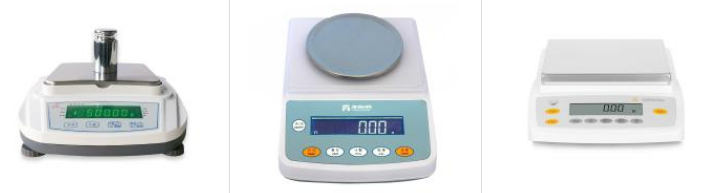
What defines a bench scale?
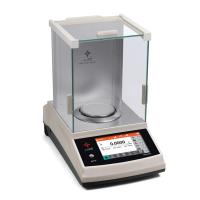
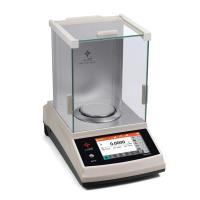
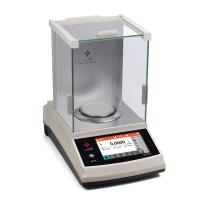
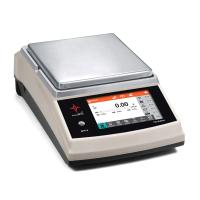
Bench scales are designed to sit on a table or counter during weighing. They have a small footprint but still include a large weighing pan. Some bench scales have integrated indicators and keypads and are therefore considered "compact." Others include a platform with a removable indicator that can be wall-mounted for easy viewing.
Bench scales are an intermediary: they're not designed to weigh very delicate compounds or very heavy objects. The Adam bench scale has a capacity between 5lb/2kg to 300lb/150kg and a readability between 0.0005lb/0.2g to 0.01lb/5g. They are available in a variety of settings and come in many different platform sizes and housing styles. Some bench scales are designed specifically for one application (such as counting or checkweighing), while others are multifunctional, allowing one scale to be used for multiple applications.
Affordable and easy-to-use bench scales provide the power and precision needed for a variety of businesses from small offices to large factories. Bench scales can provide a professional weighing solution on a limited budget and can be used almost anywhere, from the kitchen to the veterinarian's office, industrial site or retail store.
Application of Bench Scale
Common applications associated with bench scales are checkweighing and counting. Some scales are dedicated to one type of scale (such as the Cruiser bench-counting scale), while others allow users to take advantage of both functions. On the assembly or production floor, bench scales are ideal for weighing raw materials, piece counting before packaging or during quality control.
Bench scales of varying capacities can be used to weigh boxes during shipping and receiving operations to ensure accurate shipping costs. The scale mounts nicely on a countertop and easily connects to nearby computers and printers for efficient use.
Grocery stores and stores use bench scales to weigh food such as fruit, meat, candy, ice cream, and more. Bench scales are also used in production to weigh ingredients when making small batches of items like food, soap and candles.
Features to Look For When Buying a Bench Scale
To ensure easy cleaning, look for bench scales with stainless steel platforms and sealed keypads. The overload protection function ensures that the scale will not be damaged by excessive weight and can make it last longer.
When used in a quality control setting, checkweighers such as the Cruiser (CKT) allow the user to set a weight limit. If an item on the scale falls below, exceeds or exceeds a preset limit, the display on the CKT changes color for an at-a-glance display. Some scales have an audible alarm, which can come in handy during the checkweighing process.
For portability, buy a scale that includes rechargeable batteries in addition to the AC adapter. The Latitude Compact Bench Scale has a rechargeable battery so it can be moved or used in places where access to electricity is difficult. There are good power options available, and the Latitude can even be charged from a USB source for convenience. When looking for a bench scale with a rechargeable battery, it's important to pay attention to how long the battery will last without recharging.
Before choosing a new scale, there are several power saving options to consider. To save battery life, some scales allow the user to program the backlight to be "on," "off," or "only on when weighing." A programmable or automatic power off feature means that the scale turns off after a certain amount of time when not in use.
Interfaces and connections are important considerations for the use of some benchtop balances. Because they can be placed on a counter next to a computer or printer, bench scales are easy to integrate into certain systems (such as shipping operations). Better equipped with a scale with RS-232 and/or USB interface to connect to a computer and print the results. You can also pair your bench scale with the Adam DU for data analysis and graphing. This is also useful for tracking records during stocktaking.
- 1Discussion on Balance Weighing Method
- 2Correct correction method of thousand electronic precision balance [including video demonstration]
- 3 What is the difference between readability and accuracy of a balance?
- 4Types and maintenance methods of scales and scales
- 56 features to look for when buying a lab scale
- 6Do you know when to change the lab balance?
- 7Huazhi balance full series selection comparison table
- 8Coatings - Test method for storage stability
- 9Balance weighing method