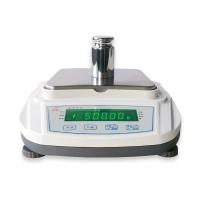
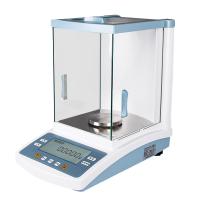
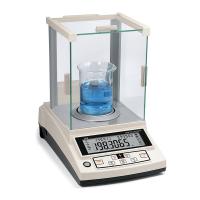
What is analytical balance? What are the common functions?
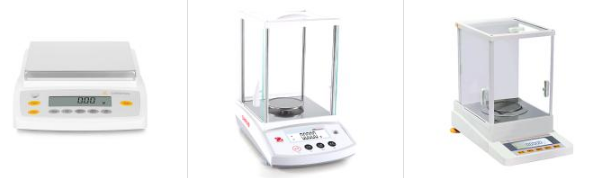
Analytical balances are highly sensitive laboratory instruments designed to measure mass accurately. Their readability is between 0.1mg-0.01mg. Analytical balances have draft shields, or weighing chambers, to protect very small samples from drafts. They are designed to detect very small increments, so the smallest vibration or breeze can affect the results. Analytical balances should therefore be used in dedicated rooms with as few disturbances as possible. Analytical balances require careful monitoring and frequent calibration. Most analytical balances feature both automatic internal motorized calibration and external weight calibration. You can get the calibration weight setup here.
What makes an analytical balance different from other balances?
Analytical balances are designed for very accurate measurements of very small samples. Precision balances usually have a higher capacity than analytical balances and typically provide results in 0.1g, 0.01g or 1mg. Analytical balances are better readable, more sensitive to changes, and can detect small changes in mass. Precision balances come in a wider variety of body styles and options, but are readable to no more than three decimal places. For acute measurements in the laboratory, analytical balances are the right choice.
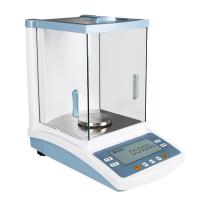
Unlike top load balances, analytical balances like the Nimbus typically have a weighing chamber that encloses the weighing pan with a glass door to prevent vibration or draft disturbances. The weighing pan is usually smaller than a precision balance and can only hold a small amount of sample.
Common functions on analytical balances
Analytical balances usually have many functions. For example, most of them have counting and check counting apps. These are useful when counting pills, ingredients, or very small pieces. Dynamic weighing is also very useful as it allows laboratory professionals to weigh unstable samples such as liquids, small animals or insects. Percent weighing enables faster and more efficient formulations and is very convenient in chemical and pharmaceutical applications. Despite the small capacity of the balance, the cumulative volume ensures that you get a large result; instead of putting all the material on the balance at once, you can accumulate the results of the doses or packages to receive the total without having to put all the product at the same time on the scales.
The importance of GLP/ISO-compliant reporting for laboratory work cannot be overemphasized. Automatically filling scales into relevant fields saves time and allows researchers to spend more time on the job and less time required. This feature is especially important for quality control.
A bright, bright display with multilingual software allows the balance to be used in multiple countries or by multilingual staff and students.
Analytical balances take longer to stabilize than precision balances. Liquid level indicators and adjustable feet are very important. Balances need to be stable to produce reliable results.
Useful accessories to use with your analytical balance
A printer is available as well as a USB port for storing test results. You can also pair your analytical balance with software like Adam DU for further data analysis of the results. A security lock prevents theft and ensures that the balance cannot be removed from the room.
Density kits are popular accessories in laboratories and classrooms as they allow the balance to perform density and specific gravity measurements.
USB and RS-232 interfaces are useful for sending data to computers and printers, saving time and facilitating in-depth analysis later. Combine this with GLP/ISO compliant printouts to save even more time and effort.
Better keep calibration weights on hand to ensure you can calibrate your balance often. A vibration-damping table can create a dedicated workstation and calibration station and ensure that the balance is stable and has fewer disturbances that compete with reliable results in the measurement.



- 1How does the analytical balance work?
- 2Offset printing ink laboratory performance testing instrument scheme
- 3Construction and use of electro-optic analytical balance
- 4How do university labs properly use analytical scales?
- 5Edham Adam Luna series electronic analytical balance models
- 6How to calibrate analytical balances?
- 7How to avoid weighing errors in precision analytical balances?
- 8The choice of laboratory precision analytical balances is all about accuracy
- 9Factors Affecting the Weighing Accuracy of Precise Analytical Balances