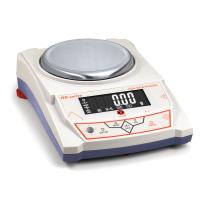
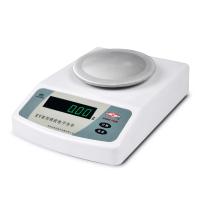
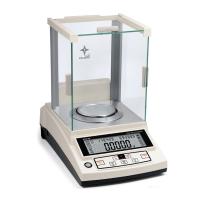
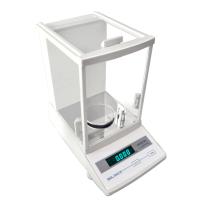
What is the difference between Electronic Balance internal calibrate and external calibrate? How to choose?
If you shop for precision laboratory balances, you may have noticed that some balances offer internal calibration as an option. If you need to use extremely precise instruments in complex applications, then you know the importance of calibration. But if you need to choose between two calibration options, which one should you choose? How are they different? What are the pros and cons? All balances should be calibrated, but the higher the resolution of the weighing instrument, the more important the calibration. Below we'll dive into the different settings and help you choose the one that's right for you.
You can define calibration as the act of verifying the reading of an instrument when compared to a known standard (in the case of a balance's mass) that reflects a standard of measurement. Calibration essentially verifies that an instrument's results are accurate, helping to reduce errors and uncertainties in measurements.
What is external calibration?
External calibration is the process of manually calibrating a balance with a predetermined mass. Basically, the user sets the weighing instrument to be calibrated (either manually or through the menu with a digital balance), places the calibration mass on the balance, and verifies that the displayed weight is correct. For examples of external calibration, you can watch a tutorial on external balance calibration on our YouTube channel, or read the product manual.
How to calibrate your balance externally
To perform an external calibration, you need a calibration mass suitable for the balance (semi-micro balances have much smaller weight increments than large-pan precision balances). Weight kits come with some calibration weights, a case to store the weights, and gloves or tweezers for handling the weights. Calibration masses require extra care; they need to be properly maintained to maintain the same weight. External calibration depends on several factors: the condition of the calibration quality and whether the user has calibrated the instrument correctly.
This is a manual process, so make sure to incorporate external calibration times into your routine when working with weighing instruments. Most balances can be calibrated externally. Some balances offer the user the option of internal and external calibration. Some instruments and organizations require external calibration to be performed as a service by an authorized company.
What is internal calibration?
Internal calibration is the process of using the balance's internal mechanisms to calibrate itself. This is usually done using the balance's display and keypad menus. This option adds cost to the balance price, but the user does not need to purchase a complete calibration kit to calibrate the balance. This feature is typically found on high-end analytical and microbalances.
How to Set Up Automatic Internal Calibration
Some balances with internal adjustment feature automatic internal adjustment. This adds cost to the price of the balance, which is usually only available on laboratory balances (eg, precision, analytical and semi-micro balances). Users can set the balance to automatically calibrate at predetermined intervals, a feature that is useful for busy laboratories if the environment in which the balance is located experiences temperature changes, power outages, etc. The user does not have to perform the calibration process and there is no chance of anyone forgetting, so the balance provides reliable results and the user can focus on preparing samples or other tasks. For example, the balance can also be set to calibrate itself when the laboratory is closed so that it is always available while people are working, maximizing productivity.
So which option is right for me?
it depends. If you have time for routine calibration and are on a tight budget, balancing with an external calibration can be a good option. If you don't want to buy and maintain a scale or spend valuable working hours calibrating your balance, internal calibration will save time. Automatic internal calibration can save you time and money in the long run if you know that there are many small changes in your environment that can affect the accuracy of your balance. Consider how much time you will spend calibrating your balance and whether that time could be better spent on other tasks.



- 1Proper Use of Electronic Balance
- 2What is the difference between 10,000-level and 100,000-level Electronic Balance?
- 3Selection scheme of solar cell slurry performance testing instrument
- 4Offset printing ink laboratory performance testing instrument scheme
- 5Method of using electronic balance and its structure
- 6How should the calibration weights of precision balances be handled and maintained?
- 7How to choose and use precision electronic balance test weights?
- 8How to choose a precision digital electronic balance?
- 9Edham Adam SAB & SPB Electronic Balance Structure