Preparation of silicon nanomaterials for oxidation with Isopropanol
experiment procedure
(1) Experimental materials
Orthoethyl silicate (TEOS, chemical formula Si(OC2H5)4), isopropanol (analytical grade), oleic acid (C18H34O2)
(2) Instruments and equipment
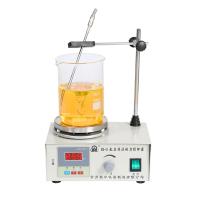
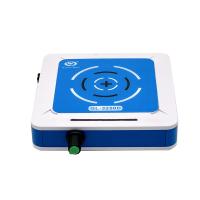
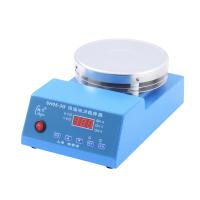
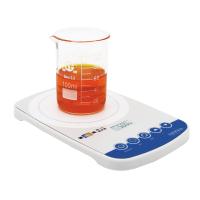
Reaction kettle, Drying Oven (101A-1E), graduated cylinder 25 ml. 08-2G Constant temperature magnetic stirrer, centrifuge (TGL-16G)
(3) Sample synthesis
Oleic acid is used as solvent, ethyl orthosilicate is used as silicon source, and isopropanol is used to provide hydroxyl groups. Under the airtight condition of the reaction kettle, the silicon oxide nanometer material is obtained by controlling the reaction time. In order to study the effect of isopropanol on silica nanomaterials with different reaction times, we conducted 7 experiments. First, accurately measure 0.2 ml TEOS with a pipette, and then accurately measure 20 ml oleic acid with a graduated cylinder. Add TEOS to oleic acid, put the mixed solution on a constant temperature magnetic stirrer, and set the speed at 500 revolutions per minute. Accurately measure 5 ml of isopropanol with a graduated cylinder, dropwise dropwise into the prepared mixed solution of TEOS and oleic acid under magnetic stirring, and magnetically stir for 20 min. A light yellow solution was formed at room temperature, and the solution was put into a reaction kettle with a volume of 30 ml, and the reaction kettle was sealed and placed in a dry box. Incubate at 180°C for 3 h, 6 h, 9 h, 12 h, 24 h, 48 h, and 72 h. After the reaction is complete, take out the reactor and cool it down to room temperature naturally. The increase gradually changed from colorless colloidal precipitate to white precipitate. The precipitate was centrifuged and washed several times with ethanol, and the precipitate was dried to finally obtain 7 groups of white silica nanomaterials.

-
![KYLINBELL GL-3250D Ultra-thin Magnetic Stirrer 5W]()
-
![SILE B11-3 constant temperature magneticstirrer 5L/1700rpm]()
-
![BDJK quadruple HMS-901D digital thermostatic Magnetic Stirrer]()
-
![CHIJIU SH05-3G Laboratory Magnetic Stirrer 10L/250 ℃]()
-
![BDJK two HMS-901D digital thermostatic Magnetic Stirrer]()
-
![LEICI JB-13 Magnetic Stirrer]() LEICI JB-13 Magnetic Stirrer$ 162.00
LEICI JB-13 Magnetic Stirrer$ 162.00 -
![LEICI JB-12 Magnetic Stirrer]() LEICI JB-12 Magnetic Stirrer$ 148.00
LEICI JB-12 Magnetic Stirrer$ 148.00



- 1Comparison and Application of Magnetic Stirring and Mechanical Stirring
- 2Application and Selection Guide of Electromagnetic Stirrer in Laboratory
- 3Describe 4 Common Stirrers in detail
- 4Principle, application and selection of vertical Electric Forced Air Drying Oven
- 5Principle, application and selection of pigment Drying Oven
- 6Principle, application and selection of electric heating air Drying Oven
- 7Principle, application and selection of vacuum electric Drying Oven
- 8Principle, application and selection of nitro paint Drying Oven
- 9Principle, application and selection of industrial hot air circulation Drying Oven
-
![RONGHUA 85-2 Digital thermostatic magnetic heating Stirrer 300W/digital temperature control]()
-
![RONGHUA HJ-4A digital thermostatic four head Magnetic Stirrer]()
-
![DaDi 85-2 digital temperature control magneticstirrer]()
-
![HUXI HMS-203D magneticstirrer]() HUXI HMS-203D magneticstirrer$ 251.00
HUXI HMS-203D magneticstirrer$ 251.00 -
![RONGHUA 78HW-1 thermostatic Magnetic Stirrer 200W/Electronic temperature control]()
-
![Qiwei CL-R magneticstirrer 1000ml]() Qiwei CL-R magneticstirrer 1000ml$ 103.00
Qiwei CL-R magneticstirrer 1000ml$ 103.00