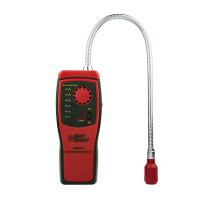
How to sample gas in a confined space?
How do you take gas samples in a confined space? We do get a question a lot, so what do you do? What exactly is a confined space? Confined spaces are spaces with restricted entry and exit that are not suitable for humans in the first place. But in some cases, for example, in storage tanks, ship tanks or tunnels, you need to sample gas before or while entering these confined spaces. So how do you take a gas sample in a confined space?
What is a confined space?
A confined space is a space where access is limited and not intended to be permanent for humans. Examples of confined spaces are oil storage tanks, ship tanks, sewers and manholes, oil storage tanks for railway vehicles, tunnels, agricultural silos, etc. Workers will temporarily enter the confined space to make repairs. The air in confined spaces often contains hazardous gases. Before entering a confined space, the interior atmosphere needs to be tested with gas detection equipment.
What are the common gases in confined spaces?
Oxygen: The satisfactory oxygen content is 20.9% Vol. This is the standard amount of oxygen in normal air that a person can breathe well. The minimum permissible oxygen content is 19.5% by volume. The oxygen content is less than 19.5% by volume. Sustained decline can lead to serious consequences such as decreased ability to continue working, poor coordination, poor judgment, bluish lips, mental breakdown, loss of consciousness, coma and eventually death. Oxygen content above 23.5% Vol. Can create a serious fire hazard.
Combustible Gases: Combustible gases are gases that can cause an explosion when mixed with certain levels of air. The lowest mixture of flammable gases and air that can cause an explosion is called the Lower Explosive Limit (LEL). Concentrations below the LEL are too low to be explosive. The highest mixture of flammable gases and air that can cause an explosion is called the Upper Explosive Limit (UEL). Concentrations above the UEL are too high to explode. In order to cause an explosion, not only a mixture of flammable gas and air is required, but also heat or a source of ignition.
Toxic Gases: Common toxic gases that may be present in confined spaces are carbon monoxide (CO) and hydrogen sulfide (H2S). However, many toxic gases can be present in confined spaces. Toxic gases should be below OSHA's permissible exposure limits.
How to collect gas samples?
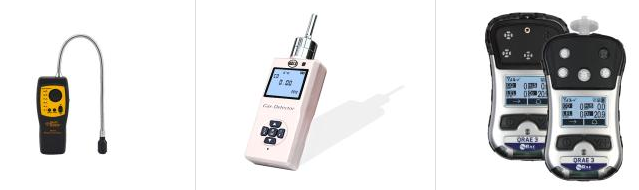
To collect gas samples, a portable multi-Gas Detector with an internal pump and gas sampling accessories such as long sampling hoses and float-type sampling probes is required. Portable multi-Gas Detectors should contain internal sensors for oxygen, combustible gases (measured in %LEL and/or Vol%) as well as toxic gases, carbon monoxide (CO) and hydrogen sulfide (H2S). If it is also equipped with a portable multi-Gas Detector With the help of PID sensor, many other toxic gases can be detected, if you want to collect gas samples in the confined space of the ship, the length of the sampling hose can reach 30 meters.
It is important to take gas samples at different levels in the confined space (top, middle and bottom) because each level contains different gas concentrations. High concentrations of gas are usually located at the top or bottom of a confined space. There is a lower concentration of gas throughout the confined space. When gas sampling in the confined space is complete and the atmosphere in the confined space is safe to enter, one or more persons may enter the confined space.
How to enter a confined space?
Personnel entering confined spaces should always carry a small personal multi-Gas Detector with internal sensors capable of continuously monitoring the interior atmosphere for oxygen, combustible and toxic gases carbon monoxide (CO) and hydrogen sulfide (H2S). The internal atmosphere in a confined space is always changing, so the importance of constantly monitoring the internal atmosphere during a stay in a confined space cannot be overemphasized.



- 1Principle and Application Analysis of Composite Four-in-One Gas Detector
- 2Introduction to Working Principle and Application of Carbon Monoxide Gas Detector
- 3Basic Principle and Application of Portable Gas Detector
- 4Basic Principle and Application Analysis of Gas Detector
- 5What is the alarm value of Gas Detector?
- 6What is phosphating Gas Detector?
- 7What is a combustion analyzer?
- 8Application Scheme of Gas Detector in Coking Coal Metallurgy Industry
保时安 - 《保时安》
- 9Application of Gas Detector in Medical Manufacturing
保时安 - 《保时安》