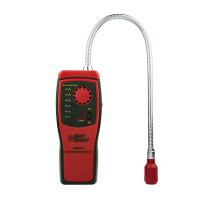
What is the difference between stationary and portable Gas Detectors?
When employees work on industrial plants, offshore rigs, or in laboratories or water treatment plants, one of the greatest dangers they face is undetected gas leaks. When this happens, not only can a burn or explosion occur, but workers can also suffer from a variety of physical problems, many of which can be life-threatening. Instead of facing these situations, companies have invested in a variety of portable and fixed gas detection systems. However, while these systems are similar in many ways, they also have a number of key differences, all of which may have a role in a facility's security program.

Detection system cost
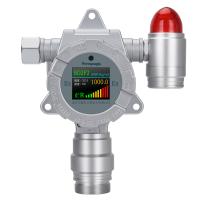
While cost is always a concern for any company, most try to keep it from being a factor in keeping their employees and facilities safe. As a result, they often invest in fixed and portable Detectors, although pricing can vary widely. The cost is usually less than $200 per Detector for many portable Detectors, and many are less than $100. However, fixed gas monitors tend to be more expensive, averaging $500-$1,000 each. In most cases, this is due to the fact that they have more features than portable Detectors such as multiple alarm systems.
various functions
A variety of features make it an attractive option for companies with both portable gas monitors and fixed gas sensors. For example, portable monitors allow for hands-free monitoring, which is useful for engineers and technicians working in confined spaces when performing equipment installations, repairs, and inspections. However, fixed gas systems also offer the added advantage of being linked to a wireless network within the facility, allowing real-time data to be transmitted to on-site engineers and off-site monitoring personnel.
working environment
For the most part, portable Gas Detectors are primarily intended for employees in confined spaces or who are moving around to many different areas of the facility during their workday. However, in very large facilities with dispersed staff, fixed detection systems can be very effective and cost-effective. Because of their ability to monitor large areas, workers can be alerted to possible gas leaks in various parts of a facility, allowing evacuations to occur before the situation becomes critical.
Alarm function
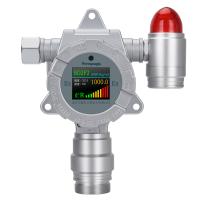
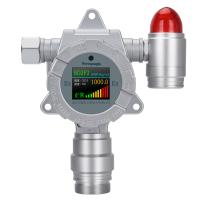
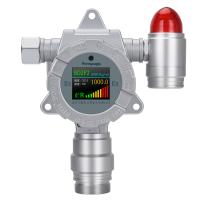
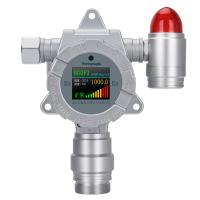
With a fixed detection system, multiple alarms are usually available because Detectors will be placed in many different types of work environments. For most Detectors, alarms such as flashing lights, strobe lights, and sirens are available. Thus, in noisy situations, lights and strobes can alert workers to danger zones. However, in facilities where workers are spread out, sirens can be very effective.
Multiple Gas Detection
In most cases, portable Detectors are designed to monitor smaller arrays for gases than fixed Detectors. However, both fixed and portable Gas Detectors can be connected to mobile devices such as smartphones and tablets, allowing engineers and technicians to access real-time data 24/7, which may be of importance should shutdowns occur in emergency situations Needless to say - hours.


- 1Principle and Application Analysis of Composite Four-in-One Gas Detector
- 2Introduction to Working Principle and Application of Carbon Monoxide Gas Detector
- 3Basic Principle and Application of Portable Gas Detector
- 4Basic Principle and Application Analysis of Gas Detector
- 5What is the alarm value of Gas Detector?
- 6What is phosphating Gas Detector?
- 7What is a combustion analyzer?
- 8Application Scheme of Gas Detector in Coking Coal Metallurgy Industry
保时安 - 《保时安》
- 9Application of Gas Detector in Medical Manufacturing
保时安 - 《保时安》