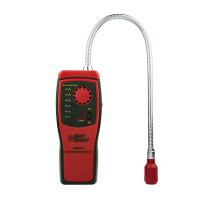
H2S gas - what you need to know about hydrogen sulfide
What is H2S gas?
Hydrogen sulfide (H2S) is a gas commonly found during the drilling and production of crude oil and natural gas, as well as in wastewater treatment, utilities and sewers. The gas is produced as a result of microbial decomposition of organic materials in the absence of oxygen. H2S gas is colorless, flammable, poisonous and corrosive, and its egg smell is obvious. With carbon monoxide-like toxicity that can impede cellular respiration, monitoring and early detection of H2S could mean the difference between life and death.
Impact on safety (short term)
The gas is a silent threat, usually invisible to the human senses. Inhalation is the primary route of exposure to hydrogen sulfide. Although some individuals may smell easily at low concentrations, sustained exposure to low levels of H2S can quickly make a person smell unpleasant (desensitization of the sense of smell). Exposure to high concentrations of the gas immediately dissipates the sense of smell. Although the smell of H2S is a feature, the smell is not a reliable indicator of the presence of H2S gas, nor is it a reliable indicator of increased gas concentrations.
H2S irritates the mucous membranes of the body and respiratory tract. After short-term or acute exposure, symptoms may include headache, nausea, convulsions, and irritation of the eyes and skin. Causes immediate and severe damage to the central nervous system after exposure. At high concentrations, it only takes a few breaths to cause loss of consciousness, coma, respiratory paralysis, seizures and even death.
Health Effects (Long Term)
Those who have been exposed to high enough levels of H2S gas for a prolonged period of time to cause coma may continue to experience headaches, decreased concentration, and decreased motor function. The pulmonary effects of exposure to H2S gas may not be apparent for up to 72 hours after removal from the affected environment. Delayed pulmonary edema, which is the accumulation of excess fluid in the lungs, may also occur after exposure to high concentrations.
H2S does not accumulate in the body, but repeated/long-term exposure to moderate levels can cause low blood pressure, headaches, loss of appetite and weight loss. Prolonged exposure to low concentrations may cause a painful rash and eye irritation. Prolonged and repeated exposure to high levels of H2S may cause convulsions, coma, brain and heart damage, and even death.
Impact on Facilities
H2S gas is heavier than air and can accumulate in low-lying areas with poor ventilation. In oil and gas applications, acid gases (products containing H2S gas) in the presence of air and moisture form sulfuric acid, which can corrode metals. The durability and impact strength of facility equipment, including the interior surfaces of various components, is reduced, potentially leading to premature failure.
Detection of H2S gas
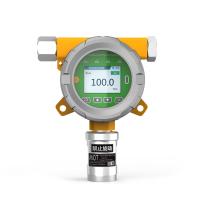
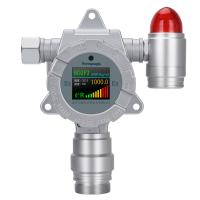
Hydrogen sulfide is a fast-acting poison that affects many systems in the body. Wearable gas sensors are desired for early detection and early warning, as human body sensations are not reliable indicators. Remember: Gas Detectors such as Blackline's G7 Wireless Gas Detector should be considered as they will alert site monitors about worker H2S gas exposure. Devices with fast response times and robust construction are important for harsh environments where H2S can occur. Furthermore, since H2S can instantly desensitize and render the human body unconscious at high concentrations, the importance of connected personal monitoring devices cannot be overemphasized.
The U.S. Occupational Safety and Health Administration (OSHA) defines the permissible exposure limit (PEL) for H2S gas as follows:
General industry limit: 20 ppm
General industry peak limit: 50 ppm (10 minutes if no other exposure during shift)
Construction 8 hour limit: 10 ppm
Shipyard 8 hour limit: 10 ppm
treat
Those exposed to H2S gas should immediately remove themselves from the toxic environment. Rescuers need to be cautious when accessing victims who are unable to evacuate independently to avoid harm from H2S exposure. Due to the very rapid poisoning effect of the gas, respiratory protection is recommended when entering an H2S environment and when entering a safety line. There is no effective antidote for H2S gas poisoning, but side effects and symptoms can be treated or managed. In severe cases, hospitalization may be required.
If you experience any unusual side effects or symptoms within 24 hours, the Agency for Toxic Substances and Disease Registry (ATSDR) recommends calling your doctor or going to the emergency room:
coughing, wheezing, difficulty breathing, shortness of breath
chest pain or tightness
stomach pain, vomiting
Headache
Increased redness, pain, or pus from skin burns
It is important to remain vigilant and avoid complacency with your security procedures. Gas detection equipment requires regular calibration and frequent bump testing.





- 1Principle and Application Analysis of Composite Four-in-One Gas Detector
- 2Introduction to Working Principle and Application of Carbon Monoxide Gas Detector
- 3Basic Principle and Application of Portable Gas Detector
- 4Basic Principle and Application Analysis of Gas Detector
- 5What is the alarm value of Gas Detector?
- 6What is phosphating Gas Detector?
- 7What is a combustion analyzer?
- 8Application Scheme of Gas Detector in Coking Coal Metallurgy Industry
保时安 - 《保时安》
- 9Application of Gas Detector in Medical Manufacturing
保时安 - 《保时安》