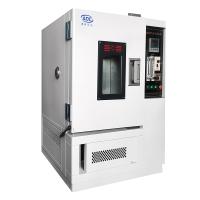
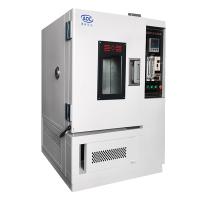
Should accelerated aging test choose UV fluorescence test or xenon lamp test?
A Comparison of Two Effective Methods for Accelerated Aging Testing
Weathering and light are significant causes of damage to paints, plastics, inks and other organic materials. Such damage includes tarnish, fading, yellowing, cracking, peeling, embrittlement, loss of tensile strength and delamination. For many manufacturers, the importance of formulating products to withstand weathering and light cannot be overemphasized. Accelerated weatherability and light stability Testers are widely used in R&D, quality control and material certification. These Testers provide fast and repeatable results.
Weathering and light are significant causes of damage to paints, plastics, inks and other organic materials. Such damage includes tarnish, fading, yellowing, cracking, peeling, embrittlement, loss of tensile strength and delamination. For many manufacturers, the importance of formulating products to withstand weathering and light cannot be overemphasized. Accelerated weatherability and light stability Testers are widely used in R&D, quality control and material certification. These Testers provide fast and repeatable results.
The coatings market is increasingly globalized, hence the need for testing to increase product durability, meet quality standards in export markets or reduce material costs to compete with imports from emerging countries.
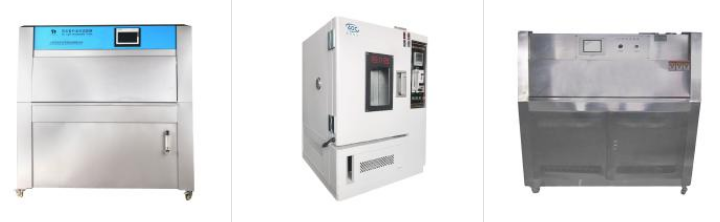
Commonly used accelerated weather resistance Testers are fluorescent ultraviolet accelerated weather resistance Tester (ASTM G 154) and xenon arc Test Chamber (ASTM G 155). In recent years, low-cost and easy-to-use Testers have been developed. This article will explore the differences between the two different types of Testers, including emission spectroscopy for moisture simulation, specialized testing methods, uniformity, and practical considerations in Tester use. The inherent advantages and disadvantages of each Tester will be discussed, including purchase price and operating costs. Guidance will be given which Tester is generally recommended for a particular material or application.
In addition, this article will briefly compare static array xenon arc Testers with rotating drum xenon arc Testers. The brand name QUV will be used to denote the fluorescence Tester. The trade name Q-Sun is sometimes used to refer to a xenon Tester.
historical perspective
Clearly, weatherability and light stability are important to many products, but good test methods can sometimes be controversial. Various methods have been used over the years. Today, most researchers use natural exposure testing, xenon arc or QUV weatherometers. Natural exposure testing has many advantages: it is realistic, inexpensive and easy to perform. But many manufacturers don't have years to wait to see if a "new and improved" product formulation can actually improve. Xenon arc lamps and QUVs are commonly used accelerated Testers. These two Testers are based on completely different approaches. Xenon Test Chambers replicate the entire spectrum of sunlight, including ultraviolet (UV), visible light, and infrared (IR). The xenon arc is essentially an attempt to replicate sunlight,
The QUV, on the other hand, does not try to replicate sunlight, but only the destructive effects of sunlight that occur in the 300 nm to 400 nm range. It is based on the concept that for durable materials exposed outdoors, short-wave UV rays cause the greatest weathering damage (Figure 1).
Which testing method is better? There is no easy answer to this question. Depending on your application, either approach can be very effective. The Tester you choose should depend on the product or material to be tested, the end use, degradation modes of concern, and budget constraints.
To understand the difference between xenon and QUV, it is necessary to first look more closely at why the material degrades.
Triple Threat: Light, Temperature and Humidity
Most weathering damage is caused by three factors: light, heat and moisture. Any of these factors can cause performance degradation. Together, they often act synergistically, causing more damage than any one factor alone.
Light
Spectral sensitivity varies by material. For durable materials such as most paints and plastics, short-wave UV light is responsible for the degradation of most polymers. However, for less durable materials, such as some pigments and dyes, longer wavelengths of UV light or even visible light can cause serious damage.
high temperature
The damaging effects of exposure are generally accelerated when the temperature increases. Although temperature does not affect primary photochemical reactions, it does affect secondary reactions involving byproducts of primary photon/electron collisions. Laboratory weathering testing needs to provide precise control of temperature and usually should provide a means of raising the temperature to produce acceleration.
moisture
Dew, rain and high humidity are the main causes of moisture damage. Studies have shown that objects remain wet outdoors for extended periods of time each day (average 8-12 hours per day). Research shows that condensation in the form of dew is responsible for most outdoor humidity. Dew is more damaging than rain because it remains on the material for a long time, absorbing a lot of moisture.
Of course, rainwater can also do a lot of damage to certain materials. Rain can cause thermal shock, which can happen, for example, during a hot summer day when heat built up in a car is quickly dissipated in sudden showers. Mechanical erosion caused by the scrubbing action of rain can also degrade materials such as wood coatings as it wears away the surface, exposing fresh material to the damaging effects of sunlight.
QUV and xenon arc Testers each reproduce light, temperature and moisture differently.
QUV Weathering Tester
QUV sunlight simulation
The QUV is designed to reproduce the damaging effects of sunlight on durable materials by using fluorescent UV lamps. These lamps are electrically similar to the common cool white lamps used in general lighting, but they produce a completely different spectrum than normal fluorescent lights. The coating on the tube glass is engineered to generate primarily ultraviolet light rather than visible or infrared energy.
There are different types of lamps with different spectra for various exposure applications. The UVA-340 lamp provides a good simulation of sunlight in the critical short-wave UV region. The spectral power distribution (SPD) of UVA-340 matches sunlight very closely, from the sun cutoff to about 360 nm (Figure 2). UV-B lamps are also commonly used in QUVs (Figure 3). They generally cause faster degradation than UV-A lamps, but their short wavelength output below the solar cutoff wavelength can lead to impractical results for many materials.
QUV irradiance control
Control of irradiance (light intensity) is required to obtain accurate and repeatable test results. Q-Lab Corporation introduced the "Solar Eye Irradiance Controller" in 1992. This sophisticated light control system allows the user to select the level of irradiance. Using the "sun eye" feedback loop system, irradiance is continuously and automatically monitored and maintained accurately. Monitoring sensors are periodically calibrated by the operator on a regular basis. Calibration is traceable to the National Institute of Standards and Technology (NIST) for ISO 9000 compliance.
Solar Eye automatically compensates for lamp aging or any other changes by adjusting the power to the lamp. Figure 4 shows how the irradiance control system works. In the past, it was recommended that the lamp in a fluorescent Tester be rotated every 400 hours. With irradiance control, lights typically last more than 5,000 hours. Variations in UV intensity are largely eliminated by the Solar Eye Control System, thus greatly reducing variation in test results.
In the QUV, the inherent spectral stability of its fluorescent UV lamp simplifies the control of irradiance. The output of all light sources decreases with age. However, unlike most other types of lamps, the spectral power distribution of fluorescent lamps does not change over time. This improves the repeatability of test results, which is a major advantage of testing with a QUV.
Figure 5 shows a comparison between a bulb aged for 2 hours and a bulb aged for 5600 hours in a QUV with irradiance control. The difference in output between the old and new bulbs is almost indistinguishable. The solar eye irradiance controller maintains the light intensity. In addition, due to the inherent spectral stability of fluorescent lamps, the spectral power distribution remains virtually unchanged. The same data are plotted in Figure 6 as percentage differences. SolarEye systems are easily calibrated and traceable to ISO requirements.
A programmable automatic irradiance control system allows the operator to select higher than standard levels of irradiance for UV exposure testing. For many materials, this results in faster degradation, reducing test time. 1
QUV moisture simulation
The main benefit of using a QUV is that it provides the most realistic simulation of moisture attack outside. Outdoors, the material will be wet for up to 12 hours per day. Since most moisture is the result of dew, the QUV uses a unique condensation mechanism to reproduce outdoor moisture.
During the QUV condensation cycle, the water reservoir at the bottom of the Test Chamber is heated to generate steam. The hot vapor maintains the chamber environment at 100% relative humidity at elevated temperature. The QUV is designed so that the test sample actually forms the side walls of the chamber. Therefore, the reverse side of the sample was exposed to room air. Room air cooling causes the test surface to drop to a few degrees below the vapor temperature. This temperature difference causes liquid water to condense continuously on the test surface throughout the condensation cycle (Figure 7).
The resulting condensate is very stable pure distilled water. This pure water improves the repeatability of test results, avoids water spot problems, and simplifies the installation and operation of the QUV.
A typical QUV condensation cycle is at least four hours due to the extended amount of time the material is wet outdoors. In addition, condensation takes place at elevated temperatures (typically 50℃), which greatly accelerates moisture attack. The QUV's long, hot condensation cycle reproduces outdoor humidity better than other methods such as water spray, immersion, or high humidity.
In addition to the standard condensation mechanism, the QUV can be equipped with a water spray system to simulate other damaging end-use conditions such as thermal shock or mechanical corrosion. Users can program UVs to produce wet cycles that alternate with UVs, which is the same as natural weathering.
The QUV Fluorescent Weathering Tester simulates the damaging effects of sunlight, dew and rain. It is the most widely used weather resistance Tester in the world.
Xenon Test Chamber
xenon sunlight simulation
Xenon arc Testers are considered a good simulation of full-spectrum sunlight because they generate energy in the ultraviolet, visible, and infrared regions. To simulate natural light, the Xenon arc spectrum needs to be filtered. Filters reduce unwanted radiation and/or heat. Several types of glass filters are available to obtain various spectra. The filter used depends on the material being tested and the end use. Different filter types allow for different amounts of short-wave UV, which can significantly affect the speed and type of degradation. There are three common filter types: Daylight, Window Glass, and Extended UV. Figures 8-10 show the spectra produced by these filters. A close-up view of these spectra at about 295 to 400 nm in the critical shortwave UV region is also included.
Xenon Irradiance Control
在氙气测试仪中,辐照度的控制尤为重要,因为氙气灯固有的光谱稳定性低于荧光紫外灯。氙弧测试仪通常配备辐照度控制系统。Q-Sun氙气的控制系统如图11所示。
光谱的变化归因于老化,这是氙弧灯的固有特性。图12说明了新灯泡和已工作1500小时的灯泡之间的光谱差异。显然,随着时间的推移,光谱在更长的波长中会发生显着变化。但是,当将相同数据绘制为随时间变化的百分比时(图13),很明显光谱的短波UV部分也有类似的变化。但是,有一些方法可以补偿频谱偏移。例如,可以更频繁地更换灯泡,以更好地减少灯泡老化的影响。而且,通过使用控制340或420 nm辐照度的传感器,可以将特定区域中的光谱变化量最小化。尽管灯泡老化会产生光谱偏移,
氙气湿度模拟
大多数氙弧测试仪通过喷水和/或湿度控制系统来模拟水分的影响。喷水的局限性是,当将相对冷的水喷射到相对较热的试样上时,试样会冷却下来。这可能会减慢降级速度。然而; 喷水对于模拟热冲击和侵蚀非常有用。在氙弧灯中,需要使用高纯水才能防止水斑。由于湿度会影响某些室内产品(例如许多纺织品和墨水)的降解类型和降解速率,因此在许多测试规格中建议控制相对湿度。现代氙气测试箱可提供相对湿度控制。
第一批旋转鼓式光稳定性测试仪于1918年左右开发,并使用碳弧作为光源。此设备的特征是垂直放置的中央光源或灯,周围环绕着过滤器系统。将测试样品面对光安装。该测试仪非常流行的氙弧灯版本为其灯使用水冷系统。这通常称为旋转鼓测试仪。
最近的技术是一种在天花板上装有一个或多个风冷灯的腔室。在此系统中,滤光片是扁平的,安装在灯的下方。内置在腔室顶部和侧面的反射器系统增强了辐照度的均匀性。将测试样品安装在托盘上的灯下方。
无论使用哪种硬件配置,现代氙气测试仪通常都具有控制光强度(辐照度),温度和相对湿度的系统(图14)。
光学滤镜系统
静态阵列氙气测试室的每个气冷式氙气灯均使用一块或多块平板滤镜。水冷式旋转鼓测试仪使用不同的系统,该系统由安装在氙气灯周围的圆柱形内部和外部过滤器组成。每种类型的氙弧测试仪都能够再现整个光谱。研究表明,静态阵列测试仪中使用的滤光片可以匹配日光和透过窗户玻璃的阳光,甚至比旋转鼓测试仪中使用的滤光片更好,甚至更好。2
过滤器的日晒作用是氙弧测试仪的潜在弱点。随着转鼓式滤光片由于暴露于紫外线而老化,它们会失去传输较短波长的光的能力。这种现象称为日晒。频谱的变化会影响测试结果的可重复性。因此,需要经常更换转鼓式过滤器。某些静态阵列的滤波器已设计为不会因长时间使用而日晒。
湿气
静态阵列氙气试验箱和旋转鼓式氙气试验箱都通过将水喷到试样上来模拟室外湿气的影响。该方法特别适合于模拟热冲击或机械腐蚀的影响。在静态阵列中,将测试样本安装在平坦的样本托盘上,该托盘与水平方向倾斜5º。静态阵列的喷水均匀地覆盖了样本,并且由于样本的位置接近水平,因此水不会迅速流走。在静态阵列中,样品在整个湿度循环中保持湿润。
旋转鼓式测试仪具有一个喷杆和一个喷嘴,当样品经过其上方时,可以用水喷射样品。每旋转一分钟,样品将浸湿约三秒钟。由于样品的垂直位置,水迅速从表面流走。在这些润湿之间,样品可能随着旋转离开喷雾而变干。
样品安装
静态阵列托盘可容纳不同尺寸的平板或三维样本,例如零件,组件,瓶子和试管。滚筒测试仪只能将平板安装在垂直位置。
灯冷却
氙弧灯产生大量的热量,需要散发热量。静态阵列通过使大量空气流过灯壳来消除多余的热量。转鼓使用水冷灯系统。由于水是极好的传热剂,因此非常有效。因此,转鼓灯可以在非常高的功率下工作以产生高辐照度。水冷却需要带有内部和外部过滤器的稍微复杂的灯/过滤器设备。冷却水需要非常纯净,以减轻灯和过滤器上的杂质堆积。
辐照度校准
静态阵列辐照度校准系统使用辐射计,可以由机器操作员执行。旋转鼓测试仪使用特殊的校准灯通过多步骤过程进行校准。通常,转鼓测试仪的校准由外部服务技术人员完成。
均匀度
A study was conducted to compare the uniformity of sample degradation within the two types of single chambers. 3 25 different uniformity tests were performed. In both rotating drum and static sample fixation systems, the degradation uniformity of individual chambers ranged from ±3% to ±13%, depending on the material. Under certain materials/exposure conditions, the uniformity of the static array Tester is equal to or better than that of the drum.
- 1Basic Principle, Functional Characteristics and Application of xenon arc aging Test Chamber
- 2Introduction of working principle and application scope of water-cooled xenon arc weathering Test Chamber
- 3The difference between fluorescent UV Lamp and xenon arc: Two Light sources in artificial accelerated aging
- 4Xenon arc weathering vs UV weathering: differences in ray of light simulation
- 5Rubber aging talk: xenon arc aging, ultraviolet light aging, ozone aging
- 6The relationship between natural aging and accelerated aging
- 7Artificial climate accelerated weathering test and natural aging conversion
- 8Application of accelerated weathering Test Chamber in respirator
- 9UV accelerated weathering Test Chamber for weathering resistance of epoxy resin