What are the defects of optical microscopes? Industry common sense
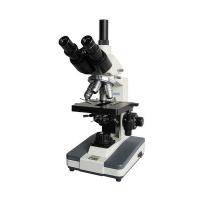
Microscopes allow scientists to observe and study objects that cannot be detected by the human eye. Two methods of observing microorganisms are light microscopy and electron microscopy. Light microscopy uses visible light to expose microorganisms. This is somewhat disadvantageous because electron microscopes require a vacuum in order to examine the sample. Light microscopes are portable and affordable, allowing researchers to observe living organisms. But optical microscopy also has its own drawbacks.
enlarge
Optical microscopes have a magnification of about 2000 times and cannot magnify like electron microscopes. The relatively long wavelengths of light reduce the magnification capabilities of an optical microscope because small spherical lenses are required to focus and spread the light.
resolution
Optical microscopes have low resolution. As the refracted light waves spread out, the resulting image is blurred. Even instruments that offer additional lenses to increase magnification do little to improve image resolution.
observe the internal structure
It is difficult to observe the internal structure of living things without the use of dyes. The live specimen needs to be killed and fixed during the staining process, eliminating the usual advantages of light microscopy




- 1Microscope classification, operation and application
- 2How to use trinocular Microscope
- 3How to detect the color difference of fluorescent color-changing materials?
- 4How is the content of non-fibroblasts determined?
- 5 How to measure cell wall thickness and cell cavity diameter?
- 6Determination of Fiber Length How is the distribution frequency calculated?
- 7How to determine the fiber morphology of plant fiber raw materials?
- 8Important instruments in clinical laboratories
- 9Coating Thickness Gauge: How to measure the dry film thickness of non-metallic substrates?