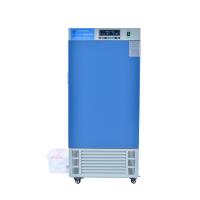
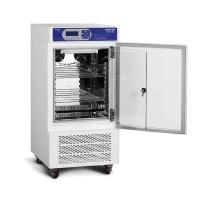
Why is the constant temperature and Humidity Chamber cooling slowly?
1. Check that the door is closed.
2. The room temperature is too high.
1) The room temperature is too high, find ways to lower the room temperature, such as installing an air conditioner in the room or opening the lower baffle, and blowing air with a fan to achieve the effect of cooling.
2) Since the temperature cannot be maintained, observe whether the refrigeration compressor can be started during the operation of the Test Chamber and whether the compressor can be started during the operation of the environmental test equipment. This indicates that the circuit from the mains to the compressor is OK and there are no problems in the electrical system.
3. Too much dust in the condenser. Remove dust from the condenser and blow it out.
4. The fan does not rotate; (Observe whether the fan can be started during the operation of the Test Chamber, for example, whether the fan can be started during the operation of the Test Chamber, indicating that the fan is normal.)
5. Refrigeration system;
1) Check the refrigeration system. First, check whether the discharge pressure and suction pressure of the two sets of low-temperature (R23) compressors are lower than the normal value, and the suction pressure is empty, indicating that the refrigerant quantity of the main refrigeration unit is insufficient.
2) Touch the exhaust pipe and suction pipe of the R23 compressor of the main unit by hand, and find that the temperature of the exhaust pipe is not high, and the temperature of the suction pipe is not low (no frost), which also means that the R23 refrigerant of the main unit insufficient.
6. Heavy objects;
1) Check whether the workpiece under test is a live test, and measure the heat generated by the workpiece during the live test.
2) If the heat generation is less than 300 W, it will have no effect on the Test Chamber, but excessive heat generation will reduce the temperature in the Test Chamber and make it unable to reach the instrument set value or refrigerate.
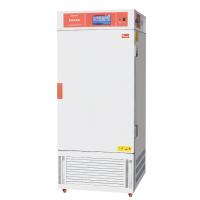
- 1Constant Temperature and Humidity Chamber
- 2Principle and Application of Constant Temperature and Humidity Chamber Biochemical Incubator
- 3Principle Characteristics and Application of New material Constant Temperature and Humidity Chamber
- 4The working principle of the three major systems of Humidity Chamber
- 5What are the Dehumidification modes in the Humidity Chamber?
- 6Application of Constant Temperature and Humidity Chamber in Lithium Battery
- 7Constant Temperature and Humidity Chamber FAQ and calibration method
- 8Application of Humidity Chamber in Food industry
- 9Printing circuit board humidity resistance test