Test application of Tensile Testing Machine in plastic materials
Every day, plastic is used in a variety of items. Today, plastics are starting to be used in structural materials for transportation equipment such as airplanes and automobiles due to their strength and light weight properties. For these applications, the importance of understanding the mechanical strength properties of these plastics cannot be overemphasized. To measure product strength and quality, plastic materials are subjected to tensile testing. Results gathered from tensile testing are used to design parts that can withstand the forces applied to them. Tensile testing is used during the quality inspection of plastic materials.
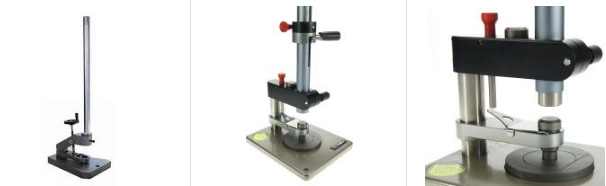
Tensile test results revealed various calculations. Some of these are tensile strength at yield and at break, tensile modulus, strain, elongation and elongation at yield, elongation and elongation at break.
The Universal Testing Machine (UTM) tests samples in tension, flexure and compression at controlled test speeds. They are used to evaluate the strength properties of static products and materials, including tension, compression, shear and bending, etc. The Tensile Testing Machine is a UTM configured to measure the tensile strength of the samples. These Testers measure properties such as yield strength, elongation, and modulus. These machines are configured according to the engineer's requirements, including controls, handles and accessories.
Tensile strength Testers perform several types of tension and compression tests on various materials. A common application of UTM is tensile testing, which evaluates the stiffness, stretchability, and stiffness of a material when it is pulled apart until it breaks.
The procedure is simple, the sample is subjected to uniaxial loading until fracture. It provides information on elastic limit, yield point, proportional point, and factors including true breaking stress, breaking point load, etc.
Tensile elongation of a test material is the percentage increase in length that occurs before failure under tension. Percent elongation values for elastomers are common. Strong plastics like fibers have values below 5%. The combination of high tensile strength and high elongation results in a material with high toughness.
Tensile modulus of elasticity is the ratio of stress to elastic strain in tension. A high tensile modulus defines a material that is sufficiently strong that more stress is required to produce a given strain. Among polymers, the tensile modulus and compressive modulus vary widely. Variations can be 50% or more depending on plastic type, reinforcement and processing method.
A Tensile Testing Machine is a general testing machine used to measure the tensile strength of a sample. Therefore, it is necessary to select the appropriate machine to determine the size and strength characteristics.
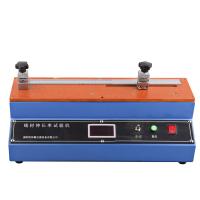

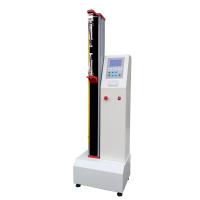
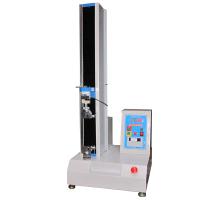
- 1The purpose of tensile testing and its application in the plastics industry
- 2What problems can be caused during tensile testing?
- 3How to choose a Tensile Testing Machine?
- 4Classification and application advantages of Tensile Testing Machines
- 5What is a Tensile Testing Machine?
- 6Discuss the influence of the flexibility of the analytical testing machine on the results of the tensile test
余立; 李荣锋; 凃应宏 - 《试验机柔度对拉伸试验结果的影响》
- 7How to choose a suitable Tensile machine?
- 8Introduction to the clamping principle of tensile testing
- 9Isoaxial tensile test method and simulation for analyzing super-elasticity films