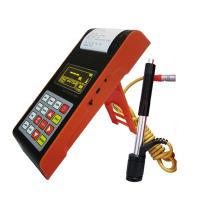
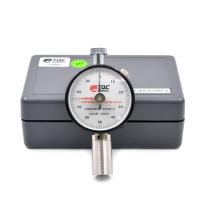
What is the significance of the Shore Hardness Tester test?
O-rings are the simple, most readily available type of seal used in every industry and market. They can be arguably great seals for many applications, but can be intimidating to engineers with no experience in seal design. The O-Ring Basics chapter of Parker's eHandbook provides an overview of what an O-ring is, how it works, and finally, the benefits of other seals.
A very important consideration is the hardness of the rubber material. Customers may need to seal against high pressure fluids, which will require tougher materials. On the other hand, he may want to minimize insertion force, or the o-ring may be sealing some delicate hardware, such as a thin plastic or sapphire plate. This may require a softer material. To test the hardness of a material, Parker recommends using the Shore A hardness. This is the industry standard test for rubber and is the acceptance criterion for each batch of O-ring material that Parker mixes.
What is Shore A Hardness? How to test?
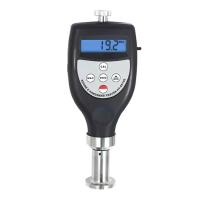
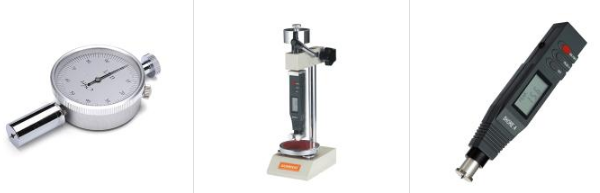
The Shore A hardness test is performed using a durometer, which was developed by Albert Ferdinand Shore in the 1920s. The Shore A hardness measurement is often referred to colloquially as "durometer" or "duro". Perform this test on cured rubber panels according to ASTM D2240 and on finished O-rings according to ASTM D1414.
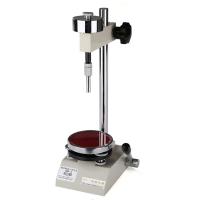
The device consists of a hardened steel rod with a truncated cone at the tip. The steel rod is spring loaded and drives a dial that reads from 0 to 100. The test sample is placed directly under the truncated cone, and the device is pressed down onto the part until the bottom flat metal plate meets the rubber specimen.
The more the cone deforms the rubber material, the lower the hardness measurement. The less the cone deforms the rubber material, the higher the hardness measurement.
How to Read a Parker Part Number
Parker compounds utilize a unique numbering system consisting of a one or two letter designation for the material, a three or four digit identification number, and a two digit Shore A hardness. Two examples of this are N0674-70 and NM304-75. The last two digits are especially significant, as they indicate the nominal hardness of the material. Compound N0674-70 has a Shore A hardness of 70, while NM304-75 has a Shore A hardness of 75. The Shore A hardness tolerance is +/- 5 for all Parker compounds.

- 1What are the applications of Shore Hardness Tester?
- 2How to measure Shore hardness with PosiTector SHD?
- 3Defelsko PosiTector SHD Series Shore Hardness Tester FAQ
- 4Why is Shore Hardness Important?
- 5TQC LD0550 A Shaw Sclerometer Product Evaluation
- 6Hardness inspection of products using the Shaw Hardness test
林巨才 - 《实用测试技术》
- 7History of the Shaw Hardness Test Method
林巨才 - 《实用测试技术》