Why is conductivity important in pure water quality testing?
Conductivity measures how well water conducts electricity due to the presence or absence of certain ions.
While pure water is a poor conductor of electricity, water that has certain chemicals or elements in it in varying amounts, including sodium, magnesium, calcium, and chloride, is a better conductor of electricity.

What are the different types of purified water?
When most people think of pure water, they think of water that has been purified in some way. However, there are actually several different types of purified water. Let's briefly examine the differences between each type.
1. Purified water
Purified water has had all or most impurities removed. Pure water may still contain some impurities. However, in general, in order for a liquid to qualify as pure water, the dissolved solids level cannot exceed 10 parts per million.
Water can be purified through many different processes, including distillation, carbon filtration, deionization, and reverse osmosis.
2. Distilled water
Distilled water has been boiled to remove contaminants. When the water boils, it is trapped as steam, leaving behind minerals and other compounds. After the steam cools down, it will revert to distilled water.
3. Double distilled water
Double distilled water has been distilled twice.
4. Ultrapure water
As the name suggests, ultrapure water has been purified to an incredible level. This water is commonly used in industries where cleanliness and water purity are extremely high, including the semiconductor, pharmaceutical and solar photovoltaic industries. It is also widely used in experiments and research laboratories.
5. Deionized water
Deionized water has been stripped of mineral ions (for example, sodium, chloride, and calcium). Deionized water is similar to distilled water, except that it usually takes less time to create.
Although ions are removed during this process, viruses and bacteria may still remain in the deionized water.
How to measure conductivity?
There are many different devices available on the market for measuring water conductivity, including:
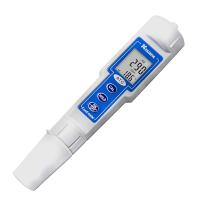
Handheld Testers are meters that can be placed in water to measure several properties, including conductivity, salinity, temperature, and pH, among others.
Portable water quality meters are ideal for field research applications. Environmental researchers use these devices because they are easy to read in outdoor situations.
Benchtop meters can be used to measure conductivity in a laboratory setting. They are usually larger than portable Testers and are capable of more accurate readings.
In-line meters are permanently installed at certain locations on the production line to measure water quality characteristics, including conductivity, in real time.
Electrodes are used to conduct electrical current to test certain properties of liquids (for example, their conductivity).
Now that you understand what conductivity is, why it's important in pure water quality testing, and how to measure it, let's take a look at some of the industries that require measurement of water conductivity.
Why do you need to measure the conductivity of water?
In a laboratory setting, the conductivity of water is measured because researchers and scientists need to know the exact composition of the water they are experimenting with in order to obtain accurate, reproducible results. This is why purified water is so common in the pharmaceutical, semiconductor and solar industries.
However, the electrical conductivity of water also has a significant impact on several other industries.
In the food and beverage industry, for example, the conductivity of water needs to be measured to ensure the efficient production of high-quality end products, thereby increasing profit margins and better reducing risks.
Aquaculture and aquarium operations also need to pay close attention to water conductivity. For example, freshwater fish and saltwater fish may require different levels of water conductivity to survive. By monitoring conductivity levels, aquariums and aquaculture companies can gain insight into whether the water in their tanks is changing. With this information, they can take proactive steps to bring the water back into balance.

- 1Principle and Application of Standard pH Meter
- 2The Working Principle of Gel Conductivity Meter Has Been Detailed
- 3Method for determining amino acid pH value
- 4Basic principle and application analysis of anti-fluorine pH meter
- 5Detection Principle and Application Analysis of Conductivity Meter
- 6Proper use and maintenance of pH meters
- 7Understanding and Addressing Common Challenges in the Use of pH Meters
- 8How to use pH meter
- 9Principle of conductivity analyzer