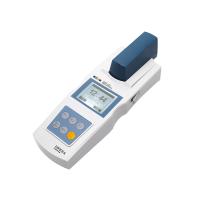
What are the water quality testing equipment required by the laboratory?
Water quality testing equipment is a required product for environmental, life science and medical research laboratories. In the environmental sector, collecting data on rainwater, groundwater, surface water and soil is often an important part of daily operations. In life sciences and medicine, water testing equipment is used to study a wide variety of solvents and solutions in addition to water. The exact model of water testing equipment used in a laboratory depends on the nature of the study and the researcher's goals. That said, most labs rely on benchtop instruments and may also use portable instruments. Below, we outline the unique uses, features, benefits, and pitfalls of each tool.
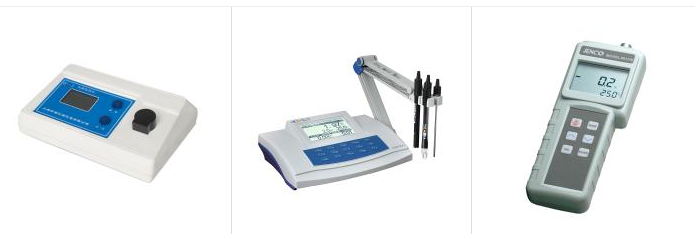
portable meter
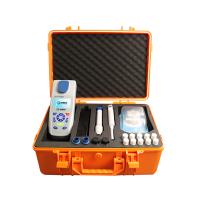
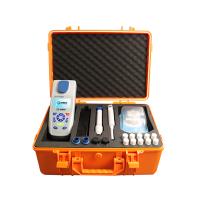
Portable meters are popular in the environmental field because they are compact and well suited for field studies. To collect water or soil samples from different locations, researchers need a tool that is easy to grip and read, regardless of location or environmental conditions. Portable Tester with backlit display and easy operation is ideal for field use. In this case, the durability, memory and battery life of the water Tester are also very important. Good portable meters are dust and water resistant and have enough memory to store all the test data collected on research trips.
All water testing equipment needs to be calibrated to ensure accurate results. Because portable meters have smaller interfaces than bench or recessed meters, they naturally need to do more with less. With just a few buttons, users need to be able to calibrate their Testers, take new readings, browse archived data and store new test results. In this regard, a Bluetooth water quality Tester connected to a smartphone app offers a more agile, customizable and sophisticated user interface.
Some pH and temperature Testers have built-in electrodes. Others require the user to connect the electrode to the meter via a cable. For soil or non-aqueous (non-water-based) testing, separate, dedicated electrodes often provide more accurate readings because they are designed to take readings under unique conditions. Meters with built-in electrodes are generally more efficient and require less manual work in the field. The model chosen depends on the substance to be tested and the level of complexity required.
In addition to field testing, laboratories also use portable instruments for convenience. Benchtop meters are built to sit on a flat surface, while portable meters are easy to move around a facility without taking up valuable work space.
Desktop instrument
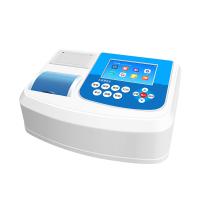
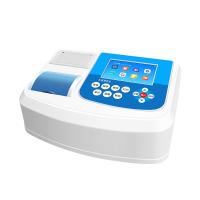
For most labs, a benchtop meter is all that is needed. For starters, they are a bit larger than portable meters and offer a larger display to view test results. They also tend to offer a greater sensitivity range than portable products. Like portable Testers, benchtop meters may be dedicated to a specific function, such as pH or conductivity, or they may provide multiple testing functions from a single meter interface.
When choosing between different benchtop instruments, researchers are often looking for the specific features and testing coverage required for their research. In addition, the measurement accuracy and resolution provided by the meter may be more important to some researchers than others. For example, a chemist might choose a meter that offers 0.001 resolution (very accurate), while other users might be satisfied with a lower resolution.
electrode
An electrode is a conductor of electric current used to examine the properties of a substance. The electrodes need to be connected by wires to a circuit (in this case, an electric meter) and relay the information back to that source.
Like electricity meters, electrodes can be designed to perform a single function, or they can be built for a variety of different tests. They are usually made of glass or epoxy and can vary in size, response time, measurement range and pressure tolerance. Epoxy electrodes are made to be more impact resistant but cannot be used in high temperature solutions. Conversely, glass electrodes are more fragile, but because glass can be easily sterilized, they are better suited for extreme temperatures and unclean environments.
The type of electrodes used in a laboratory depends on the functional needs of the researcher and the type of meter they use. For example, if you need to test an oxidation-reduction potential (ORP) of -1,000 to 1,000 mV, both electrodes and meters should be sensitive to this range.
Additionally, electrodes can be fillable or non-fillable. Both refillable and non-refillable electrodes naturally leak electrolyte through the porous junction, but refillable electrodes can be routinely filled. Although they require more maintenance, they tend to last longer than non-refillable models. The reference electrode can be refilled by the user as long as the connection remains clear and free from contamination (for example, by protein, food, or soil). Non-refillable models, by contrast, are generally cheaper and can use a gel-based electrolyte solution, which leaks out of the electrodes at a slower rate. Nevertheless, there is still a risk of contamination of the solution through joints in use. Testers with built-in electrodes are almost entirely gel-filled.
Before purchasing water quality testing equipment, evaluate the unique strengths and capabilities of different models based on your research environment and goals. First, learn about Jenco's many portable meters, benchtop meters and electrodes via the links below.
-
![Yoke P16 Precision pH/mV/Conductivity Detector/dissolved oxygen Measurement Instrument Multi-parameter meter]()
-
![Yoke P614 Portable dissolved oxygen Conductivity Detector rate Measurement Instrument]()
-
![LEICI TR-901 Soil ORP Meter]() LEICI TR-901 Soil ORP Meter$ 1083.00
LEICI TR-901 Soil ORP Meter$ 1083.00 -
![YUEFENG SZ8128 multiparameter STIP-scan to measure 12 kinds of water quality parameters]()
-
![YUEFENG SZ8127 multiparameter STIP-scan can measure 11 kinds of water quality parameters]()
-
![YUEFENG SZ8126 multiparameter water quality Tester, supports 10 parameters]()
-
![YUEFENG SZ8125 multiparameter Water Quality Analyzer residual chlorine dioxide, compound residual chlorine total chlorine nitrite dissolved oxygen, ammonia nitrogen, iron copper]()
-
![YUEFENG SZ8123 multiparameter Water Quality Analyzer residual chlorine dioxide, compound residual chlorine total chlorine nitrite]()
-
![YUEFENG SZ8122 multiparameter Water Quality Analyzer measurement residual chlorine/chlorine dioxide]()

- 1Application of Water Quality Analyzer in Swimming Pool Water Quality Detection
- 2How to maintain dissolved Oxygen electrode?
- 3What is ORP in solution testing?
- 4What type of electrode can be used to measure dissolved oxygen?
- 5American Ren's JENCO water quality analysis full series of instrument model selection table
- 6雷磁水质分析仪DZS-706A/706B/706C三种型号对比
- 7What are the common classifications of industrial pH meter electrodes?
王琳 - 《工业用PH计的概述》