How does an anemometer measure wind speed?
Older anemometers were developed centuries ago and took many forms. Over time, scientists learned which configurations worked, and because of this knowledge, common designs today tend to incorporate rotating wind cups or propellers.
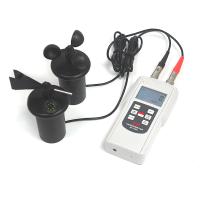
Wind Cups - Many weather sensors use a three-cup configuration that rotates on a horizontal plane as wind passes. A three-cup design arranged horizontally works really well because it measures wind speed no matter which direction the wind is coming from. Tested for decades, the three-cup design produces higher torque, is more consistent, and responds faster to gusts of wind than other cup configurations. Additionally, the aerodynamically optimized cup captures the maximum possible wind force on the open side, pushing the cup forward, while the streamlined cup front slices through the air during rotation. Wind Cups also offer a dual bearing design to eliminate shaft deflection and wobble, which can affect accuracy.
As the wind cups spin, they turn a small drive shaft and place a magnet on the bottom end of it. The magnet passes an electrical sensor called a reed switch. When exposed to a magnetic field, two tiny metal reeds connect together, forming an electrical circuit. Each time the circuit completes, an electrical pulse is sent to a digital processor. Based on the frequency of the pulses, the processor can calculate a wind speed reading.
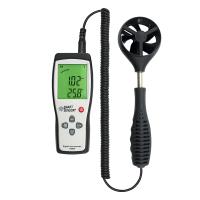
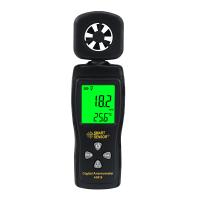
Propeller-Propeller designs (such as those used in portable hand-held anemometers) operate in a vertical plane, requiring the user to manually face the anemometer in the direction of the wind. As the propeller spins, it also spins the magnet (located in the center of the propeller). Nearby, a small magnetic field sensor detects this rotation and sends electrical pulses to the anemometer's processor. The frequency of the pulses is converted to a wind speed reading.
What is an anemometer?
Anemometers have two main applications:
Weather Observations – Along with temperature, humidity, barometric pressure, rainfall and wind direction, the measurement of wind speed cannot be overemphasized for its importance in observing, understanding and predicting the weather. For this reason, high-end weather stations will often include an anemometer in their sensor suite.
Measuring airflow – Anemometers are widely used for weather observations, but it is also common to place a small anemometer inside or in front of ducts, vents, and other locations to get the velocity of the air being moved.
Why is it beneficial to have an anemometer?
Benefits depend on how you use your anemometer, including safety, personal property protection, home improvement, property management, and getting the most out of your favorite recreational activities.
Safety – Knowing the wind conditions at your exact location has many benefits for keeping your family safe. Anemometers will notify you of high winds at your home, golf course, construction site, and more.
PROTECT PROPERTY – In addition to keeping loved ones safe from harm, reliable wind speed readings and timely severe wind warnings can give you the opportunity to put down hanging plants, pull patio furniture inside, and take care of other things before your home gets damaged.
Golf, boating, drones and rc planes, and more – reliable wind speed readings can help you better enjoy hobbies that are directly affected by the wind. Having an anemometer at the pier, fairway, and more can provide vital information to help you make better decisions when engaging in your favorite activities. It can also help you know when conditions indicate that it's better to pack up and go home.
Tuning heating and cooling systems – Placing an anemometer in front of a duct meter or inserting it into pipes, vents, etc. allows you to measure airflow, which can help optimize the performance of your home or commercial heating and cooling system. An anemometer can serve a similar purpose in automobiles or other situations where air circulation needs to be measured.
Storm Spotters and Storm Chasers – Partnering with organizations like SKYWARN and the Bureau of Meteorology, the Storm Spotters and Chasers Network provides an invaluable “ground watch” service that helps keep communities safe during severe weather events. The ability to measure wind speed is often important in the weather readings that observers and chasers need to communicate to authorities.
Watch the Weather – More and more people are discovering the joys of being a neighborhood weather pro. As any weather buff knows, keeping conditions in check and having an anemometer to provide reliable readings is an essential part of any weather station's sensor kit.
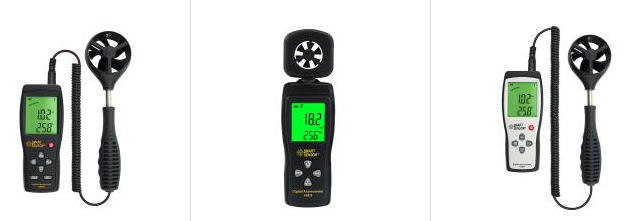
- 1Share several different types of anemometers
- 2Frequently Asked Questions in Light Resistance Testing ISO 105 B02 and AATCC 16
-
![SMART SENSOR SMART SENSOR AS856 Anemometer]()
-
![SMART SENSOR AS836 split anemometer]()
-
![SMART SENSOR AS816 Anemometer (Mini)]()
-
![AMITTARI AA-136C Three Cup Anemometer]()
-
![AMITTARI AA-136V impeller anemometer]() AMITTARI AA-136V impeller anemometer$ 167.00
AMITTARI AA-136V impeller anemometer$ 167.00