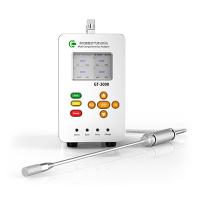
The working principle of infrared Gas Analyzer and its advantages and disadvantages
Infrared Gas Analyzers are used to measure the amount of various gases. The amount of gas is determined by the amount of light of a particular frequency absorbed by the gas as it passes through it. Different molecules in the air absorb different frequencies of light, and measuring the frequency of absorption clearly provides a relationship to the amount of a particular gas in the air.
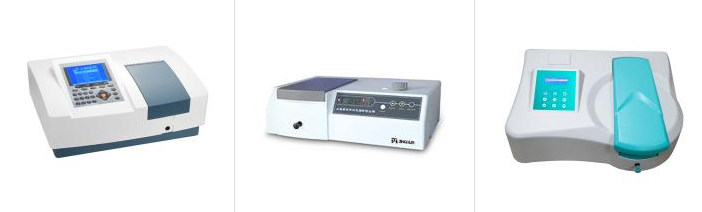
There are dispersive and non-dispersive infrared analyzers. Dispersive infrared analyzers are used in laboratories as Spectrophotometer s. Non-dispersive infrared analyzers (NDIR) are used for continuous measurements in industrial applications.
Absorption spectra of infrared radiation absorbed by gases are individual for the gas type. In optical analyzers of each absorption type, the basic equation relating photon absorption to species concentration is the Beer-Lambert law (sometimes called the Lambert-Beer method):
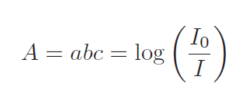
where,
A = Absorbance
a = extinction coefficient of the photon-absorbing substance
b = path length of light passing through the sample
c = concentration of photon-absorbing species in the sample
I0 = light source (incident) light
Intensity I = intensity of light received after passing through the sample
Construction and work:
There are two tubes in the analyzer, one filled with a reference gas and the other with a light-absorbing sample or process gas. The reference gas is usually a gas that does not absorb light, such as nitrogen.
The upper mirror splits the incoming light (infrared light) into two parallel beams. One bundle is used for measurements and the other is used as a reference.
The reference beam passes through a reference cell filled with air or N2 and is reflected from the bottom mirror onto the semiconductor Detector. The measuring beam passes through the measuring cell and is reflected onto the semiconductor Detector in the same way as the reference beam.
The constituents to be measured in the gas sample flowing through the measuring cell absorb some of the measurement light, thus reducing the intensity of the light relative to the intensity of the reference light. The two beams are alternately excised from the Detector by semicircular rotating sectors. This allows the Detector to convert the difference in intensity between the measurement and reference beams into an AC signal that represents the concentration of the gas being measured.
advantage:
Gas molecules do not directly interact with gases.
Non-destructive analysis.
Infrared Gas Analyzers are the standard Detectors for measuring gases in any given environment.
Monitor emission levels over time.
shortcoming:
Simple Measurements Become Complex Measurements
The cost of measuring gas normalization parameters is greater than the cost of a dust measurement