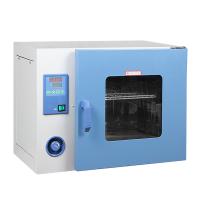
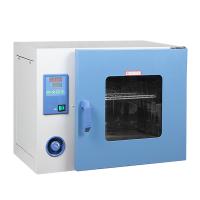
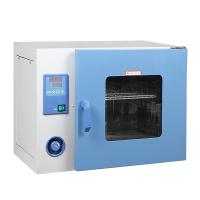
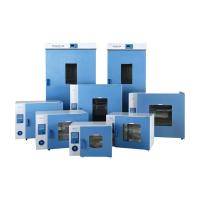
How to choose the right laboratory oven?
Laboratory oven principle
A good lab oven will last for years with heavy daily use, so it's worth giving a little thought when choosing the right oven for your needs. This blog post lists some important features to consider when looking for an oven for aggregate, soil, concrete or asphalt testing.
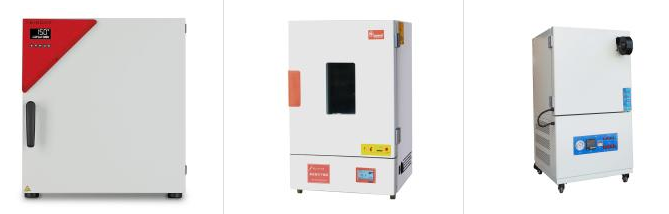
test application
Construction materials testing applications use laboratory ovens to dry materials at controlled temperatures and heat bituminous materials for processing and testing. When heating aggregates, soil, and asphalt, it is important to follow testing protocols and avoid high temperatures that can alter their properties. These ovens are used by other industries for applications such as heat treatment, annealing and conditioning of metals and other materials.
temperature range
The maximum temperature rating is a major consideration when matching a laboratory oven to your application. Obviously, you need an oven with a maximum temperature equal to or higher than the maximum temperature called for in the test method. However, models for higher temperature ranges may not always provide the stability and uniformity required at lower temperatures. Additionally, these ovens may use more expensive components and may be more expensive to operate.
Many oven models also list a minimum operating temperature. This is the lowest temperature for the oven to reach its stated specifications. When looking for ovens to test various materials using different test methods, the minimum temperature comes into play.
Types of Convection Ovens
Heat is distributed throughout the chamber of a laboratory oven by gravity convection or mechanical ventilation (forced air) to heat the contents.
Gravity furnaces rely on temperature and density differences in the heated air to circulate through the chamber. This natural circulation results in reduced temperature stability and uniformity and occasional dead spots within the chamber. Gravity convection ovens, on the other hand, are ideal for simple drying applications, or where strong airflow may displace lightweight sample material. They are usually more economical to buy and operate.
Forced Air Ovens have powered blowers that actively distribute air through special baffles in the chamber to produce even heat. Applications with multiple samples, higher moisture content, and required levels of precision or uniformity will benefit from forced air convection. When deciding on an oven, check the test methods, many ASTM and AASHTO standards require a forced-air design.
chamber selection
The volume and size of the chamber are important factors to consider. The sample compartment needs to be adapted to the size and shape of the sample and should take into account the number of samples that need to be loaded at a given time. If you choose a chamber that is undersized, it will affect your workflow. Chambers that are too large waste lab space and add higher operating costs to heating unused chamber areas. Externally, the oven needs to fit the available floor space and ceiling clearance, and you need to be able to move it in through available doorways. Most oven compartments are designed to accommodate additional racks and relocate existing racks.
uniformity and stability
Uniformity in a laboratory oven is a measure of how consistent the temperature is at different points in the room. Cold or hot spots can affect overall accuracy and can affect test results. All familiar oven manufacturers will indicate uniformity ratings for their laboratory models and some industrial models. Stability refers to the temperature range above and below the setpoint that a thermostat or control maintains within the oven.
energy demand
Before buying, you should know the capacity and configuration of the power supply in the laboratory and the power requirements of the oven. Before installation, you may need to plan for electrical upgrades or modifications. With some ovens, the amperage may be increased beyond stated specifications during start-up. Gas ovens are also an option when high-volume process chambers or continuous operations are anticipated and reduced uniformity can be tolerated.
ventilation
If fumes from heating samples in the laboratory are undesirable or dangerous, the oven exhaust will need to be vented outside. In some cases, ovens can be placed under a fume hood with sufficient capacity, and many ovens have the option of direct forced ventilation through built-in ports. Some models include options for explosion proof motors, which are required when materials or fumes are particularly volatile. Samples with high moisture content may also require ventilation to ensure adequate drying performance. Safe and effective ventilation may require the services of an HVAC professional to design and install a good system.
Recovery Time
Frequently opening the oven door to add or remove samples puts an additional burden on the system as it tries to make up for lost heat. A short temperature recovery time is a desirable performance characteristic, but it does require additional energy. If your specifications require a high degree of uniformity and accuracy, reduced recovery times are important to you. Otherwise, heat loss can be satisfactorily controlled by limiting the frequency of door openings and maintaining an adequate sample load within the chamber.
Materials
Many laboratory ovens have stainless steel liners and shelf construction to prevent corrosion and deterioration. If your materials are not particularly corrosive, models with galvanized or galvanized steel interiors may be considered economical options. Ovens with a double-wall construction, with better insulation between the chamber and the outer cabinet, run more economically, more evenly, and have cooler outer surfaces for added safety.
control options
A variety of controller options are available, from simple analog dials with bimetal thermostats to high precision programmable digital PID controllers with data logging, calibration routines, self-diagnostics and even remote network access. Stuff is neat, but you need to strike a balance between feature cost and benefit. If you process a large number of samples per day, or if your lab is "understaffed", it can be helpful to have ovens timed, automated or even remotely operated and temperature protected set points. If an entry-level technician will be using an oven, perhaps the simpler the better. The point is to consider the options available and make an informed decision.


- 1Laboratory oven type principle fault problem maintenance
- 2Principle, application and selection of Electric Oven
- 3Principle, application and selection of Electric Oven
- 4Principle, application and selection of ozone sterilizing oven
- 5Principle, application and selection of tunnel oven
- 6Working principle and application analysis of laboratory oven
- 7Hot Air Oven FAQ and its solution
- 8Precision oven FAQ and its solution
- 9Oven FAQ and its solution