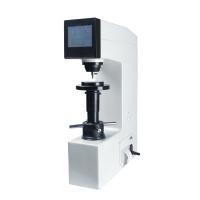
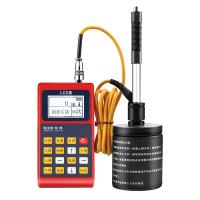
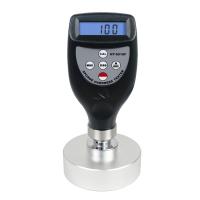
How to test the hardness of copper?
Copper plays an important role in human life. From electricity to water, copper makes everything possible.
It allows current to pass at the same voltage. It is a good conductor of electricity.
Copper is used in appliances, and almost every high-quality electric motor has copper wires.
In the past, tableware was made of copper, which was a good conductor of heat and cold. Copper by itself is soft by nature, but when you mix it with any other metal it hardens.
How hard is the metal?
Hardness is known as a metal's resistance to indentation. Hardness doesn't stay the same forever, it depends on the strength and malleability of the metal.
The hardness of a metal depends on the method of measurement. Measurement results are expressed in quantitative numbers.
The different properties of metals allow them to resist or deform for a long time when a load is applied. Greater resistance to deformation indicates higher hardness of the material.
The hardness of a material is often used in quality testing and quality control of materials.
The main reason for quality control of materials is because they are fast and known as non-destructive testing. The following are some important methods for measuring hardness of materials:
Indentation Hardness: This is a simple method by which we can measure a material's resistance to deformation when a constant pressure or load is applied to a sharp object. Can be measured by Rockwell, Brinell, Coast and Vickers.
Scratch Hardness: In this method, we measure the resistance of a metal to permanent plastic deformation or fracture due to the friction of a sharp object. To measure this method, the Mohs scale is used.
Springback Harness: Springback hardness is a method in which a diamond hammer is dropped from a specific height at a specific height to check its hardness. Bennett hardness and Leeb rebound hardness scales are used to measure rebound hardness.
A conversion table is used to convert one scale to another. for practice. Each of these categories has a separate metric.
Copper characteristics: (related to hardness)
Copper is usually used in thin plates in strip form. It is composed of 99.9% pure copper, while 0.1% may be other metals.
In its pure form, copper is soft and extremely malleable, and can be used in a variety of applications, such as intricate decorative works.
In the past, it was commonly used in the construction of buildings. Heavy gauge materials are used with copper because copper has lower strength than other metals.
Over time, copper in building structures was replaced by other strong metals.
Many years ago, cold rolled copper was introduced and other materials were reduced in size.
Cold rolled copper has a long life and low maintenance compared to other materials.
Cold rolled copper is harder and less ductile than soft tampered copper. It is a popular form of copper and is used for architectural purposes.
Common mechanical properties of copper are strength, hardness and ductility, which determine the condition of copper.
You can easily increase the strength and hardness of copper. A common way to increase the strength of copper is through alloying, but it affects the electrical conductivity.
The hardening process is done by heat treatment, which can develop a tensile strength of 1500 N/mm2.
Test hardness:
There are different types of tests to determine the hardness of metals, but for copper there are only three different types of tests that can be used to determine the hardness of metals. The test types are discussed below:
Rockwell test:
The Rockwell hardness test is a common test to check the hardness of copper. It consists of thirty different tests, which include load numbers and indenter configurations.
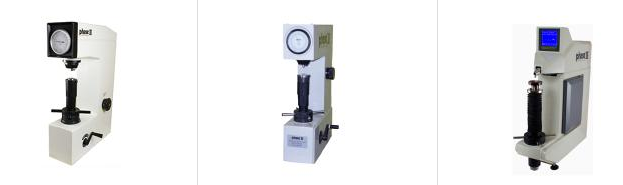
Scales B and C are only for a thickness of 1 mm and can be used for copper alloys of this thickness. For thin products, it should be tested by surface scale N and T. Check the hardness of thin materials with a microhardness scale.
Brinell test:
This is a large and extensive indentation test, not suitable for thin and linear materials. It is widely used for testing large rods, rods, plates and other heavy materials.
Testing of these materials will produce larger indentations. Brinell testing is only performed on material that is at least 3.2 inches thick.
Vickers and Knoop tests:
The Vickers test is also known as the diamond pyramid hardness test. The loads used in this test ranged from 1 to 120 kilograms. If the material weighs less than 1 kg, a Vickers microhardness test will be performed. The knob test is specially designed for microindentation hardness testing.
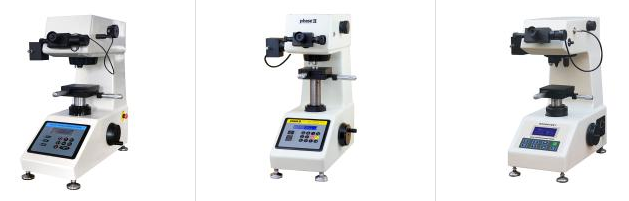
The test is carried out with the help of a slender indenter.
All of the above tests are designed to check the hardness of copper, and the choice of test depends on the quality and type of copper.


- 1What is the principle of the Vickers test?
- 2What is the purpose of the Brinell Hardness Tester?
- 3The principle and subdivision type of Vickers Hardness Tester
- 4Learn the basics of Vickers hardness testing
- 5How to test the hardness of copper?
- 6Comparison of six hardness test methods of Vickers, Rockwell, Brinell, Mohs, Shore and Knoop
- 7What is the Vickers hardness test? How to test Vickers hardness?
- 8Microindentation Hardness Testing Principle and Its Typical Applications
- 9When to use Brinell and Rockwell hardness tests?