Is hardness measurement more convenient than tensile testing?
What is a hardness measurement test?
In order to understand hardness measurement, we first need to test hardness.
Hardness is the ability of a material or product to resist any type of force (such as processes such as drilling or penetration) without deforming.
At present, there is no scale for measuring product hardness in the world.
Therefore, different processes are performed on the product to obtain different results, and finally a full hardness measurement test is performed.
There are many hardness tests used for this purpose in the world, but the main tests include Rockwell test, Brinell test and Vickers test.
Each test provided us with a completely different and separate set of product results.
What is a Tensile Test?
Tensile testing is the testing of tension in different samples of a product.
In it, objects are tested to their limits until they are destroyed.
The properties of the product that are usually measured by this tensile test are the ultimate tensile strength of the product, the maximum breaking limit of the product, the maximum elongation of the product, and its reduction in area. It has to do with physics.
From a product security standpoint, this isn't very useful.
This is so because the product in it needs to be broken so that we can start to understand the limits of the product, the extent to which the product will stretch itself and break.
This process is also mainly used to find the elasticity of the product. All these processes are ultimately related to Young's modulus. Yield strength and strain hardening are also part of it.
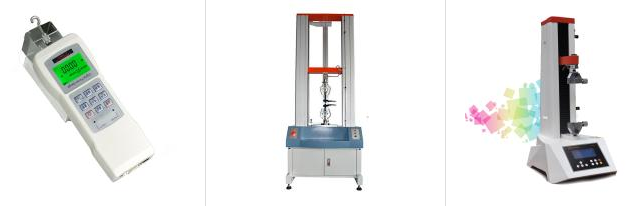
Why Hardness Testing Is More Convenient Than Tensile Testing
In a hardness test, no product is harmed or damaged, while in a tensile test, the opposite is true.
In a tensile test, the product is stretched until it breaks so that the total tensile strength of the product can be accurately obtained.
Another reason is that hardness testing can tell us about all the specifications of a product without damaging them, whereas tensile testing does the opposite.
It needs to run a different process which can lead to damage or even damage to the product.
Therefore, this is the main reason why hardness testing is better than tensile testing.




- 1Tensile machine application in various industries
- 2Technical analysis of key parameters of Tensile machine: Scientific selection from force measurement accuracy to Power system
- 3Tensile machine purchasing guide [dry version]
- 4Talking about the performance test of epoxy resin film coated on PET
- 5ASTM D5019 Single-layer roofing film reinforced CSM board (chlorosulfonated polyethylene (PE)) standard interpretation
- 6Common problems and solutions in tensile testing
- 7What is tensile strength testing and which products can be tested?
- 8Factors Affecting the Performance and Accuracy of Tensile Testing Machines
- 9Classification of Tensile Testing Machines
-
![Patek Jushi LY-7012C Tensile Tester 1000KG]()
-
![BaidaJUSHI LY-7012A Small Tensile Testing Machine 200KG]()
-
![CHINA NBC-1024-2 Tensile Tester 5T]() CHINA NBC-1024-2 Tensile Tester 5T$ 6635.00
CHINA NBC-1024-2 Tensile Tester 5T$ 6635.00 -
![CHINA NBC-6820 Ring type initial tacking machine Tensile Tester]()
-
![CHINA NBC-1023-1 Computerized Double Column Tensile Testing Machine]()
-
![CHINA NBC-1021 Touch screen single column Tensile Strength Tester 10KG]()