What is the definition of turbidity and how to measure it?
What is Turbidity?
Turbidity is defined as cloudiness or cloudiness caused by suspended solids not normally visible to the naked eye. The measurement of turbidity is an important test when trying to determine water quality. It's an overall optical property of water that doesn't identify individual substances; it just says there's something there.
Water almost always contains suspended solids consisting of many different particles of different sizes. If you place a sample, some particles are large and heavy enough to eventually settle to the bottom of the container (these are settleable solids). Smaller particles will only settle slowly if possible (these are colloidal solids). These particles make the water look cloudy.
The term turbidity (also known as haze) is also applied to transparent solids such as plastics and glass.

What causes cloudiness?
Organisms such as phytoplankton can cause cloudiness in open waters. Erosion and sewage in highly urbanized areas contribute to the cloudiness of the water in these areas. Construction, mining and farming disturb the soil and can lead to elevated levels of sediment that can flow into waterways during storms. Rainwater from paved surfaces such as roads, bridges and parking lots can also cause turbidity.
In drinking water, the higher the turbidity, the higher the chances of developing gastrointestinal problems for those using the water. Contaminants such as viruses and pathogenic bacteria can attach themselves to suspended solids. These solids can interfere with disinfection.
High turbidity levels can reduce the amount of light reaching lower depths in bodies of water such as rivers, lakes and reservoirs, which can inhibit the growth of some forms of aquatic vegetation and negatively affect species that depend on them, such as fish and shellfish. High turbidity also hinders the fish's ability to absorb dissolved oxygen.
How is Turbidity Measured?
A common measure of turbidity is the nephelometric turbidity unit (NTU).
You can check for turbidity in water in a number of ways, the most direct being a measurement of the attenuation, or decrease in intensity, of a light source as it passes through a water sample. The older system was called Jackson Candles and the units were expressed as JTU or Jackson Turbidity Units. It uses candle candles, viewed from a clear column filled with water. It can be seen that the length of the water in the candle is related to the turbidity in the water sample. With the advent of electronic instrumentation technology, this method is no longer used.
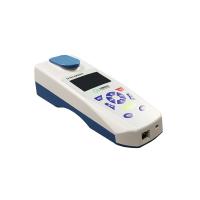
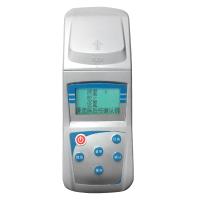
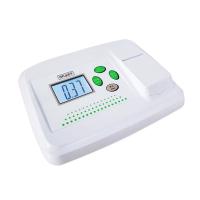
Particles suspended in water will scatter the light beam focused on them. Scattered light is then measured at various angles from the incident light path. This is now considered the more accurate method of measuring turbidity. To measure turbidity this way, use a nephelometer such as the LaMotte 2020we. Nephele is the Greek word for "cloud"; a measuring device of "measure." Turbidity, therefore, means 'measurement of turbidity.' 'Most nephelometers measure scattered light at 90°C. If more light reaches the Detector meaning there are many small particles that scatter the source beam, less light reaches the nephelometric unit (NTU)) is the unit of measurement used by nephelometers that meet EPA design criteria. The amount of light scattered is affected by many aspects of the particle, such as color, shape, and reflectivity. Therefore, heavier particles may settle quickly and may not contribute to the turbidity reading, so the relationship between turbidity and total suspended solids (TSS) may vary depending on where the test sample is collected.
Secchi disks can be used when measuring turbidity in environmental applications such as oceans, rivers and lakes. It's a black and white disc that's been put in water until it's out of sight. At this depth, known as the Seki depth, the correlation number is recorded as a measure of clarity in the water. The advantage of using this device in open water is the ability to measure turbidity at various depths where multiple turbidity layers exist. The device is also easy to use and relatively inexpensive.
Drinking water standards and testing methods
Many factors can affect the quality of drinking water, so government regulations set allowable levels of turbidity. In the United States, public drinking water systems that use flocculation or direct filtration for turbidity control must not leave treatment plants with a turbidity turbidity unit (NTU) greater than 1.0. Of the samples collected for turbidity measurements, the turbidity should remain less than or equal to 0.3 NTU for at least 95% of the turbidity collected in any one month. If public drinking water systems use any other means of filtration than flocculation or direct filtration, they are subject to respective state limits, but even these must not exceed 5 NTU. Typically, utilities will attempt to maintain turbidity at approximately 0.1 NTU.
Analytical method
Published test methods for turbidity analysis include:
US EPA Method 180.1, "Turbidity"
ISO 7027 "Water quality: Determination of turbidity"
No. 2130B "Standard Method"
Various ASTM methods
Nephelometers and Nephelometers
In this discussion, we will focus on the use of turbidimeters and nephelometers to analyze turbidity in drinking water as well as in environmental and industrial applications. The difference between the two is subtle. If the light Detector is at a 90° angle to the light source, the meter is considered a nephelometer, and if it is at a 180° angle it is a nephelometer. Since one or more light sources in most portable meters contain both types of Detectors, these meters are often referred to as nephelometers.
As mentioned earlier, turbidity measurements in drinking water are important because bacteria may use suspended particles to hide "particulates" in the chemicals that utilities use for disinfection. The particles themselves also interact with the disinfectant, making it difficult to maintain high enough residual levels to effectively neutralize the pathogens present.
Most portable turbidimeters vary according to the type of light source used. The two types commonly found are incandescent tungsten bulbs (white light) and infrared LED bulbs.
The turbidity of the sample will increase with the amount of undissolved solids present. Measuring light as it is scattered at a 90° angle is a better and more accurate method when measuring in the lower range, less than 40 NTU. At higher ranges, 180° angles are more accurate. Between 500 and 1000 NTU, most meters will convert from 90° angle measurement in NTU to 180° angle and attenuation units or AU, the two units can be directly compared.
Nephelometers with an ISO-specific design use an infrared LED (IR-LED) with a wavelength of 860nm and a collimated light path required by the following method: ISO 7027 / DIN EN 27027 (EN ISO 7027).
Nephelometers with an EPA-specific design use incandescent tungsten lamps and require compliance sampling for nephelometric determination of turbidity according to EPA Method 180.1, which states:
"Variances in the physical design of nephelometers can lead to differences in turbidity measurements, even when calibrated with the same suspension. To minimize this variance, the following design criteria should be followed:
Light source: tungsten filament lamp, its color temperature is between 2200-3000°K.
The distance traveled by the incident light and scattered light in the sample tube: the total does not exceed 10 cm.
Detector: centered at 90° to the incident light path, and the distance from 90° does not exceed ±30°. The Detector and filter system (if used) should have a spectral peak response between 400 nm and 600 nm.
The sensitivity of the instrument should allow detection of a turbidity difference of 0.02 NTU or less in water with a turbidity of less than 1 unit. The instrument should measure turbidity from 0-40 units. For low turbidity, several scopes may be required to obtain sufficient coverage and sufficient sensitivity. "
The reason for this is that an infrared light source will minimize or possibly eliminate the effects of coloration in the sample. These may lose sensitivity to the smaller particles at this 860nm wavelength because smaller particles scatter less at 860nm than at visible wavelengths. A tungsten type "white light" meter will have greater sensitivity for those small particles, but will be less accurate when there is any color in the sample.
It is important to remember that with both types of portable turbidimeters, floating and moving particulate matter can cause slight measurement deviations. For these meters to work well, samples should always be measured immediately, as particles will settle over time. It is better not to switch the meter on and off frequently between analyzing samples to maintain a constant bulb temperature. Also, when placed in the sample chamber, the location on the sample cell should be marked to account for variance in glass vials.
Sampling, Calibration and Analysis
For the sake of discussion, the LaMotte 2020we/wi turbidimeter will be used as an example. Most portable turbidimeters will follow a similar procedure for calibration and testing. Always follow the manufacturer's recommendations for use, care and storage of the meter.
The meter shall come with a set of turbidity standards. If not, buy the standard the manufacturer recommends for that device. 2020we/wi meters come with blank or 0 NTU standard, 1 NTU standard and 10 NTU standard. Other NTU level standards can be purchased separately. Always choose a standard that is close to the range of turbidity samples being tested. For accurate results, choose the standard within the smallest possible range. The meter should be calibrated at least monthly, but the calibration should be checked daily to ensure it is still accurate. A check can be performed by scanning a sample of one of the standards to ensure the meter is still reading correctly.
Turbidity testing in conditioned water systems is a critical step in ensuring compliance and therapeutic efficacy. Great results can be achieved with careful attention to procedure and technique. Maintaining the instrument, including gauges, tubes and sample chambers and careful sample handling, is better at reducing interference and providing accurate results. Periodically check the sample chamber in the gauge for scratches. If so, replace the chamber as soon as possible. The same applies if the sample tube is scratched. It is not recommended to use silicone oil on scratched glass surfaces as this will create an uneven oil surface on the tube and alter the final reading.
Regardless of the design level of the meter, only by paying attention to these details and performing correct calibration can the meter work properly.

- 1Common types and application differences of STIP-scan
- 2What is haze or turbidity?
- 3Turbidity Meter/Turbidity Sensor FAQ
- 4What is a turbidity meter and how does it work?
- 5Water quality testing instrument FAQ collection
- 6Why is silicone oil important in turbidity meter measurements?
- 7How to measure the turbidity of a liquid?
- 8Testing water quality with turbidity instruments
- 9Techniques for measuring turbidity in water