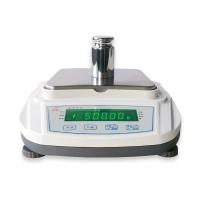
How to calibrate analytical balances?
Analytical balances are very sensitive devices that can measure masses down to 0.00001 gram. An analyst may need this specificity for the substance she is weighing, so accuracy is very important. The calibration process ensures that the analyst's balance is working properly, but calibration is only as good as the analyst's calibration skills.
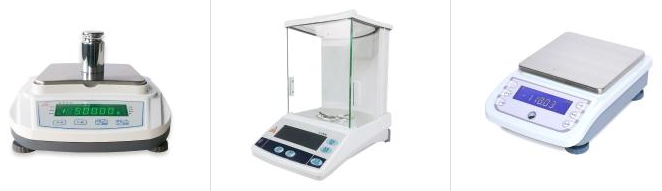
Make sure you don't have to follow a specific procedure to calibrate your balance. In some laboratories, such as pharmaceutical laboratories, the balance will have its own specific calibration procedure which you will need to follow to comply with the necessary regulatory quality standards.
Check the expiration date on the calibration label on the analytical balance, if available. If the balance calibration is out of date and requires a valid calibration than the one you did yourself, the balance is not suitable for use and any procedure you use to measure substances may not be accurate.
Check the balance for a sticker, or refer to the balance documentation, which indicates how often the balance needs to be calibrated. Some analytical balances have an internal auto-calibration feature that only requires you to calibrate them intermittently.
Keep the air bubbles on the level of the balance. The scale will have adjustable feet that you can individually rotate to raise or lower one side. Equipment needs to be accurate.
Ask other analysts if they turned off the balance in the previous hour and check that no one has moved the balance. Both of these issues can affect the accuracy of the device. Wait at least one hour after the balance has been switched back on before attempting to calibrate. If someone has moved the balance, you may need to perform a more efficient calibration or call a professional for recalibration.
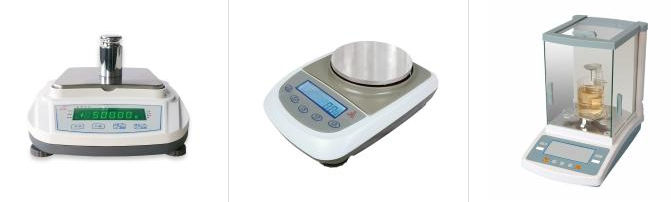
If there is a scale, open the door of the scale. Remove any dust or particles from the balance that may interfere with the measurement process. To do this, use a dry cloth or a soft brush.
Press the "Tare" button, close the door and tare the balance. Allow the reading to stabilize for a few seconds to ensure the balance reads zero.
Select one or more weights to calibrate the balance. These weights should be normalized to exact weights. Agencies such as the National Institute of Standards and Technology have accuracy standards that manufacturers of commercial scales can follow. One weight may suffice for your lab's standards, and you can use roughly the same weight of substance as you need. Also, if you plan to weigh a variety of items over a wide range, you can use two or three weights that cover the balance capacity to ensure accuracy over the entire range.
Open the door and lift the weight with tweezers or gloves - oil and moisture from your hands will alter the weight; place the weight lightly in the center of the balance, close the door and let the balance settle for a few seconds. Record the result and remove the weight.
Refer to manual or calibration procedure to ensure weight is within acceptable tolerances. You can then use the balance for testing.


- 1How does the analytical balance work?
- 2Offset printing ink laboratory performance testing instrument scheme
- 3Construction and use of electro-optic analytical balance
- 4How do university labs properly use analytical scales?
- 5Edham Adam Luna series electronic analytical balance models
- 6How to avoid weighing errors in precision analytical balances?
- 7The choice of laboratory precision analytical balances is all about accuracy
- 8Factors Affecting the Weighing Accuracy of Precise Analytical Balances
- 9How to ensure the weighing accuracy of precision analytical balances?