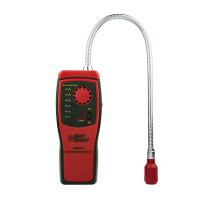
Application of Guaranteed Safety Gas Detector in Underground Pipe Gallery
Background of the project:
The urban underground integrated pipe gallery is a municipal public facility that implements unified planning, design, construction and maintenance, and is built underground in the city for municipal public pipelines. During the construction process, the staff is actually working in a confined environment or a confined space, and the occupational hazard protection for operations in a confined space is particularly important. The organic and inorganic substances contained in domestic sewage and industrial wastewater transported by pipelines and drainage pipelines will produce various toxic, harmful, flammable and explosive substances under the action of microorganisms under anaerobic conditions in closed pipelines. Gas, such as hydrogen sulfide, methane, carbon monoxide, etc., when the gas reaches a certain concentration, it will cause personal injury to the workers, and it will also explode when encountering an open flame, affecting the environment or injuring the surrounding people.
For municipal and public utilities, there are the following situations: gas supply safety inspection, leak detection, will produce flammable gas (CH4), hydrogen sulfide (H2S), etc.; fossil fuel power equipment will produce nitric oxide (NO), carbon dioxide Nitrogen (NO2), etc.
Hazardous gas:
The urban comprehensive pipe gallery is located underground and is mainly used to accommodate urban engineering pipelines. Under the condition of poor ventilation or long-term semi-closed state, the oxygen content is affected by the environment and is thinner than that in the atmosphere. Due to the lack of oxygen, substances in sewers and pipe galleries will ferment to produce hydrogen sulfide (H2S), ammonia (NH3), methane (CH4) and carbon monoxide (CO) gases. The hypoxic environment is more dangerous for inspection personnel, ranging from dizziness, headache, tinnitus, vertigo, weakness of limbs, to difficulty breathing, cardiac arrest, and even death from suffocation. Hydrogen sulfide (H2S), ammonia (NH3) and carbon monoxide (CO) are toxic gases that can irritate the human respiratory tract and are easily poisoned by inhalation, resulting in dizziness, nausea, vomiting, coma and other symptoms, which can lead to shock or even death in severe cases . Methane (CH4) is a flammable and explosive gas. If the content of this gas is too large in the environment, it may form an explosive mixed gas and directly threaten the safety of the pipe gallery itself.
Program overview:
Before working in the underground pipe gallery, the staff need to detect the gas content in the pipe gallery to avoid accidents. In order to fully guarantee the environmental safety in the pipeline gallery, Detectors such as oxygen, hydrogen sulfide, ammonia, carbon dioxide, and methane should be installed to monitor the internal environment in real time. When a certain gas content exceeds the standard, timely measures should be taken to avoid danger.
1. Manual detection scheme
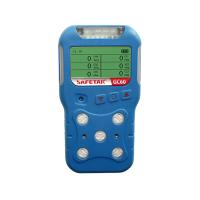
Working in the work area, the portable Gas Detector is a necessary instrument for personal protection and safety. It can detect the change of gas concentration in the working environment in real time, and set the secondary alarm value to ensure that the operators can respond quickly.
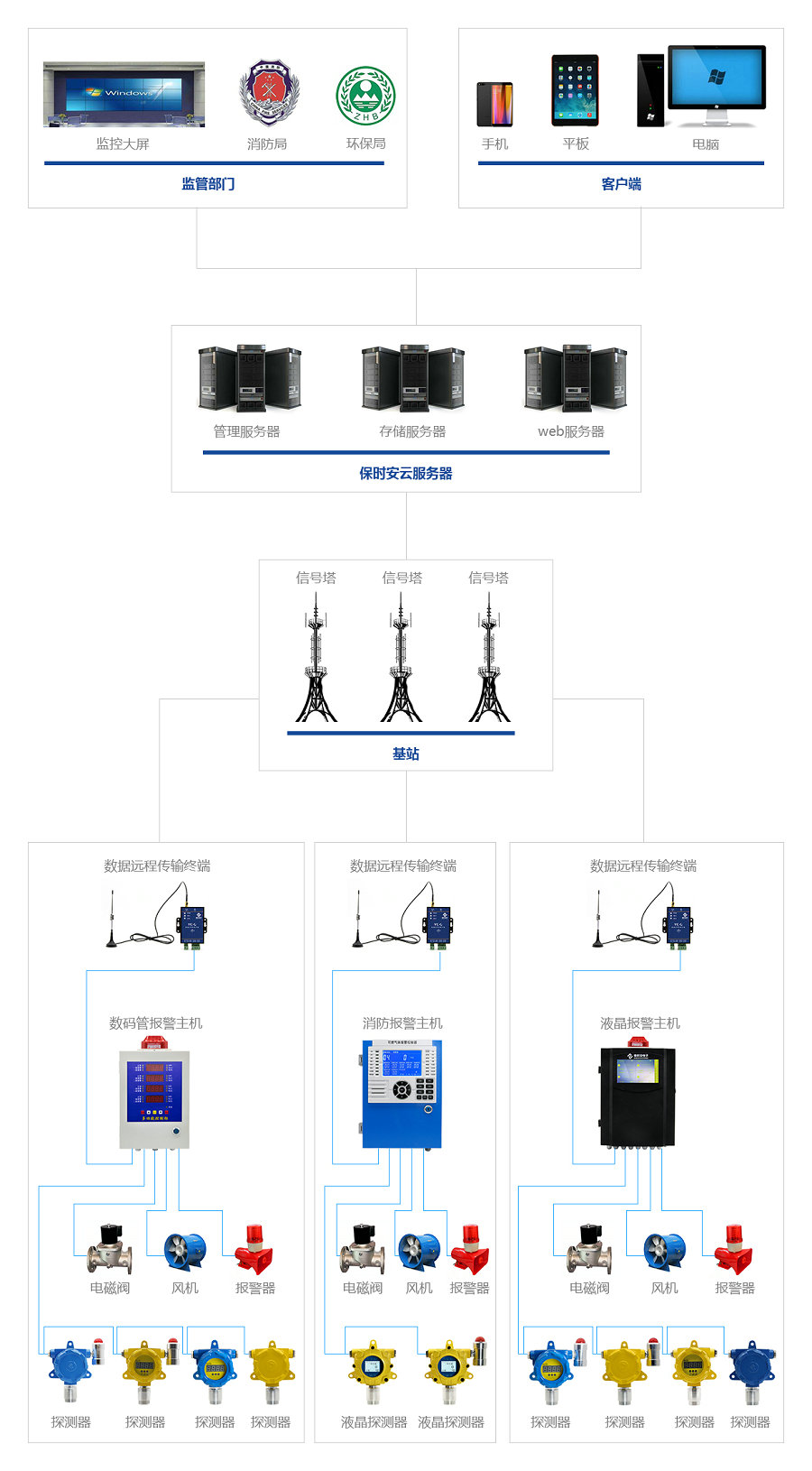
2. On-site gas monitoring and data transmission scheme
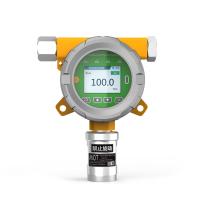
According to the characteristics of gas production in the industry, Baoshian is equipped with a self-developed valve well multi-function detection terminal, which can realize 24-hour all-weather monitoring, and can work continuously for more than 2 years without external equipment. Detect the gas concentration and water level in the environment where the device is located, and self-check the battery power and network signal of the device itself.
The system uploads all the data to be collected to the cloud server, and obtains real-time data through the software interface. Realize the segmental control of the pipeline. Once the measured gas exceeds a certain range, the alarm information will be sent in time, and the emergency plan for decision-makers and managers will be activated to minimize various losses.
3. Terminal system solution
The monitoring platform database includes the graphic data and attribute data of the underground comprehensive utility gallery, the graphic data and attribute data of various main lines, the operation management data of the underground comprehensive utility gallery and comprehensive pipeline, the automatic control and sampling data, and the relevant management of the government and various professional companies. Data, etc., to realize the management of underground comprehensive utility corridors and various comprehensive pipelines.
Managers can check the real-time values of monitoring area parameters at any time through computers, mobile phones, tablets, etc. When the relevant parameters exceed the limit, an alarm message will be sent to remind the manager to take corresponding measures.
System Features:
1. Suitable for harsh environments, it can work continuously for 24 months without external power supply;
2. Visualized and integrated operation and collaborative environment, quick response and timely guidance;
3.GPRS satellite positioning technology, quickly and accurately locate the designated terminal.




- 1Principle and Application Analysis of Composite Four-in-One Gas Detector
- 2Introduction to Working Principle and Application of Carbon Monoxide Gas Detector
- 3Basic Principle and Application of Portable Gas Detector
- 4Basic Principle and Application Analysis of Gas Detector
- 5What is the alarm value of Gas Detector?
- 6What is phosphating Gas Detector?
- 7What is a combustion analyzer?
- 8Application Scheme of Gas Detector in Coking Coal Metallurgy Industry
保时安 - 《保时安》
- 9Application of Gas Detector in Medical Manufacturing
保时安 - 《保时安》