Learn about the types of gloss meters and their applications in paper gloss
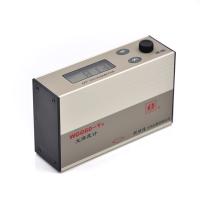
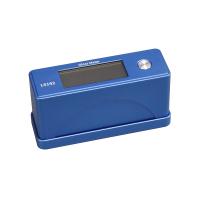
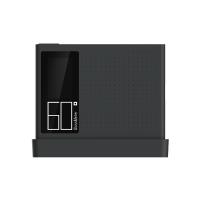
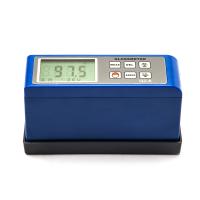
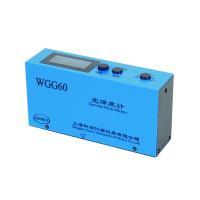
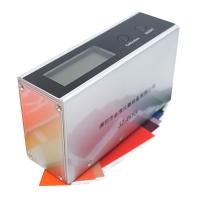
A gloss meter is a device used to measure the specular reflection of a surface such as gloss. Gloss is determined by projecting a beam of light onto a surface at a constant intensity and angle and measuring the amount of reflected light at equal but opposite angles.

angle measurement
Selection of an appropriate gloss meter depends on the application and level of surface gloss. Every digital gloss meter mentions the angle of measurement used. The measurement angle is the angle between the incident light and the reflected light. Most coatings cover the three angles of 20°, 60° and 85°.
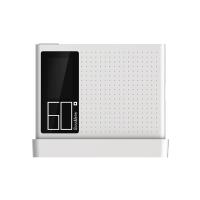
The angle can be selected according to the expected gloss range, for example, the high gloss range of 60° value is greater than 70GU. If the measured value exceeds 70GU at 60°, change the test setup to 20°. The medium gloss range of 60V value is 10-70GU, and the low gloss range is less than 10GU. If the measurement is less than 10GU, change the test setup to 85°.
Types of Gloss Meters
To optimize measurement accuracy, it is equally important to select the correct application angle. There are three types of gloss meters available in the market. They are 60° single-angle instruments, a combination of 20° and 60°, and a type that joins 20°, 60°, and 85°. Two additional angles are used for various other materials. The 45° angle is used for measuring thin films, ceramics, and anodized aluminum, while the 75° angle is used for paper.
The measure of gloss can be referred to as the point at which a paper is represented as a polished photo paper, some of which are more glossy than others. Chances are you will need a hint of shimmer, and it is important to realize that the sheen of various papers is comparatively checked. Glossy paper comes after pearl paper and glossy silk paper. These papers are low in glare and provide a soft sheen to the entire picture. In contrast to lustrous silk, pearl paper has a high luster.
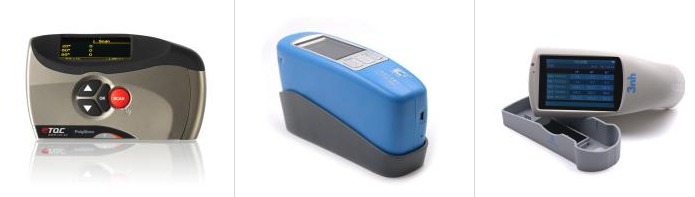
The use of gloss meter
A gloss meter is used to quantify the specular sparkle of a surface. Gloss is controlled by foreseeing a constant power luminance directed towards the surface and measuring the reflected light at the equivalent opposite edge. Gloss estimation can be done using a variety of different profiles, each depending on the type of surface being estimated. For non-metals such as paints and plastics, the measure of reflected light increases with more enlightenment points as a portion of the light enters the surface material and is either fed in or diffused away from the surface material depending on its shadow.

- 1Gloss inspection method of slurry inks
- 2Principle and Application of Glossiness Tester
- 3Working Principle and Application of Metal Gloss Meter
- 4Basic principle and application analysis of insulating paint gloss Detector
- 5Working principle and application analysis of film Glossmeter
- 6Principle and application analysis of microporous gloss meter
- 7 FZ/T 01097 Analysis of fabric gloss test method
- 8Evaluation and Application of Optical Properties of Powder coatings
- 9Coating coatings - Determination of surface gloss and Gloss meter