How does a digital microscope work?
Optical microscopes magnify small objects viewed through eyepieces. However, as technology has improved, digital microscopes have become increasingly popular.
What is a digital microscope?
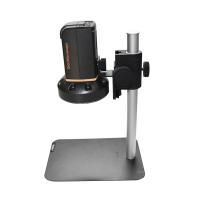
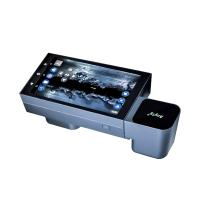
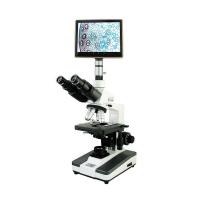
Instead of using eyepieces, digital microscopes use a digital camera connected to a computer monitor to display the results in real time.
How does a digital microscope work?
Output the captured image to a computer monitor using optics and a digital camera. Digital microscopes range from simple handheld versions to advanced systems that offer a variety of observation methods and measurement capabilities.
Some digital microscopes use computer software to perform advanced tasks such as recording video, adjusting images, editing video footage, analyzing 3D samples, taking measurements, and creating reports.

What are the benefits of using a digital microscope?
The purpose of digital and optical microscopes is the same. However, digital microscopes also have other advantages, such as:
Collaboration: Because digital microscopes display images on a screen, information can be easily shared with colleagues.
Comfort: Sitting comfortably allows you to view samples on the monitor display instead of having to sit and look through eyepieces, making the work environment more ergonomic.
Magnification: The magnification of an optical microscope is determined by multiplying the magnification of the lens by the magnification of the eyepiece, while the magnification of a digital microscope is determined by the size of the computer monitor. This means that some digital microscopes have higher magnification than many optical microscopes. For example, the DSX1000 digital microscope from Olympus offers optical zoom magnifications from 20x to 7000x, allowing for close observation of samples and the ability to capture higher quality digital images than can be achieved using conventional digital zoom.
Higher-quality images: Digital microscopes can project images directly onto the camera to create high-quality images. Other image enhancements include anti-glare to reduce glare, high dynamic range (HDR) for better contrast and color depth, the ability to create all-in-focus images that extend beyond the field of view, and angled lighting options.
Image Storage: Images taken on a digital microscope can be saved on a computer hard drive or storage device, allowing users to refer to and examine them as well as create detailed reports.
Ease of Operation: Digital microscopes are often easier to operate than traditional optical microscopes, so work can be done quickly.
What is the use of digital microscope?
Objects ranging from tiny parts to large electronic devices can be efficiently inspected and analyzed using a miniature microscope. Numerous industries including education, research, medicine, forensics, and industrial manufacturing use digital microscopes. They are commonly used for:
Check car brake pads
Detecting Forged Documents in Law Enforcement
Check connector pins in production
Check for collectible coins or stamps
Inspecting Semiconductor Wire Bonds in Manufacturing
Recover and save artwork
Complicated Repairs to Jewelry and Watches
Enhancing industrial QA/QC processes
Quantifying the Presence of Defects in the Automotive Painting Process
Analyze historical files
Conduct field research in archeology and paleontology




- 1Microscope classification, operation and application
- 2How to use trinocular Microscope
- 3How to detect the color difference of fluorescent color-changing materials?
- 4How is the content of non-fibroblasts determined?
- 5 How to measure cell wall thickness and cell cavity diameter?
- 6Determination of Fiber Length How is the distribution frequency calculated?
- 7How to determine the fiber morphology of plant fiber raw materials?
- 8Important instruments in clinical laboratories
- 9Coating Thickness Gauge: How to measure the dry film thickness of non-metallic substrates?