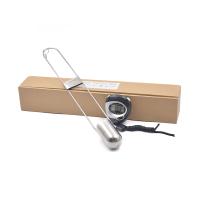
Two different viscosity measurement methods
Viscosity is a measure of a material's resistance to flow, usually a fluid.
Viscosity can be measured using two different methods:
Dynamic Shear Viscosity: A shear stress (force) is mechanically applied to a fluid and the rate of motion of a fluid layer over a stationary material is measured. Viscosity = shear stress / shear rate
Kinematic Viscosity (also known as momentum diffusivity or flow time): Measures the flow rate of a fluid as it moves under the force of gravity over a stationary material. In this case, force cannot be measured since kinematic viscosity is a measure of how fast a fluid moves under the force of gravity.
The following types of viscometers see Test Dynamic Viscosity Measurements:
High shear rate viscometers for paints and pigment coatings, also known as ICI viscometers
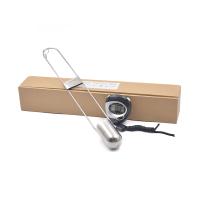
Krebs viscometer (KU meter / Stormer viscometer) for paints, pigmented coatings, pastes and adhesives
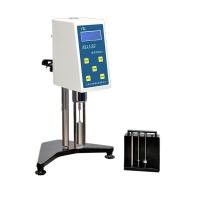
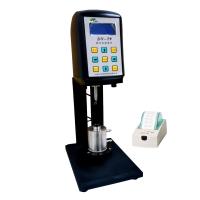
Rotational viscometers for various torque ranges.
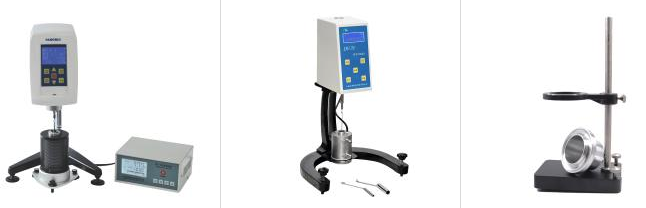
For all of these types of instruments, a cone, mandrel or paddle is placed in contact with the test fluid and rotated at a programmed shear rate. The instrument contains a calibrated spring that measures the fluid's resistance to movement. Depending on the equipment used, viscosity data can be reported in centipoise, poise, Pascal seconds or Krebs. Commonly used ASTM dynamic viscosity test methods include ASTM D4287, ASTM D562 and ASTM D2196.
The following viscometers are used for kinematic viscosity measurement:
Ubbelohde Viscometer
Cannon-Fenske Viscometer
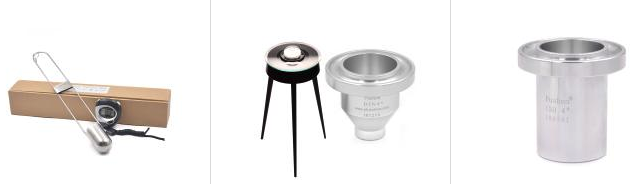
ford cup
Zion Cup
DIN Cup
Cup viscometers are commonly used in paints, inks, varnishes and high viscosity coatings.
Ubbelohde and Cannon-Fenske viscometers utilize a glass capillary through which the fluid flows under the force of gravity. For high viscosity samples, the capillary geometry is too small. Typical applications for capillary viscometers therefore include: dilute polymer solutions, certain types of solvents, dilute solutions, syrups and oils. Intrinsic viscosity is an important technique for characterizing polymers in dilute solutions because it provides information about the molecular weight and conformational shape of a particular polymer in a chosen solvent. Intrinsic viscosity is usually measured using an Ubbelohde viscometer.
Depending on the equipment used, kinematic viscosity can be reported in meters per second, strokes, centior or seconds. Common test methods for kinematic viscosity include ASTM D4212, ASTM D1200, and ASTM D445.
As with all viscosity techniques, temperature can greatly affect test results. The higher the temperature, the more easily the material flows, which results in a lower measured viscosity compared to ambient or sub-ambient conditions. Some viscometers offer selective or programmed temperature control, allowing viscosity testing to be performed at a constant, specified temperature.
- 1Viscosity of polypropylene (PP) amide measured by NDJ Viscometer
- 2Which Viscometer to Choose for Licorice Extract Viscosity Testing? How to Test?
- 3Application of Rotational Viscometer in juice viscosity test
- 4Coating viscosity determination - viscosity cup Yiwen
- 5Working Principle, Classification and Application of Capillary Viscometer
- 6Principle, application and selection of ZAHN5 viscosity cup
- 7Corrugated fibreboard starch viscosity cup its principle, application and selection introduction
- 8Decryption paints original juice viscosity cup, principle, application and selection
- 9Wood lacquer viscosity cup, principle, application and selection introduction