How to consider gloss when measuring color?
Many physical factors can affect the way we see the color of objects. One of these factors is gloss. But do you know how to measure gloss and why it can be challenging?
Measuring Gloss: A d/8° Spectrophotometer measures the amount of light reflected from a surface (not the appearance of an object). Therefore, a glossy object may appear to be a different color than the matte, even though the two objects are measurably the same color.
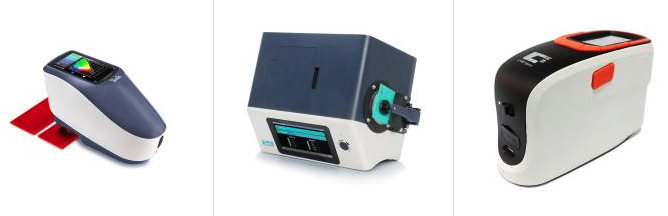
If the standard and batch samples have different amounts of surface gloss, it can pose a significant challenge to color matching.
Our eyes perceive color based on reflected light
When light hits an object, some of the spectrum is absorbed and some is reflected. Our eyes perceive color based on the wavelength of reflected light. Depending on how glossy the surface is, light bounces back to our eyes in different ways.
Specular reflection is the way a perfectly smooth surface (whether specular or not) reflects light at the same angle as the incident beam. In order for the color not to be affected by the gloss of the surface, the observer should position the sample so that reflected light is not visible. The measured color will be fully saturated with no reflected light.
Diffuse reflection describes how light bounces off a surface that is not perfectly smooth at many angles. The viewer cannot avoid this reflected light because it is reflected in all directions. And because the chromaticity of the reflected light is added to the light coming from inside the sample, the perceived color is lighter or less saturated.
There is no doubt that a Spectrophotometer provides a more accurate color match than a subjective visual assessment. We've explored in other blog posts the ways digital color management can save companies time and money by eliminating the need to create and ship actual production samples. Digital color management improves quality control and helps maintain color consistency, a key quality indicator. So, how can you better use our instruments to more accurately match, correct and control color even when standards and products have different gloss levels?
How to Measure Specular Gloss
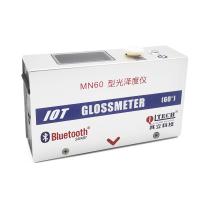
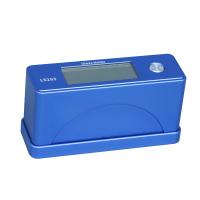
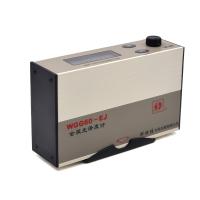
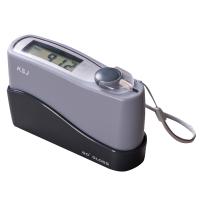
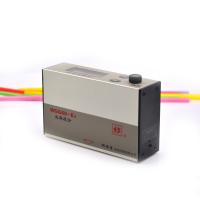
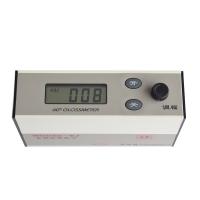
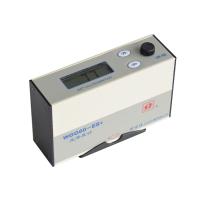
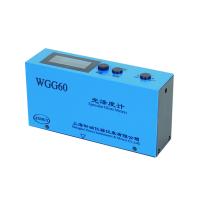
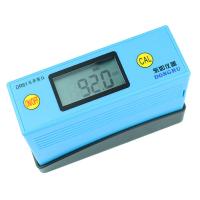
Specular gloss can be quantified. Gloss meters are designed to measure the amount of light reflected from a surface. The specular gloss value is the ratio of the specular reflection from a sample to a standard material under the same conditions.
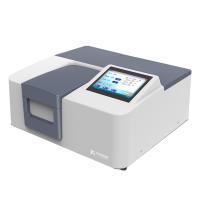
Spectrophotometers are used for quality control and color matching. Depending on the measurement geometry used, color measurements of high gloss and low gloss samples may yield close readings (diffuse 8 degree instrument). But samples may look very different to the human eye.
Datacolor's d/8° instruments (including Datacolor's Inspect 3, 20D, 200, 500 and 800 series Spectrophotometer s) can measure specular gloss to improve results. Utilizing Datacolor's Gloss Compensation can be an effective tool for all colors that vary in gloss between standard samples and batch samples.
Datacolor's 45/0° instruments (including the Datacolor 45G series) do not contain a specular gloss component, making them effective instruments for measuring the color and appearance of objects.
Why Gloss Compensation Technology Matters
Paints, plastics, inks and cosmetics are among the products whose products have many different gloss levels. Many industries that use pigments can benefit from gloss compensation, a proprietary feature within the color control and color matching software offered by Datacolor.
Datacolor's gloss compensation system first measures samples with and without specular reflection. Then, by applying calibrations and mathematical models, we were able to determine relative gloss and then adjust the measurements as if both samples had the same gloss. We can even tweak the formula to achieve the desired gloss finish, further enhancing your matching ability.

- 1Application of Flame Atomic Absorption Spectrophotometry in Detection of Food Talc Powder
- 2Talking about the performance test of epoxy resin film coated on PET
- 3Spectrophotometer principle, structure and application do you know geometry?
- 4Principle, characteristics and application of ultraviolet Spectrophotometer
- 5Principle and Application of Glossiness Tester
- 6Working Principle and Application of Metal Gloss Meter
- 7Basic principle and application analysis of insulating paint gloss Detector
- 8Working principle and application analysis of film Glossmeter
- 9Principle and application analysis of microporous gloss meter