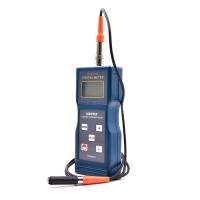
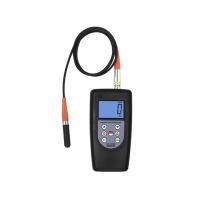
Which Coating Thickness Gauge is Right for You?
Using a coating Thickness Gauge is a very simple, hassle-free process and can make a huge difference in product quality...if it is accurate, highly portable, very easy to use, and gives almost instant results. Once you've found the right coating Thickness Gauge, it's more complicated than practical to use.
So, which coating Thickness Gauge is right for you? It all depends on your needs. Do you need to take lots of different readings without spending a lot of time on calibration?
Whether you're anodizing aluminum, testing the paint thickness of a used car at an auto auction or measuring bond coats on 'sticky notes', whatever your needs we have the right Thickness Gauge for you. Here are some considerations you should consider.
Portability
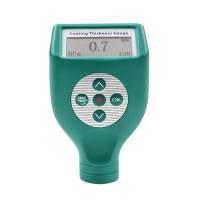
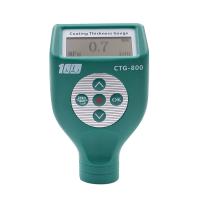
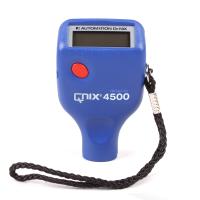
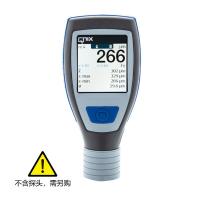
If you need to carry the coating Thickness Gauge with you: online, in the field or other places where you need to go, you generally choose a dual-function integrated coating Thickness Gauge, which can test the coating thickness on the magnetic metal substrate, It can also test the coating thickness on non-magnetic metal substrates . One-piece coating Thickness Gauges are relatively light and portable, such as Nix’s Qnix4200 and 4500 one-piece Thickness Gauges. Not only is it small and lightweight, but it is also versatile, meaning it is easy to take the instrument with you and use it on many different surfaces, ferrous and non-ferrous.
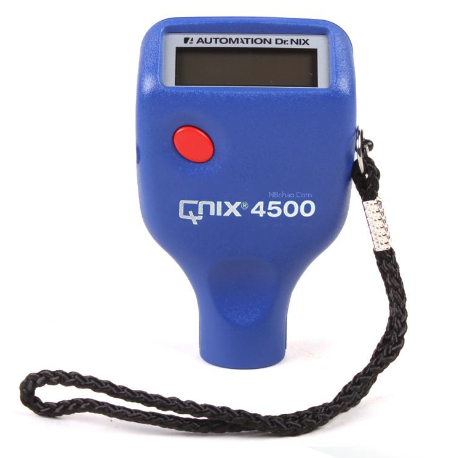
And in general coating Thickness Gauges have calibration, especially ones with a high degree of measurement stability, you can even use it in a busy, buzzing location like a production floor and still rely on the results .
In addition, if the thickness measurement is carried out under some changing ambient temperature, the LZ990 like kett can also be used normally, so the coating thickness can be tested at any stage of the manufacturing process to obtain instant feedback.
With the development of technology, many coating Thickness Gauges have high versatility, high accuracy and ergonomic design, such as Defelsko's 6000 series Thickness Gauge, Elcometer's 456 series Thickness Gauge, large and The clear screen is easy to read in any situation, and the dual-function probe can automatically measure between ferrous and non-ferrous substrates.
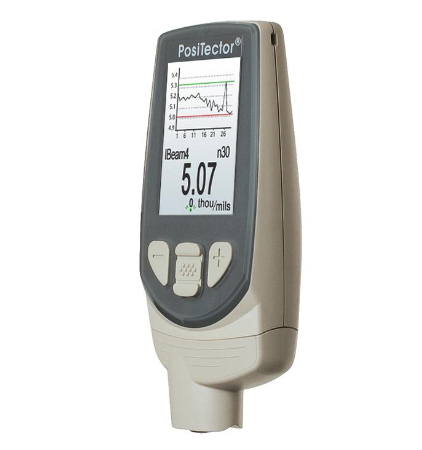
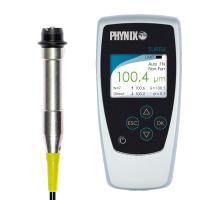
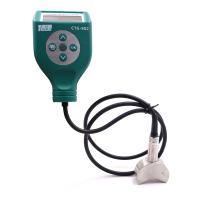
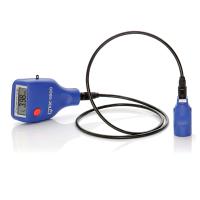
What are the disadvantages? Test size. The built-in probe type coating Thickness Gauge is generally suitable for testing large surfaces. If you need to enter narrow corners or test some areas close to the edge, you generally choose a line type coating Thickness Gauge.
Thickness measurement in special scenarios
In addition to the conventional planar coating thickness measurement scenarios, there are some areas that are difficult to access to measure thickness. In this case, a coating Thickness Gauge with a wire probe type is required.
In addition, there are actually more special scenarios, such as high temperature environment, underwater, small curved surface thickness measurement, curved surface thickness measurement, rough surface, low headroom and other environments. If you need a stable coating Thickness Gauge that can perform normal coating thickness measurement in these special environments, then please use our model tool (coating Thickness Gauge https://www.nbchao.com/list26/ ) to filter.
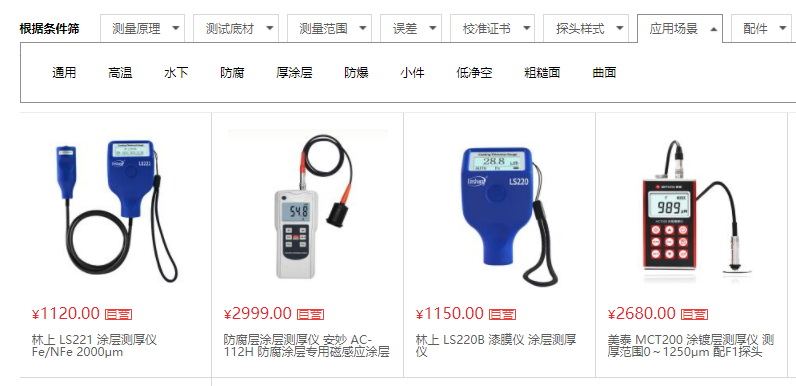
Generally, for test objects with curved surfaces, you also need to clearly define the radius of curvature of the measured object. For the thickness measurement of some extremely small workpieces, some manufacturers will also produce special small thickness measurement probes, such as defelsko's 90-degree small probe and 0-degree small probe. It helps the operator maintain constant contact with the test surface, even in the tiniest of crevices, so you can trust every reading.
As for the calibration function and storage function of the coating Thickness Gauge, in fact, this is already a standard function of the coating Thickness Gauge, but different Thickness Gauges have different storage capacities and support different calibration methods. For example, the standard type and advanced type of defelsko have a difference of 100 times in storage capacity.
Does the coating Thickness Gauge have other functions? certainly. With the development of technology, the functions are becoming more and more complete, including printing data in real time, doing data statistics, graph analysis, etc. if needed.
-
![Germany Knix QNix4500 dual-use Coating Thickness Gauge integrated probe 3mm range]()
-
![QNix 9500 Coating Thickness Gauge, basic]() QNix 9500 Coating Thickness Gauge, basic$ 1194.00
QNix 9500 Coating Thickness Gauge, basic$ 1194.00 -
![Germany Knix QNix4500P/5 paints Thickness Gauge magnetic Induction/eddy Current thickness measurement 5/3mm]()
-
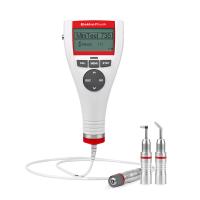
![German EPK MiniTest 735 N0.7 eddy Current Thickness Gauge, Thickness 0~700μm]()
-
![QNix4500P dual-use Coating Thickness Gauge 3mm range]()
-
![Qnix 5500 Coating Thickness Gauge]() Qnix 5500 Coating Thickness Gauge$ 1044.00
Qnix 5500 Coating Thickness Gauge$ 1044.00 -
![DONGRU DR5000S Coating Thickness Gauge 0~5000μm]()
-
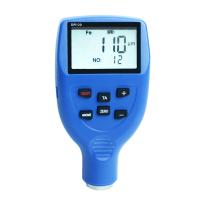
![DONGRU DR120 Coating Thickness Gauge]() DONGRU DR120 Coating Thickness Gauge$ 168.00
DONGRU DR120 Coating Thickness Gauge$ 168.00 -
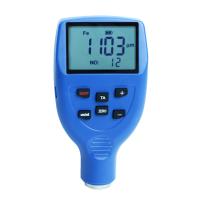
![DONGRU DR3000 dual-use Coating Thickness Gauge 0~3000μm]()


- 1Nondestructive measurement Coating thickness
- 2Principle, application and selection of traffic coatings Coating Thickness Gauge
- 3Principle, Application and Selection of Eddy current Coating Thickness Gauge
- 4Principle, Application and Type Selection of Electronic Coating Thickness Gauge
- 5Explore the principle, application and selection of phosphating layer Coating Thickness Gauge
- 6Principle, Application and Type Selection Analysis of Chrome Coating Thickness Gauge
- 7Principle, Application and Selection of Coating Thickness Gauge for inner wall of small pipe
- 8Basic principle and application scenario of steel Coating Thickness Gauge
- 9Principle and Application Analysis of Coating Thickness Gauge