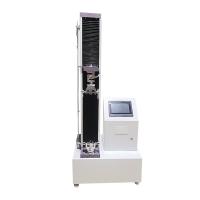
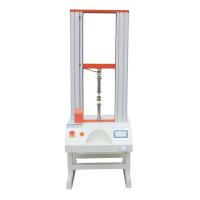
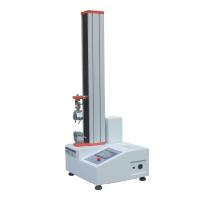
Application of Tensile Testing Machines - tensile strength testing
Tensile strength testing is one of the important tests performed in several industries such as paper, textile, plastic and polymer industries, etc. to determine the mechanical properties of materials.
Why perform a tensile strength test on any material?
Tensile strength testing ensures the quality and effectiveness of materials in various situations. Tensile testing determines the behavior of the material in question when a force is applied to both edges of the material.
After the tensile test is completed, various observations are formed as required. Some of them are:
Material quality of new products under development
Behavior of a material under normal or ultimate force at either end
Can provide a proof of concept for some testing
The result is shared to the buyer to understand the material quality
What is a Tensile Strength Test?
Tensile strength testing is one of the basic physical tests performed on paper, plastics, textiles, rubber, and other materials.
Sample preparation for tensile strength testing.
Sample preparation can vary depending on the purpose of the test.
But more often than not, samples are cut into drums. The shoulders of the test specimen remain broad compared to the test area.
How is the tensile strength test performed?
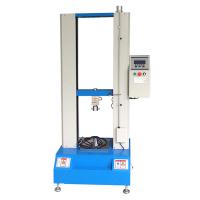
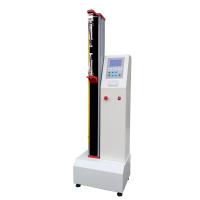
The sample is fixed with clamps. Both ends of these grips are attached to the Tensile Testing Machine.
After that, pull one or both handles away from each other.
This test will stop after a certain period of time, after a certain distance or when the sample breaks. This standard can usually be set in the machines used to perform tensile tests.
Final Observations of the Tensile Strength Tester
Some important parameters measured are:
maximum load
maximum elongation
Young's modulus
Poisson's ratio
Yield Strength
etc…

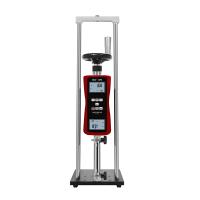
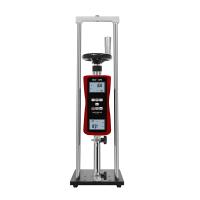
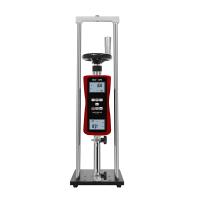
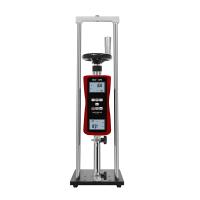


- 1Tensile machine application in various industries
- 2Technical analysis of key parameters of Tensile machine: Scientific selection from force measurement accuracy to Power system
- 3Tensile machine purchasing guide [dry version]
- 4Talking about the performance test of epoxy resin film coated on PET
- 5ASTM D5019 Single-layer roofing film reinforced CSM board (chlorosulfonated polyethylene (PE)) standard interpretation
- 6Common problems and solutions in tensile testing
- 7What is tensile strength testing and which products can be tested?
- 8Factors Affecting the Performance and Accuracy of Tensile Testing Machines
- 9Classification of Tensile Testing Machines
-
![Patek Jushi LY-7012C Tensile Tester 1000KG]()
-
![BaidaJUSHI LY-7012A Small Tensile Testing Machine 200KG]()
-
![CHINA NBC-1024-2 Tensile Tester 5T]() CHINA NBC-1024-2 Tensile Tester 5T$ 6635.00
CHINA NBC-1024-2 Tensile Tester 5T$ 6635.00 -
![CHINA NBC-6820 Ring type initial tacking machine Tensile Tester]()
-
![CHINA NBC-1023-1 Computerized Double Column Tensile Testing Machine]()
-
![CHINA NBC-1021 Touch screen single column Tensile Strength Tester 10KG]()