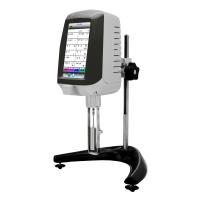
What is rheological testing?
The Rheology Research Laboratory tests the rheological properties of polymeric materials. Rheological characterization of materials including polymers, liquids, adhesives, and other samples using a variety of shear and tensile conditions. Rheology laboratories determine rheological properties for degradation studies, determination of molding parameters, material properties, and other applications.
Understanding the rheological (flow) properties of polymers helps to achieve good material properties during molding. Rheological testing can determine whether a material has been properly processed with minimal product degradation. Rheological testing measures the viscosity of polymers and ranges from single point testing to variable shear rate testing.
Rheological characterization can be accomplished using a variety of shear, tensile and tensile conditions. This data can be used for many purposes including: quality assurance, product development, and better understanding of material performance. In addition, rheology testing can determine whether a material has been properly processed with minimal product degradation, or understand flow properties which are of paramount importance in QA molding applications.
Fluids analyzed include
essential oil
Dispersions
emulsion
solution
mud
resin
lotion
polymer melt
grease
Fluid rheology testing is performed while the polymer is in the melt phase or during the process of dissolving the polymer in a solvent for intrinsic and relative viscosities.
Solids analyzed include
polymer plaque
elastomer
rubber products
Fiber
Movie
composite material
thermoplastic
thermosetting plastic
Molded product
adhesive
Rheology testing measures the viscosity of polymers, ranging from single point testing to variable shear rate testing.
Rheological tests include
frequency sweep
The temperature rises
Intrinsic Viscosity and Relative Viscosity
Melt Flow Rate (MFR) and Melt Flow Index (MFI)
Capillary rheometer
Creep (flow under a given force or pressure)
Stress relaxation (change in force for a given deformation)
thermal stability
Melt viscosity
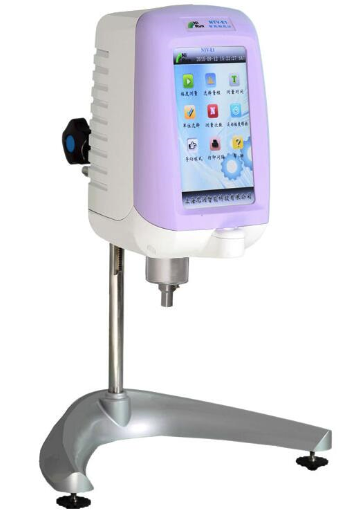

Many of these techniques fall under the umbrella of Dynamic Mechanical Analysis (DMA). These DMA tests often provide a mechanical fingerprint for the material. Many properties such as Tg, width of Tg, secondary transitions, crosslink density, etc. can be determined using DMA.
- 1Application of Rheometer in Viscosity Test of Tomato Paste
- 2Understanding Rheometers in One Article - Principle, Application, Selection & Maintenance
- 3Rheometer polymer rheological performance
- 4Influencing factors of asphalt rheological performance
- 5How to calibrate the Rheometer? With calibrating steps
- 6Difference between Rheo-meter and Rotational Viscometer
- 7How to test rheological properties of colloidal materials
- 8Paint rheology phenomenon: What is the effect of viscosity change after coating?
- 9Influence of Leveling on Rheological Phenomena of Coatings