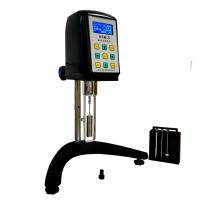
How to measure unknown viscosity samples
(1) General principles of measurement: for high-viscosity samples, use small-volume (No. 3, No. 4) rotors and slow rotating speeds low-viscosity samples, select large-volume (No. 1, No. 2) rotors and fast rotating speeds. The percentage scale (torque) of each measurement is a normal value between 20%-90% or 10%-90%, and the viscosity correct value.

(2) First roughly estimate the viscosity range of the sample to be tested, and then select a small-volume rotor and a slow speed for high-viscosity samples, and a large-volume rotor and fast speed for low-viscosity samples. Generally, the rotor is selected first, and then the appropriate . For example, when the rotor SP is No. 1, the speed is 60RPM, and the screen directly displays the full scale as 100mPa.s, when the speed is changed to 6RPM, the full scale is 1000mPa.s.
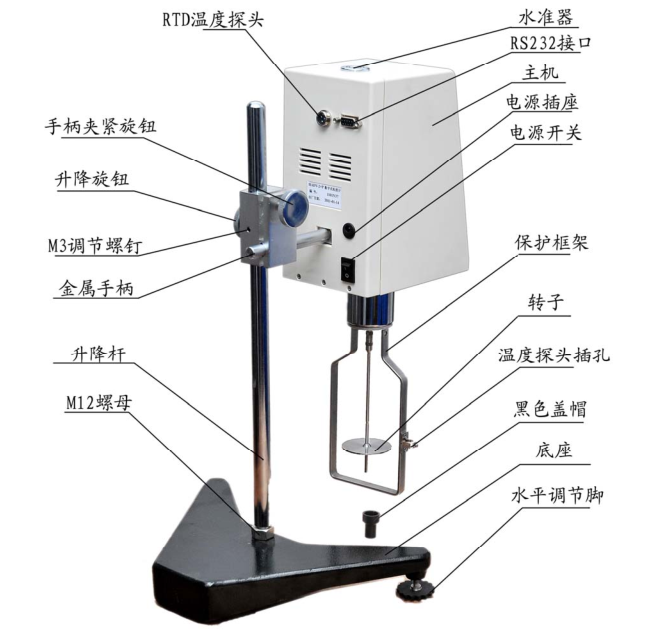
(3) When the approximate viscosity of the sample to be tested cannot be estimated, it should be set to a higher viscosity first. Experiment with small volume No. 4 rotors to large volume No. 1 rotors and speeds from slow to fast. Then each measurement judges the rationality of the selection of the rotor and speed according to the percentage scale (torque) . The percentage scale is generally between 20%-90% or 10%-90 %. Within this range, the viscometer will sound an alarm to prompt the user to change the speed and rotor. Don't forget to change the rotor, you must change the rotor number SP according to the selected rotor