Development and Application of Magnetic Drive Stir
Based on the relevant information in recent years, this paper mainly introduces the principle, classification, characteristics, development and application of magnetic drive stirrer at home and abroad, summarizes the problems and solutions in the design and use of magnetic drive stirrer, and looks forward to its Prospects.
Key words magnetic drive stirrer, sanitary magnetic stirrer, eddy current effect, sliding bearing
CLC number TQ051.7 Document identification code A Article number 0254-6094 (2013) 04-0415-05
With the development of industries such as medicine, food, organic synthesis, petrochemical industry and nuclear industry, the requirements for stirring or stirring reaction process of some flammable, explosive, toxic, highly corrosive and precious media are becoming more and more stringent. The requirements for cleaning and sterilization of reaction equipment are also very stringent. Therefore, the sealing requirement of the stirred tank or stirred reactor used in the above working conditions is to achieve zero leakage. In this context, magnetic sealing technology has become an inevitable choice, and magnetic kettle (or magnetic stirrer) came into being [2]. The magnetic kettle replaces the dynamic seal with a static seal structure. This structure transmits torque without contact, which can effectively solve the leakage problem of the mechanical seal and the packing seal, and the stirring parts are in an absolutely sealed state. It is suitable for petrochemical, organic synthesis, food processing, and biological pharmaceutical processes. The selection trend of reactions such as sulfidation, hydrogenation, oxidation and fermentation.
1 Principle and classification of magnetic stirrer
1.1 Principle and structure
Magnetic stirrer is the combination of magnetic coupling and stirring device, and it is one of the successful applications of magnetic transmission technology. The so-called magnetic transmission refers to a practical technology based on modern magnetism, which uses the magnetic coupling effect between permanent magnet materials to realize non-contact torque transmission. The magnetic transmission is completed by the magnetic coupling [1]. The structure of the magnetic stirrer mainly includes components such as a motor, a stirring device, an active magnetic rotor, a driven magnetic rotor, and an isolation sleeve. The motor transmits power to the active magnetic rotor through the transmission shaft, and the driven magnetic rotor starts to rotate under the action of magnetic coupling, thereby driving the stirring device connected with the driven magnetic rotor to rotate to achieve the purpose of stirring [3]
1.2 Classification
Magnetic stirrers can be classified in different ways. According to the structure of the magnetic transmission device, it can be divided into cylindrical magnetic stirrer and disc magnetic stirrer; according to its application field, it can be divided into industrial magnetic stirrer and laboratory magnetic stirrer; according to the placement method, it can be divided into There are top-entry magnetic stirrers, bottom-entry magnetic stirrers and side-entry magnetic stirrers.
1.2.1 Cylindrical magnetic stirrer
The cylindrical magnetic coupling drive agitator is an outer magnetic ring with an inner magnetic ring, and a spacer is set between the inner and outer magnetic rings. The three are installed concentrically. The working surfaces are all cylindrical and the magnets are in the shape of tiles. This transmission form has a large transmission torque, and it also has enough torque to fully stir the high-viscosity materials, which is suitable for high-speed occasions [4]. Therefore, the production equipment mainly adopts this form of magnetic drive agitator. 1.2.2 Disk-type magnetic agitator In the disk-type magnetic coupling drive agitator, two magnetic rings are installed , the working surfaces are planes parallel to each other, and the magnets are fan-shaped. Between the two magnetic rings of the coupling drive, an isolation sealing cover is usually required. This transmission form can simplify the geometric dimensions of the magnetic steel and the axial dimensions of the magnetic transmission device, but the transmitted torque is small, so it is usually only suitable for low-speed occasions such as small reactors for gas-liquid mixed reactions in the laboratory [4 ].
1.2.3 Laboratory magnetic stirrer
The stirrers currently used in the laboratory mainly include electric stirrers.
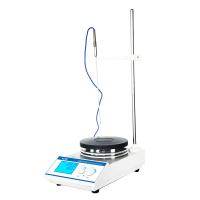
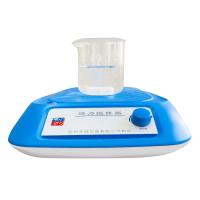
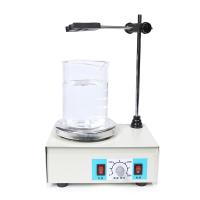
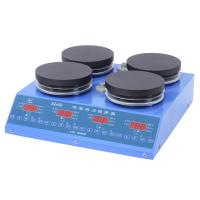
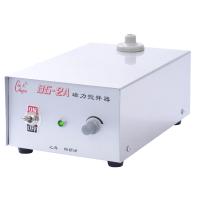
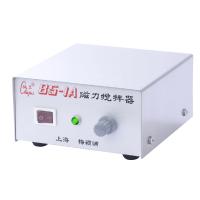
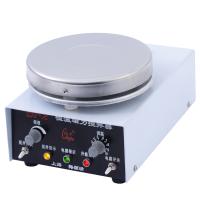
mixer and magnetic stirrer. The laboratory magnetic stirrer is mainly used for heating or heating and stirring at the same time, and is suitable for liquids or solid-liquid mixtures that are not very viscous. When using, put the liquid into the container first, then put the stirrer into the liquid, when the base generates a magnetic field, use the principle of magnetic coupling and vortex to drive the stirrer to do circular motion, so as to achieve the purpose of stirring the liquid.
The advantages of a magnetic stirrer over an electric stirrer are:
a. Low noise, stable speed regulation;
b. It can be mixed in an airtight container, which is convenient to use;
c. Stirrer is made of high-quality magnetic steel coated with polytetrafluoroethylene, which is heat-resistant, wear-resistant and corrosion-resistant;
d. It can cooperate with the bottom temperature control device to make the liquid heated more evenly. Therefore, the sample temperature can be controlled and maintained according to specific experimental requirements, which greatly improves the repeatability of the experiment.
1.2.4 Industrial magnetic stirrer
Industrial magnetic stirrers mainly include: top-entry magnetic stirrer, bottom-entry magnetic stirrer and side-entry magnetic stirrer. The top-entry magnetic stirrer is to install the magnetic stirring device on the center line of the vertical equipment cylinder or eccentrically on the vertical container. Sometimes the stirring shaft can be inserted obliquely into the cylinder in order to prevent the generation of eddy current. The top-entry magnetic stirrer consists of a motor, a reducer, a transmission shaft, a driving magnet, a spacer sleeve, a driven magnet, a coupling, a stirring shaft and paddles, and some also have a cooling structure. The advantages of this structure are: there is no axial attraction between the active magnet and the driven magnet, and the permanent magnetic coupling part is far away from the stirred liquid, the magnet is less affected by high temperature or corrosion, and particles are allowed to be entrained in the stirred liquid.
However, with the rapid development of industry, the equipment tends to be large-scale. The large-scale container makes the shape of the kettle develop from slender to short, which makes the demand for mixing equipment in industrial applications more and more trendy. However, the large-scale top-entry magnetic stirrer has the following problems:
a. The cantilever of the stirring shaft is too long, the critical speed of the shaft is low, and the bending resistance is poor. It is easy to bend, deform or even break during stirring, which affects the stirring effect; when it swings, it will cause friction between the inner magnetic steel rotor and the inner wall of the isolation sleeve, shortening the use of the equipment life;
b. The diameter of the stirring shaft is generally very large, and the transmitted torque is very large, and the manufacture of bearings and magnetic coupling devices is limited.
Due to the above-mentioned defects of the top-entry magnetic stirrer, the engineering design of many new technologies needs to use the bottom-entry magnetic stirrer, especially for those working conditions where the material is prone to precipitation during stirring or reaction. Superiority. The bottom-entry magnetic stirrer is to install the magnetic stirring device at the bottom of the equipment. Its structure generally consists of 3 independent parts and some parts, namely the impeller, the welding plate with the bottom of the tank and the driving device. The parts include hub bearings, Locating bearings and sealing rings, etc. The characteristics of this kind of stirring device are: to ensure the integrity of the tank, installed at the bottom, short drive shaft, compact structure, easy to disassemble; allow high speed, self-lubricating cooling, low liquid level stirring is very good, no particles are generated; online can be realized Cleaning and sterilization in place (CIP/SIP), structural design meets GMP requirements.
With the rapid development of modern industry, environmental protection and energy conservation have attracted more and more attention from various countries, which also drives the development of large-scale and efficient technical equipment, but the stirring efficiency in large-volume magnetic kettles is significantly reduced. This is because the factors affecting the mixing efficiency are more complex and do not simply follow the law of geometric amplification. When Graduation up a conventional top-entry or bottom-entry magnetic stirring device, equipment cost, energy consumption and load become the main constraints [5 ]. At this time, an efficient stirring device --- side-in magnetic stirrer appeared in industrial applications. The side-entry magnetic stirrer (also known as the magnetic drive side stirrer) is to install the magnetic stirrer on the side wall of the equipment cylinder at an appropriate depth position, and at the same time adopt a combination of various stirring blades and arrange them in a direction to achieve Very good stirring effect. In this form, a small amount of power can be put into a large storage tank to get a proper stirring effect, so it is widely used [6].
2 Development history and application of magnetic stirrer
As early as the 1930s, people had discussed and looked forward to the application of magnetic drive technology in stirred reactors. In the 1940s, a simple magnetic drive stirrer (such as the US patent Magnetic Stirrer) appeared. This simple stirrer A permanent magnetic element is installed on the outside of the bottom of a glass vessel, and a magnetic stirrer is placed inside the vessel. When the external permanent magnetic element rotates, the magnetic stirrer is driven to move, so as to achieve the purpose of stirring the medium.
The sealing of permanent magnet transmission technology for chemical agitation began in the 1960s . Due to the poor performance of the magnetic materials at that time, the transmission device was bulky, which affected its application in chemical agitation. With the development of magnetic materials, the international community began to pay attention to the research on magnetic drive technology in the 1970s [1]. In the early 1980s, due to the rapid development of magnetic materials, the magnetic circuit design also made some progress, and an impeller-type lower magnetic stirrer appeared. The US Patent Magnetic Mixer is a typical impeller-type lower magnetic stirrer. At the same time, Germany, Japan and other countries have also successively reported that they have developed small-scale magnetic drive reactors. In the 1990s, the sanitary magnetic stirrer was gradually developed. Its structure is simpler and more open. The stirring blade and the driven rotor are integrally processed, and the push-pull combined magnetic circuit is relatively mature, which can transmit greater magnetic torque. The key component bearing is made of cemented carbide.
Since the 21st century, the structure of the magnetic stirrer has been continuously improved and innovated. Both the impeller and the bearing have developed towards the open type. The bearing is a sliding bearing made of hard alloy (such as SiC, TC, Si3N4, etc.), and there is no cleaning dead angle, which realizes CIP and SIP, and in-depth research on the structural form of the blade (such as opening grooves on the blade, curvature of the blade, etc.), can meet higher fluid shear requirements.
It can be seen that after more than half a century of development, magnetic stirring technology has played an increasingly important role in all walks of life in scientific research and production, and has achieved huge economic benefits at the same time. With the improvement and development of its technology, the scope of use of magnetic stirrers has been greatly expanded, such as in pharmaceuticals, food, dairy products, beer, beverages, water treatment, chemicals, cosmetics, bioengineering and machinery manufacturing and other industrial fields. Especially in sterile and aseptic applications and other special applications, such as those involving shear-sensitive products, processing under vacuum or pressure, etc. are widely used.
2.1 Development and application abroad
The research on magnetic transmission technology in foreign countries is earlier, and its application range also very wide, from the early magnetic pump to pharmaceutical, food, dairy products, beer, beverage, water treatment, chemical industry, cosmetics, bioengineering and machinery manufacturing and other industries field. Table 1 is related to foreign patents.

With the advancement of material science and structural design, the material safety of magnetic stirrers has been resolved, and the product structure is more open, without dead ends, and easy to clean and sterilize. Therefore, many processes that require high aseptic processes choose magnetic stirrers. Generally, the upper part of the impeller, locating bearing and welding plate is completely in contact with the material, the more open the design of the impeller, the better the effect of CIP/SIP. The impeller and welding plate are generally made of 316L stainless steel, and the bearing material is made of wear-resistant and corrosion-resistant hard alloy (such as SiC, Si3N4).
Today, the top 100 biopharmaceutical giants have been using tank-bottom magnetic stirrers on a large scale. Among them, the Swedish Nov Aseptic magnetic stirrer is more famous, and it is very representative in the aseptic design Its agitator is installed at the bottom of the reaction kettle, flush with the bottom of the kettle. It is characterized by easy disassembly, reliability, durability and easy maintenance, and can meet the requirements of CIP and SIP. Nov Aseptic company carried out the particle test, and the support bearing detected very little weight loss (only 0.5mg) after working for 48 hours. The STERIMIXER magnetic stirrer produced by STERIDOSE under the Swedish ROPLAN Group, the MBI series clean magnetic stirrer produced by Lightnin Company and the new magnetic stirrer produced by Alfa Laval are all professional products in this field. The laboratory magnetic stirrer of the German IKA Group is a professional in the field of laboratory stirring and mixing.
2.2 Domestic development and application
Domestic research on magnetic stirrer started a bit late, but has made great progress . CHINA started to manufacture magnetic transmission equipment in the 1980s. The magnetic drive stirring tank developed by the company attracted great attention and praise from professionals from various countries at the 7th International Conference on Rare Earth Permanent Magnet Materials and Applications. Our country constantly absorbs foreign professional technology, explores and innovates, and the magnetic stirrer is developing in the direction of high power, large volume, high temperature, high pressure and high speed.
In 1990, Peking University developed Sm2Fe17Nx for the first time in the world. The Curie temperature was raised to 480°C, and the cost was lower than that of NdFeB magnets. It opened up a new field of research and development of permanent magnet materials in the world, and also brought magnetic transmission technology new developments [7]. The high-temperature-resistant asynchronous magnetic coupling developed by Xu Shifen (Hong Kong) Joint Research Institute of Jiangsu University uses the principle of electromagnetic induction for transmission, and does not need to arrange permanent magnets on the inner rotor, which effectively solves the problem of the synchronous magnetic coupling on the inner rotor at high temperature. The problem of permanent magnet demagnetization [3].
Since the 1990s, magnetic stirring devices have entered a stage of rapid development in my country. Table 2 lists the relevant patents in my country.

Table 2 Chinese magnetic stirrer patents

- 1Comparison and Application of Magnetic Stirring and Mechanical Stirring
- 2Application and Selection Guide of Electromagnetic Stirrer in Laboratory
- 3Describe 4 Common Stirrers in detail
- 4Principle and Application of Water Bath Magnetic Stirrer
- 5What is a mixer? Applications, advantages and disadvantages of mixers
- 6How to prepare polymer blended solid film materials?
- 7Agitators and their classification
裴梦琛 - 《西北大学》
- 8Testing Factors Affecting the Drying Properties of Plastic Water-based Gravure Ink with Agitator
- 9What are the characteristics of an overhead mixer?
-
![DaDi 85-2 digital temperature control magneticstirrer]()
-
![HUXI HMS-203D magneticstirrer]() HUXI HMS-203D magneticstirrer$ 251.00
HUXI HMS-203D magneticstirrer$ 251.00 -
![Qiwei CL-R magneticstirrer 1000ml]() Qiwei CL-R magneticstirrer 1000ml$ 103.00
Qiwei CL-R magneticstirrer 1000ml$ 103.00 -
![DADI CJJ78-1 Magnetic Stirrer]() DADI CJJ78-1 Magnetic Stirrer$ 101.00
DADI CJJ78-1 Magnetic Stirrer$ 101.00 -
![RONGHUA HJ-6 Six Head Magnetic Heating Stirrer]()
-
![RONGHUA Instrument 99-1A Dual digital display high power thermostatic magnetic heating Stirrer]()