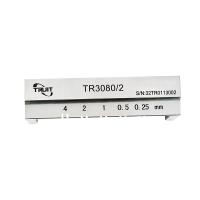
LPQ Leveling Tester, Leveling Tester Instructions for Use
Scope of application:
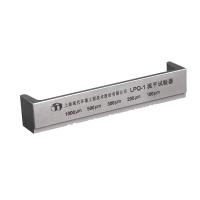
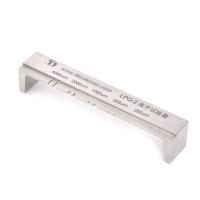
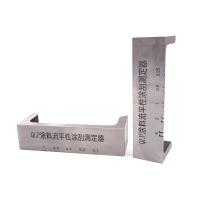
The leveling Tester is mainly suitable for testing the relative leveling of white or light-colored liquid paints (water-based or non-water-based) in the laboratory.
This Tester conforms to ASTM D2801 "Determination of Leveling of Coatings by Squeegee Coating".
2. Specifications:
1. LPQ-1 100m~1000m
2. LPQ-2 250m~4000m
3. LPQ-3 10mil~160mil
3. How to use:
1. Test surface, sog convex paper coated with a suitable varnish with a smooth and flat surface.
2. Put the test surface on the glass plate, put the guide plate (a wooden ruler with a length greater than 300mm) on one side of the test surface, and parallel to the long side of the test surface, put 10ml of the paint sample adjusted to the working viscosity on the On the inner edge of the scraper, press the guide plate with one hand, and hold the scraper along the guide plate from the top of the test surface to the bottom of the test surface at a uniform speed.
3. Under the specified laboratory conditions (25°C±1°C), lay the scraped coating flat and dry.
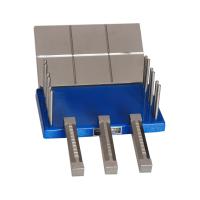
4. After the paint surface is dry, count the number of parallel belt pairs that have flowed together on the test surface, and compare the leveling level diagram to determine the leveling level. A "10" rating indicates better leveling, and a "0" rating indicates the worst leveling.

1—Guide plate 2—Leveling scraper 3—Test surface 4—Glass plate
Figure 1 Schematic diagram of operation

Figure 2 leveling grade
- 1Types, applications and evaluation methods of levelling agents
- 2Working mechanism and selection considerations of anti-shrinkage agent
- 3Coating performance testing: leveling & sagging
- 4Coating surface tension and its effects
- 5Coating leveling and sagging
- 6Key Factors and Evaluation Methods of Coating Constructability
- 7Coating performance testing: ensuring the efficiency and mass of the painting process
- 8Coating levelling and sagging performance test
- 9what is the coating Leveling and Sag resistance