Epoxy vs Polyurethane: Which Coating is Better?
Epoxy and polyurethane coatings have excellent long-term qualities such as chemical and acid resistance, ease of maintenance and aesthetics. We'll look at some of the differentiating factors between the two so you can decide which product is right for your floors.
Benefits of Epoxy
Epoxy resins come in many forms: water-based, solvent-based, and 100% solids. Different types of products will bring you different benefits. At its core, epoxy resins are "a class of reactive prepolymers and polymers containing epoxy groups. Epoxy resins can react with themselves through catalyzed homopolymerization, or with polyfunctional amines, acids (and anhydrides) in These co-reactants are often called hardeners or curing agents, and the cross-linking reactions are usually called curing agents. Polyepoxides with themselves or with multifunctional hardeners The reaction of the additives forms thermoset polymers that typically have good mechanical performance properties and high thermal and chemical resistance."
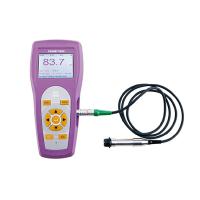
Epoxy is very easy to work with, can vary in thickness (typically between 3 and 15 mils) (testing instrument: coating Thickness Gauge), and gives you a very durable floor that can withstand what it is subjected to abuse. One of the nice things about epoxies is that they're made with varying amounts of VOCs (Volatile Organic Compounds)...that's the really bad smell that paint gives off. You can request a low VOC formulation in most epoxies. When applying, Parts A and B are usually mixed together (mixing ratios vary by product) to account for the hardening process. Once mixed properly, you can apply it to the floor and wait for the epoxy to bond to the concrete and cure. Epoxy doesn't have a long working time because once mixed, the epoxy reacts with the hardener, so it's important to remember that time is of the essence.
The strongest and least odorous epoxy is 100% solids. This means that there are very few VOCs in the epoxy, as this will give you the strongest coating possible. It will dry and thicken, providing a hard wearing surface. Not only will the epoxy fill hairline cracks and dings in the floor, but thanks to its self-leveling properties, the thickness will stay level when calendered or scraped. Epoxy resins are used in a variety of applications, from home garages and basements to aircraft hangers and commercial-grade food processing plants.
Benefits of Polyurethane
Polyurethane is also a thermosetting polymer and is commonly used as a topcoat product for flooring.
The common types are aliphatic polyurethanes, which are 55-75% solids and 1-4 mil dry thickness depending on the application process. Aliphatic polyurethanes are extremely flexible and have good impact resistance. They are also UV stabilized, meaning they won't yellow over time like some epoxies when exposed to sunlight.
When it comes to hardness (testing instrument: durometer), epoxy is much stronger, while polyurethane is more resistant to scratching (testing instrument: scratch resistance instrument). Polyurethane does not bond well to concrete, nor does it exhibit the self-leveling properties of epoxy on these surfaces. Most polyurethanes also have high VOC content, which can cause odor when used.
So what should I use on the floor?
It all depends on the application of the floor and the desired end result. Epoxy should be used as a primer (to bond to the concrete), while polyurethane can be used as a topcoat (soft, scratch-resistant, UV-stabilized).
- 1Discussion on film thickness and accuracy in epoxy resin coating
- 2Experimental test of performance of epoxy resin film coated on metal iron plate by small coater
- 3Application Significance of Laboratory Automatic Film Applicator Scratching Polyurethane Glue
- 4Epoxy resin floor coatings key performance and detection method
- 5Epoxy resin Coating characteristics, uses and performance testing
- 6What is epoxy resin?
- 7Performance Testing Subjects and Testing Instruments of Waterborne Epoxy Resin Coatings
- 8Epoxy resin coating
- 9What are the main types of epoxy resin emulsions