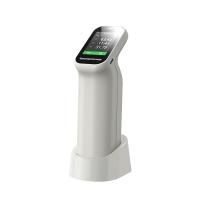
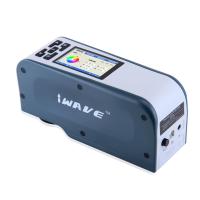
How to choose the right color measuring instrument in the printing field?
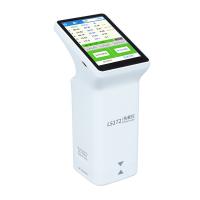
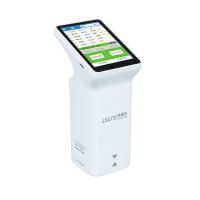
Density meters, color difference meters and Spectrophotometer s are key special tools for accurate measurement of packaging and printing hues when controlling and testing colors. Although each of these three instruments has a different function, they all use reflected (or scattered) light to accurately measure color. Using the standard light source inside the instrument to illuminate the lamp sample, the tested sample can selectively absorb, reflect and transmit, and the photoDetector of the instrument will detect the refracted light and compare it with the standard light source. When using a single-wavelength filter or spectrometer splitter, the controller will analyze the color and intensity according to the wavelength of the light, carry out information resource management, and obtain the required density value or colorimetric parameters. Data information.
1. Densitometer is a density detection instrument designed with 3 to 4 color filters (red, green, blue, etc.) that allow 1/3 of the visible spectrum to reach the photoDetector. The densitometer supports measurement of the entire visible spectral range and obtains yellow, magenta, and cyan density values. Built-in functions of density, ink overprint ratio, gray scale, saturation, dot area, color tone error, and printing contrast. Among them, the density value measurement is the main function of the densitometer, and the density value can directly reflect the information of the ink thickness and concentration of the printed sheet.
2. Colorimeter. There are currently two types: the tristimulus principle and the spectral principle.
The design of the three-stimulus principle color difference meter and the density meter are very similar, both include three primary color (red, green, blue) color filters to divide visible white light into three primary colors, but they have two main differences: ① The three-stimulus value color difference meter is designed It is used to observe the color, and its function is similar to that of human eyes, but the design of the densitometer should consider the special sensitivity of the ink. ②The tristimulus value color difference meter can process and calculate different color data (such as: color space conversion, color difference calculation, etc.), and allows users to draw color coordinates in three-dimensional space, while the densitometer does not have the function of describing colors in this way.
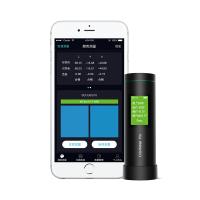
The spectral Colorimeter, also known as the spectroColorimeter, divides the visible spectrum into very narrow intervals, and each interval represents different wavelengths in white light. Since the white light spectrum can be divided into many small parts, the spectroColorimeter It can collect more data, making it more accurate than a densitometer. Therefore, such spectroscopic instruments have better measurement repeatability. Like the tristimulus Colorimeter, the spectral Colorimeter converts the measurement result into three numbers that can be displayed. When accurate color repetition is required, a Colorimeter is a more satisfactory choice (but the reliability is worse than that of a Spectrophotometer ), but in four-color printing applications, a Colorimeter is also inferior to a density meter, because a density meter can Individually separate the measurements of four-color printing, such as density, dot area ratio, ink overprint ratio, etc., while the Colorimeter only measures color.
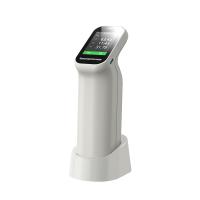
3. Spectrophotometer. Like the Colorimeter, there are two types of Spectrophotometer : filter type and spectral dispersion type, and its measurement principle is also similar to that of a Spectrophotometer . The visible light spectrum is divided into sub-segments using narrow-band color filters (filter type) or diffraction gratings (dispersive type). The use of filter-type instruments is similar to that of densitometers, except that there are more color filters in the Spectrophotometer , which can obtain high resolution on the spectrum. Furthermore, due to the simplicity of the instrument design, filter Spectrophotometer s are robust enough to withstand the harsh environments of everyday life. The dispersive Spectrophotometer is more sensitive to collision, fragile and expensive, not suitable for portability and use in production, but suitable for operation in a laboratory environment.
All Spectrophotometer s can output the same data as Colorimeters, and Spectrophotometer s can also output spectral curves. Each curve represents the color of each measurement, which can be used as a fingerprint to identify the pigment composition of the ink.
To sum up, if the color measurement and density measurement are integrated, it will be a satisfactory instrument for the printing industry. At present, such instruments have been developed and produced, such as the Gretag SPM 100 Spectrophotometer produced by Gretag Company in Switzerland. Although this type of color measuring instrument is currently expensive, it represents the development direction of color measurement in the printing industry.
In terms of use, what are the requirements for color measuring instruments in the printing field?
Requirements for color densitometers:
①It is easy to use and standard. In the experimental production, the printing quality control is inseparable from the use of the density meter from the beginning to the end. If each measurement and calibration is cumbersome and time-consuming, it will definitely affect the speed and accuracy. Moreover, the calibration of the density meter should be tested regularly with a special reflection (or transmission) gray scale or ruler.
②The sensitivity of the instrument should be suitable for printing color measurement, generally CIE A light source, T state density. Because the T-state density is an objective physical measuring instrument specially designed for color separation and printing, the blue light, green light and red light of the T-state density meter are the complementary color lights of the three primary colors of ink yellow, magenta and cyan, which can be well Detect and control the modulation amount of the three primary colors and the relative thickness of the yellow, magenta and cyan ink layers in the process of color separation and printing.
③ The performance of the instrument must meet the requirements of the specification. Accuracy, repeatability, reproducibility and internal agreement of the instrument are the performance specifications of the density meter. They should be able to compare and measure performance over time.
For Colorimeter requirements:
①The appearance is light, so that it can be flexibly positioned on the printed matter to be tested and adapted to the measurement of large-format printed sheets.
②Measurement geometric conditions should be 45°/0° or 0°/45°; standard light source is C or D65 light source; it is advisable to use CIE 2° small field of view standard observer (because the area of color evaluation in printing operations is small) .
③ The measuring aperture of the Colorimeter should not be greater than 5mm. Usually, the color blocks of the color spectrum for printing are all less than 10mm2, and the color blocks on the printing quality control strip are only 6mm2. Especially for continuous tone color images, the measurement range is smaller, so the measuring aperture of the Colorimeter should not be larger than 5mm.
④The output value of the Colorimeter not only has the standard color value (such as: XYZ), but also should be able to output the coordinates of CIE LAB and CIE LUV chromaticity.


- 1Color difference meter and its application in Coating production
- 2Application of color reader in paper color difference control
- 3Principle, characteristics and application of Spinning & weaving precision color difference instrument
- 4Detection of film color retention with color reader
- 5Optical inspection structure for color readers: D/8 D/0 45 °/0
- 6Application of color reader in inks industry
- 7What is the difference between tristimulus Colorimeter and Colorimeter?
- 8FAQ of computer color reader and its solution
- 9Tristimulus Colorimeter:principle, application, operation and selection