Yueping Precision Torque Balance JN-B Instruction Manual
JN-B Precision Torque Balance is a sensitive precision measuring instrument that can measure very light weight. The main structure is composed of two kinds of elastic elements, flat coil spring and leaf spring. When using it, there is no need for weights, just turn the reading knob, and rely on the balance torque generated by the elastic element torsion angle to measure the weight of the material, so there is no fulcrum mechanical wear and tear. Since the balance adopts a single-arm lever structure, there is no unequal arm error. At one end of the beam, a quick-stop damper is installed so that the swing of the beam can stop within a few seconds, so that it is convenient to quickly read the measured value. The main structure of the balance is sealed in the shell, and the weighing pan and the material to be weighed are isolated from the outside world by the metering box.
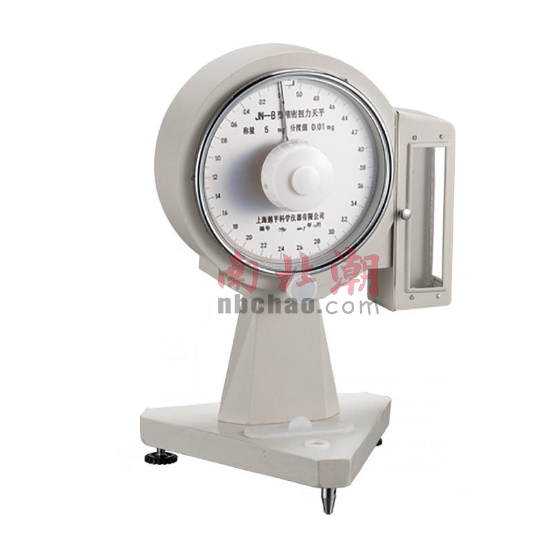
Balance installation and adjustment
After unpacking the balance, use soft materials such as handkerchiefs, gauze, and soft brushes to clean it carefully . It is strictly forbidden to use coarse cloths and hard brushes to prevent scratches and damage.
1. Place the balance in a room with an appropriate temperature and humidity (see Table 1 in the Appendix) and on a stable workbench, put the feet on it, observe the blisters, and turn the horizontal adjustment feet with both hands to make the bubbles in the blisters be in the center of the small circle.
2. Take out the weighing pan in the paper bag, hang it on the scale hook, and then close the measuring box.
3. Turn the reading knob to make the reading pointer point to zero. Then turn the brake knob to turn on the balance, and observe the balance pointer. The projection line on the mirror should overlap the verification line on the scale plate. The protective shell in the middle of the reading knob must be gently opened, and then slightly rotate the middle with a small screwdriver. Screw, if the balance pointer is to the left, turn the screwdriver to the right, if the balance pointer is to the right, turn the screwdriver to the left, and adjust until the balance pointer and the verification line overlap on a straight line.
4. Put the standard weight on the weighing pan, close the measuring box, turn the reading knob counterclockwise, make the pointer point to the dotted line (that is, the maximum weighing), then turn the brake knob to open the balance, and then balance the pointer It needs to overlap with the verification line to form a line. If there is any deviation from the verification line, the weight difference should be subtracted or added, and then check the balance tolerance on the verification certificate to calculate whether the balance measurement meets the tolerance.
5. Turn the brake knob to close the balance, take out the standard weight, turn the reading knob, and return the reading pointer to zero. At this time, the balance installation has just been completed.
Balance use and maintenance
This balance is a kind of precision measuring instrument, which needs to be maintained carefully and strictly abide by the installation and use rules of the balance:
1. The balance that has just been installed can only be used after the temperature of the surrounding environment is consistent.
2. Before use, check whether the components of the balance are installed correctly, and then adjust the balance position of the balance before use.
3. The weighing object and weight should be placed in the center of the weighing pan to prevent the weighing pan from swinging after opening the balance. The weight of the weighing object must not exceed the maximum weighing range of the balance. All weighing objects should be taken and placed under the condition of closing the brake. To avoid damage to the balance due to impact.
4. When the balance is not in use, the brake knob should be closed, and the reading pointer should be pointed at the zero position, so that the hairspring is not in the working state for a long time. According to the frequency of use of the balance, cleaning work and measurement performance verification should be carried out regularly. If the balance is found to be damaged or swings abnormally, stop using it until the fault is eliminated, and use it after passing the repair test.
5. Do not open the back cover of the balance when it is not necessary. After the balance is used, put a hygroscopic agent in the metering box (it is better to use silicon alum/silica gel as the hygroscopic agent).
